Not a Landscape, But a Territory: Decoding the Social Systems of the Beach
Not a Landscape, But a Territory: Decoding the Social Systems of the Beach
When we step onto the sand and strip down to our essentials, we often believe we are entering a space of absolute freedom and lawless relaxation. However, from a socio-psychological perspective, the opposite occurs. The beach is not a neutral natural landscape; it is a complex, temporary territory where human behavior repeats itself with absolute consistency.
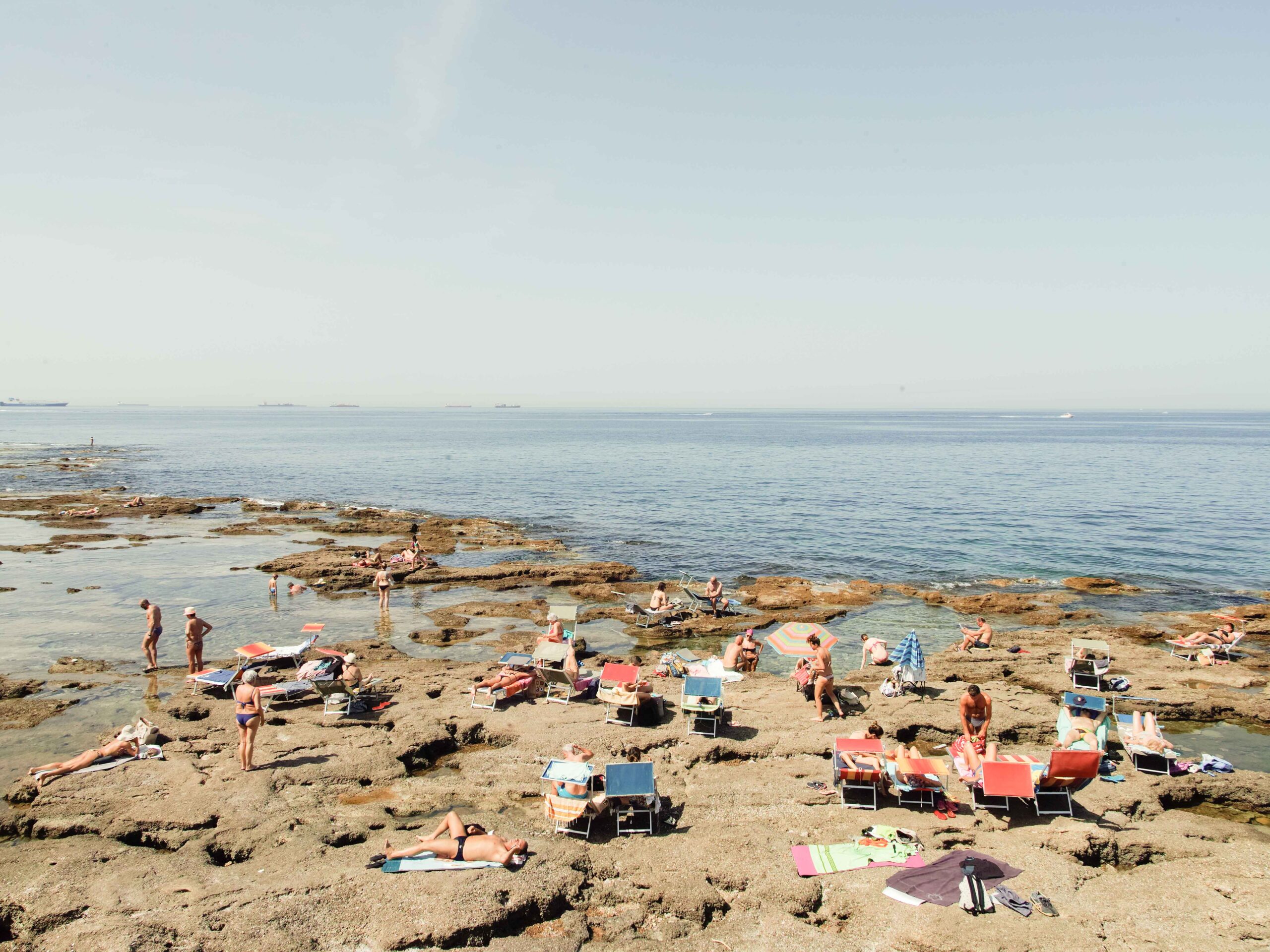
Through Flesh Sand, this ongoing visual anthropological survey aims to treat the Italian coastline not as a postcard, but as an open-air laboratory. By changing our vantage point slightly above the horizon, the implicit rules we live by become completely legible. The improvised layout of towels, umbrellas, and windbreaks ceases to be random chaos and reveals itself as an unwritten law of spatial claiming.

Reading the Shoreline Through Six Fixed Layers
To ensure that a highly developed, crowded resort and an isolated, empty cove can be observed and compared on equal terms, every single location in this archive is filtered through the same six conceptual lenses:
- Territorio (Terrain): The physical geometry of the coast—whether sand, rock, or the concrete edge that attempts to contain it.
- Corpo (Body): The vulnerable ways the human body occupies, marks, protects, and exposes itself on the shore.
- Identità (Identity): The social background of who claims the space—local rituals, tourist communities, class dynamics, and spontaneous groups.
- Natura (Nature): The tension and dialogue between human domestication and the wild, unpredictable border of the sea.
- Tempo (Time): The cyclical rhythms—daily migrations, seasonal shifts, and generational habits that repeat indefinitely.
- Logica Aerea (Aerial Logic): The macro-patterns visible only from a detached, vertical perspective—a reading that the ground-level view systematically hides from us.
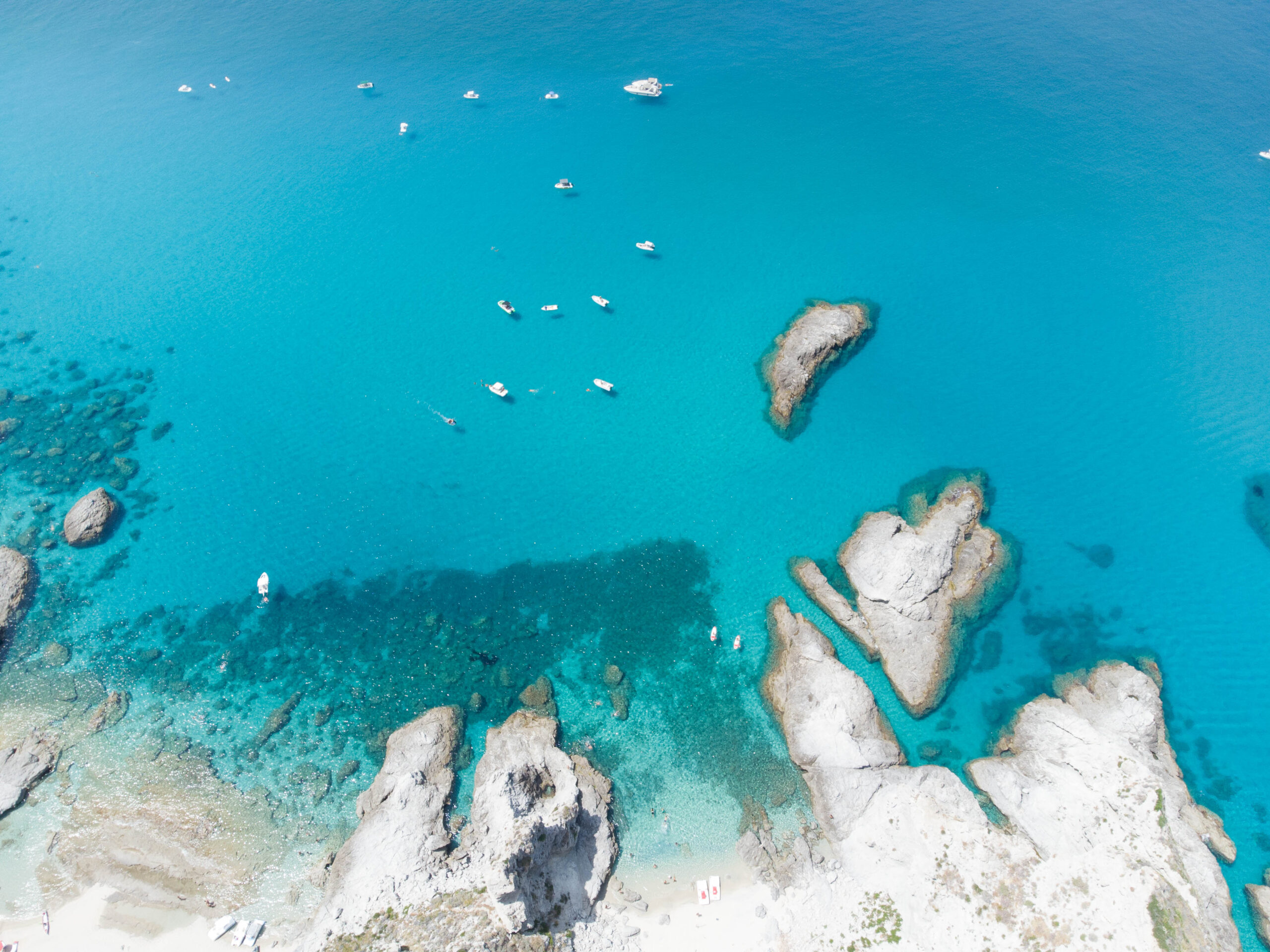
By shifting our gaze above, using drones strictly as an elevated, detached canvas, we clear away the romanticism of the landscape to focus entirely on human geography. It is a tool used not for spectacular imagery, but for objective recording.
The Psychology of Inhabiting Space
My background as a psychologist deeply informs this research. Before turning to long-term landscape documentation, my focus was always on how people inhabit the spaces they claim as their own. The beach is perhaps the most honest space for this investigation because the physical boundaries are entirely self-imposed.
For a deeper technical and normative look into how I utilize UAVs to achieve this flat, uniform perspective across different landscapes, you can read my previous articles on the technicalities of drone operations in Italy on my main photography blog.

Slowing Down the Lens: Field Observations
Conducting a visual anthropological survey requires a profound change of pace. It demands spending days inside a specific environment, observing its slow mutations, rather than merely passing through it to collect a shot.
This philosophy of deep, intentional looking is exactly what I share during my small-group Fine-Art Photography Workshops. Whether we analyze a landscape from the ground or explore its abstract structures from above, the goal is to dismantle our preconceptions about the spaces we live in.
The archive continues to expand, one coastline at a time. It remains a public record of our collective, unconscious choreography on the edge of the water.