Time to Photograph Angkor Wat: Light, Seasons and Why the Dry Season Works
The best time to photograph Angkor Wat is not just a date on the calendar. It is a choice about light, heat, water and crowds. The same stones change completely with the months. In October they rise from flooded green fields under heavy skies. In February the air is clear and the moats are still. By April, the heat flattens everything before nine in the morning.
So choosing when to go is your first photographic decision, long before you pick up the camera.

Cambodia’s Two Seasons
Cambodia doesn’t have four seasons. It has two, and they shape everything you will see.
The dry season runs from November to April. However, it splits into two very different halves. From November to February the air is cooler, skies are mostly clear and humidity drops. From March to April, on the other hand, the heat builds fast, often above 35°C, and the midday light turns hard and white.
The wet season runs from May to October. It brings afternoon storms, saturated greens and dramatic skies. The moats and reflecting pools are full, the rice fields shine, and there are fewer visitors. The trade-off is uncertainty: a morning planned around sunrise can vanish into grey.
Both seasons have their photographs. Still, if you have only one trip, the first half of the dry season is the most generous.
Why the Dry Season Is the Best Time to Photograph Angkor Wat
First, the light is clean. Clear skies give you real sunrises, long golden afternoons and the side light that makes the bas-reliefs readable. At Angkor this matters more than anywhere else, because the carvings are shallow and flat light erases them.
Second, the days are workable. In the cooler months you can photograph from dawn to mid-morning, rest, and return for the afternoon. Most good pictures at Angkor come from patience, and patience needs a body that isn’t exhausted by the heat.
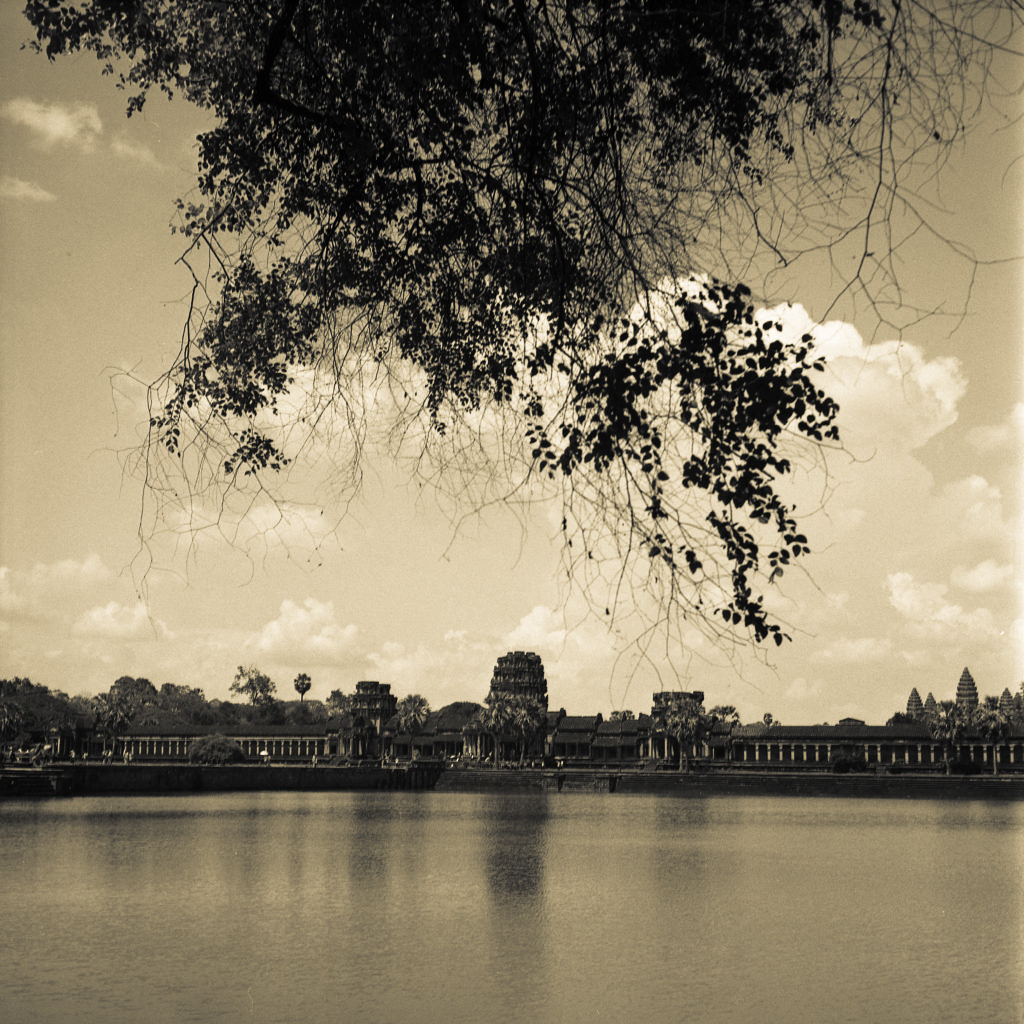
Third, the water is still there. The reflecting pools in front of Angkor Wat keep their water into the early dry months. Later in the season the levels drop. As a result, the classic reflection is still possible between November and February.
Finally, the landscape tells a different story. Around the Tonle Sap lake, falling water reveals the tall stilts of the lake villages: whole communities raised on wooden legs above dry ground. It is one of the most striking scenes in the country, and you only see it this way in the dry season.
Sunrise or Afternoon? Every Temple Has Its Own Clock
At Angkor, the time of day matters as much as the season. In fact, the best time to photograph Angkor Wat is different from the best time for the Bayon or Ta Prohm.
Angkor Wat faces west
It is almost the only major temple in the complex that does. At sunrise the sun comes up behind the towers, so the temple becomes a silhouette against the sky. That is the famous image, and you share it with a crowd. The west façade receives its real light in the afternoon, when the stone warms and the entrance galleries open up.
Around the equinoxes, in March and September, the sun rises directly above the central tower. The builders placed it there on purpose.
The Bayon faces east
Its stone faces turn toward every direction. Morning gives them the most shape: light grazing the cheeks, shadow in the eyes. By midday, however, the faces go flat.

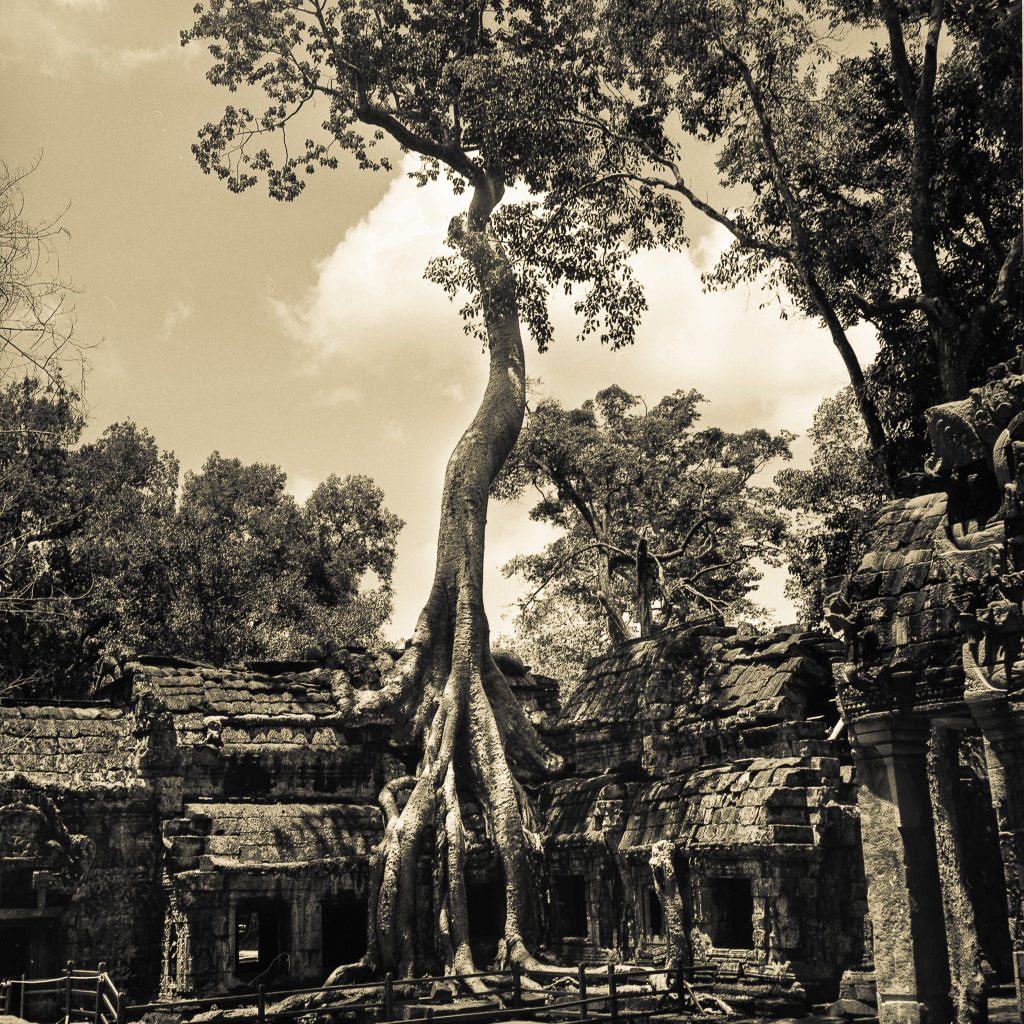
Ta Prohm needs soft light
Under direct sun, the contrast between shaded stone and bright canopy is too strong. For this reason, go early or hope for clouds.
Banteay Srei glows in low light
Carved in pink sandstone, it comes alive early or late in the day. At noon, its colour disappears.
How to Avoid the Crowds at Angkor
The crowds at Angkor follow a predictable rhythm. Everyone arrives for sunrise at Angkor Wat, and most people leave for breakfast soon after. As a result, the temple’s interior is often quieter in the following hour than at any other time of day.
The same logic works everywhere: be where others are not. Visit the Bayon while the crowd is at the Angkor Wat sunrise. Explore the smaller temples in the middle of the day. Then return to Angkor Wat once the tour buses have moved on.
[YOUR TIP: the timing mistake you see people make most often, and what you do instead. Two or three short sentences.]
Light Is Only Half the Story
Knowing the best time to photograph Angkor Wat will give you better light. Knowing what you are looking at will give you better photographs.
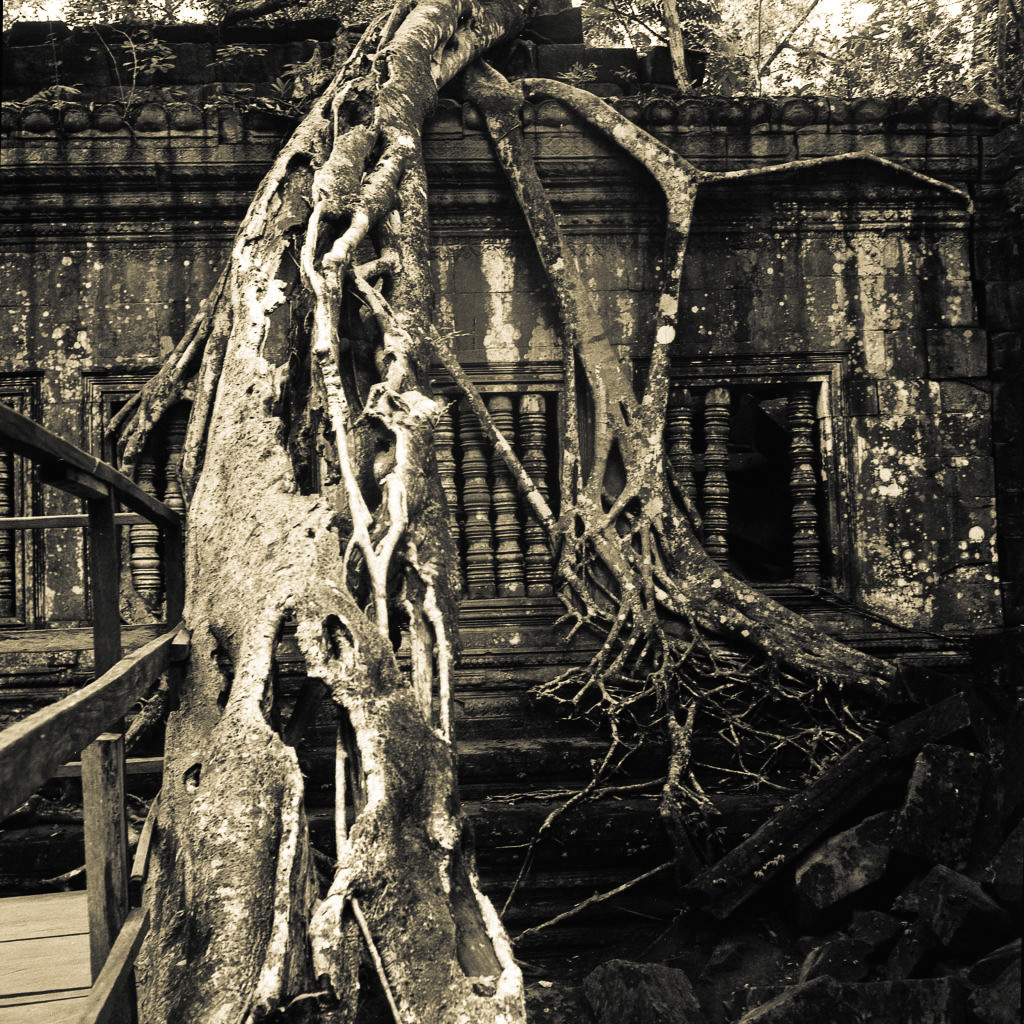
Angkor Wat faces west because west was the direction of Vishnu and of death. The Bayon’s faces watch every direction because the king wanted his presence felt across the kingdom. Ta Prohm’s roots were left in place because someone decided the ruin itself was worth keeping. Angkor is recognised as a UNESCO World Heritage Site, and every one of these choices is part of that story.
Once you know this, you change where you stand and what you wait for.
[YOUR STORY: a moment at Angkor when timing or light showed you something unexpected. Three or four short sentences.]
To go deeper before you travel, read my Angkor Wat photography guide, the story behind The Photographer of Angkor Wat, and my photography guide to Cambodia, which looks beyond the temples.
Photographing Angkor With Me
In February 2027 I lead a small group, never more than four people, through Angkor, the Tonle Sap and the Cambodian countryside. We move with the light: temples at the right hours, villages when life is happening, and time to understand a place before we photograph it.
It is, in my experience, the best time to photograph Angkor Wat. Two spots are still open.