Lucca Photography Guide
Lucca Photography Guide: The Walls, the Towers, and the Light Locals Wait For
Lucca is one of the only cities in Italy still fully enclosed by its Renaissance walls — and almost nobody photographs the walls themselves. They photograph the streets inside them, the towers rising above them, but rarely the walls as the thing that shapes everything else: a ring of trees and stone, wide enough to walk or cycle on top of, that separates the city from the world in a way you can feel before you understand it.

The view from the walls, before the city below wakes up
Why Lucca is a city best photographed from above, then below
Most visitors get this backwards. They arrive, walk the flat streets, photograph the piazzas, and only climb Torre Guinigi — the tower with the oak trees growing improbably from its roof — as an afterthought at the end of the day. But seeing the city’s layout from above first changes everything about how you shoot it afterward: suddenly the seemingly random turns of Via Fillungo make sense, and the oval shape of Piazza dell’Anfiteatro, built directly over a Roman amphitheater, becomes obvious rather than curious.
[Aggiungi qui una tua nota su Torre Guinigi o un’altra vista dall’alto — magari l’orario migliore per salire, o come cambia la luce vista da lassù.]

The city seen from within its own walls
What the walls are actually for, photographically
The walls aren’t just a vantage point — they’re a rhythm. Walking or cycling their full loop, about 4 kilometers, means passing through completely different qualities of light and shade roughly every few hundred meters, thanks to the plane trees planted along most of the ramparts in the 19th century. This makes the walls one of the only places in Lucca where you can genuinely wait for light to change without waiting for the sun itself to move — you just keep walking.
- Early morning on the eastern ramparts catches the first light before the city below wakes up
- The bastioni along the walls offer wide, uncluttered views back toward the towers — useful when you need to show scale, not just detail
- Late afternoon on the western side, when the plane tree canopy filters the light into something closer to dusk than day
[Sostituisci o integra con punti specifici che conosci davvero — un bastione preferito, un orario che funziona meglio di un altro nella tua esperienza reale con i gruppi.]
The piazzas that reward slowness
Piazza dell’Anfiteatro is the postcard shot, and it’s worth taking — but it’s also worth returning to at an hour when the tour groups have moved on, when the oval space empties out enough that you can actually see the curve of the old Roman structure in the building line, rather than just a crowd of café tables.
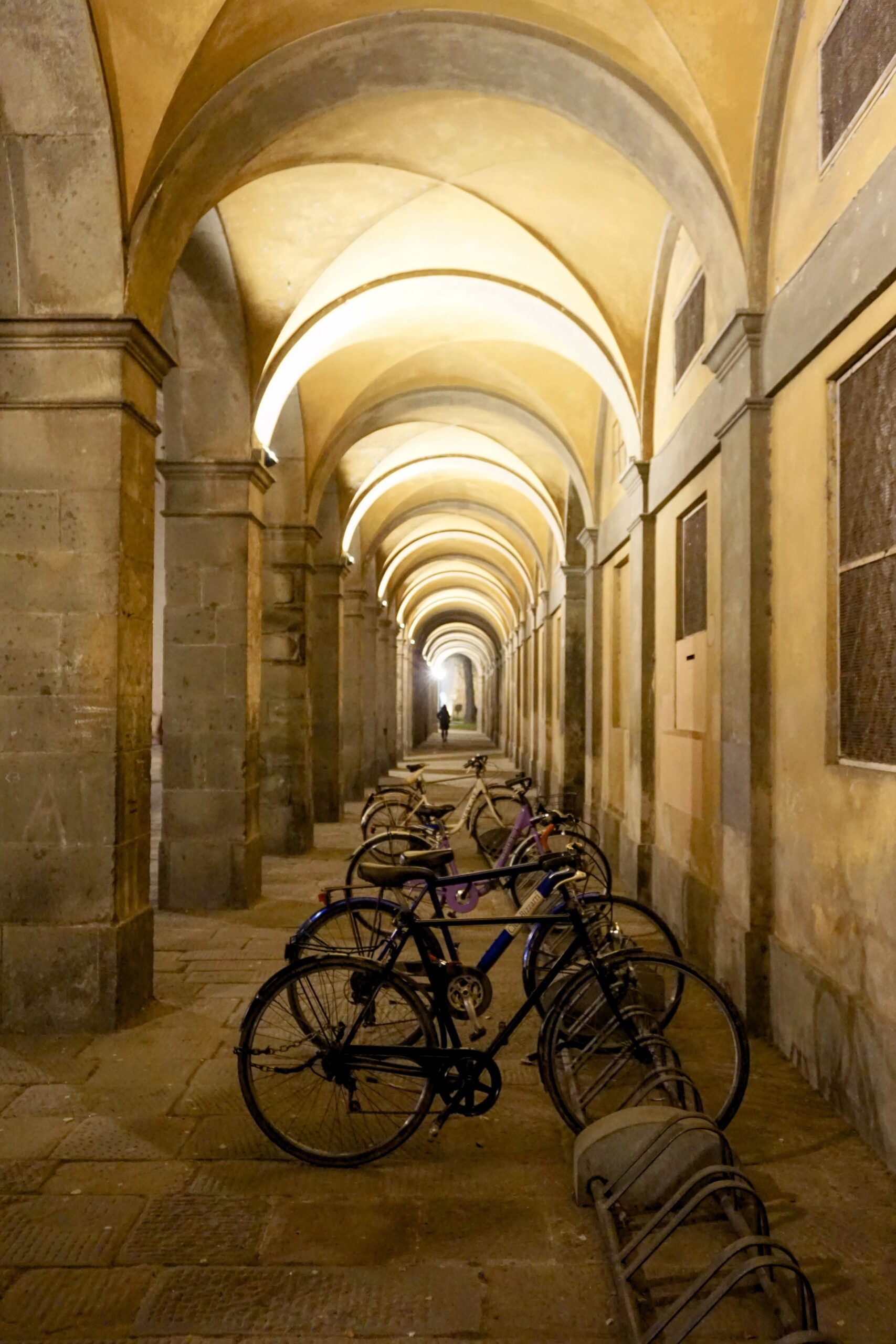
[Aggiungi qui una didascalia per questa foto specifica]
[Chiudi questo paragrafo con un’osservazione personale — cosa dici ai partecipanti quando arrivano in questa piazza, cosa noti tu che spesso i visitatori non notano.]
What this means for how you shoot
Lucca doesn’t reward chasing landmarks in sequence. It rewards choosing one system — the walls, one piazza, one tower view — and letting the light finish the work for you before moving to the next. Fewer stops, more attention at each one, the same principle that applies across Tuscany.
See the Photography Workshop in Tuscany


