Cypress Trees in Tuscany: A History Photographers Never Ask About
The Cypress Came From Somewhere Else
The Tree Everyone Photographs and No One Asks About
Every photographer who comes to Tuscany photographs the cypresses. The tall dark line along a ridge, the pair flanking a farmhouse gate, the solitary tree on a hilltop that has appeared in more images than almost any other single subject in landscape photography. I have photographed them hundreds of times myself, in every season and every light, and for years I photographed them the way most people do — as pure form. Vertical shapes against rolling hills. A compositional device, not a subject with a history of its own.
Then at some point, doing the kind of reading a photographer does when they’ve spent enough winters in one place, I learned something that changed how I frame every cypress I photograph now. The tree is not from here. It never was.
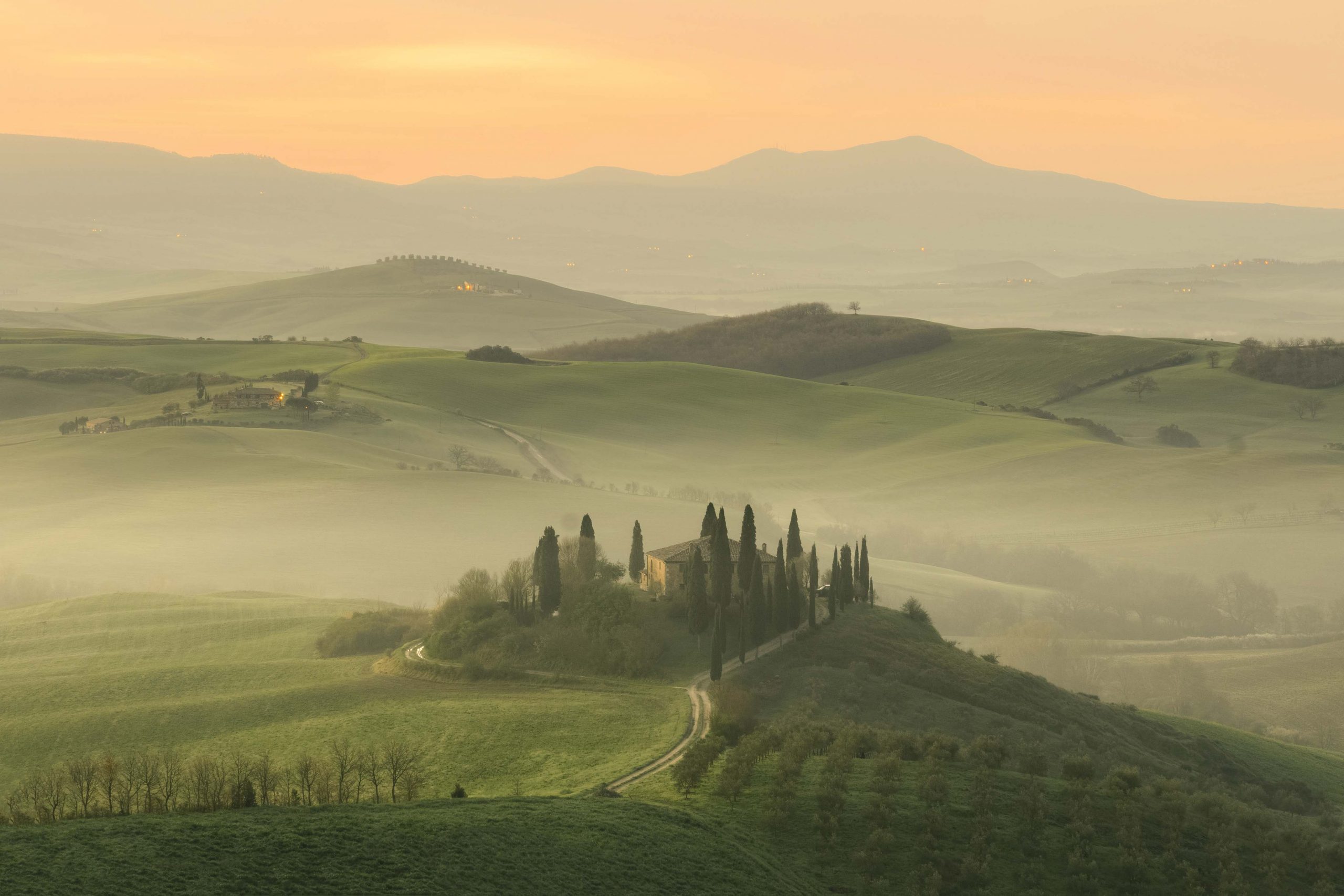 The most Tuscan image imaginable, made from a tree that arrived from thousands of kilometres away
Where the Cypress Actually Comes From
Cupressus sempervirens — the Mediterranean cypress — originates in the eastern Mediterranean and Anatolia, in the region that is now western Turkey and reaches toward Persia. It arrived in Italy carried by Phoenician and Greek traders, and it was the Etruscans — the seafaring civilisation that settled this exact stretch of central Italy nearly three thousand years ago, well before Rome existed as anything more than a village — who planted it here in numbers, first around their tombs, as a symbol connecting the earth to the sky. The Romans continued the practice. The tree that photographs as the very definition of Tuscan identity is, genealogically, an immigrant that has been here so long everyone forgot it came from anywhere at all.
I find this almost impossible to hold in mind while actually standing in front of one with a camera, and that is exactly the point. The image in the viewfinder does not change. The cypress still stands where it stands, still catches the same light at the same hour. What changes is everything around the image — the weight it carries, the questions it quietly raises about what “belonging to a landscape” actually means, the awareness that you are photographing three thousand years of human movement disguised as a tree.
What This Does to the Rest of the Frame
Once you start looking for this, you cannot stop finding it everywhere. The famous cypress-lined avenue outside San Quirico d’Orcia, photographed so many times it has become a kind of visual shorthand for Tuscany itself, is a straight line of the same immigrant tree, planted deliberately in the twentieth century along a private driveway — a designed landscape barely a hundred years old, photographed as if it were eternal. The terracotta of every rooftop in the region carries the same iron-rich clay that has been fired here since the Etruscans, the colour itself a four-thousand-year-old technology before it is ever an aesthetic choice.
None of this shows up directly in a photograph. A camera cannot record migration routes or the age of a driveway. But a photographer who knows these things frames differently, waits differently, chooses differently between two nearly identical compositions — because one of them, almost invisibly, is carrying more of the actual story than the other. This is the argument I keep returning to whenever I lead a photography workshop through Tuscany: technique produces a competent image. Cultural and historical understanding produces one that means something, even if the viewer never learns why.
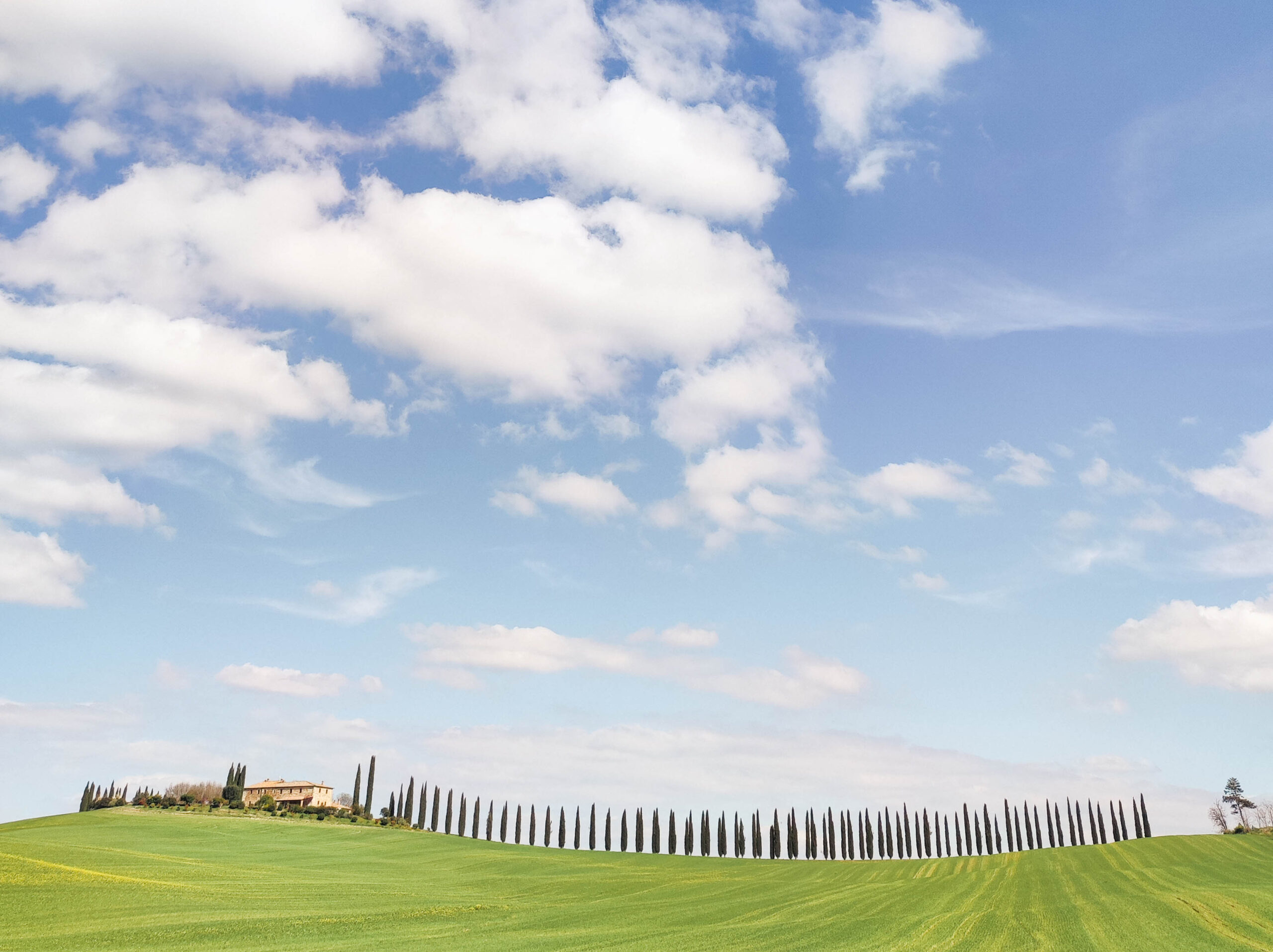
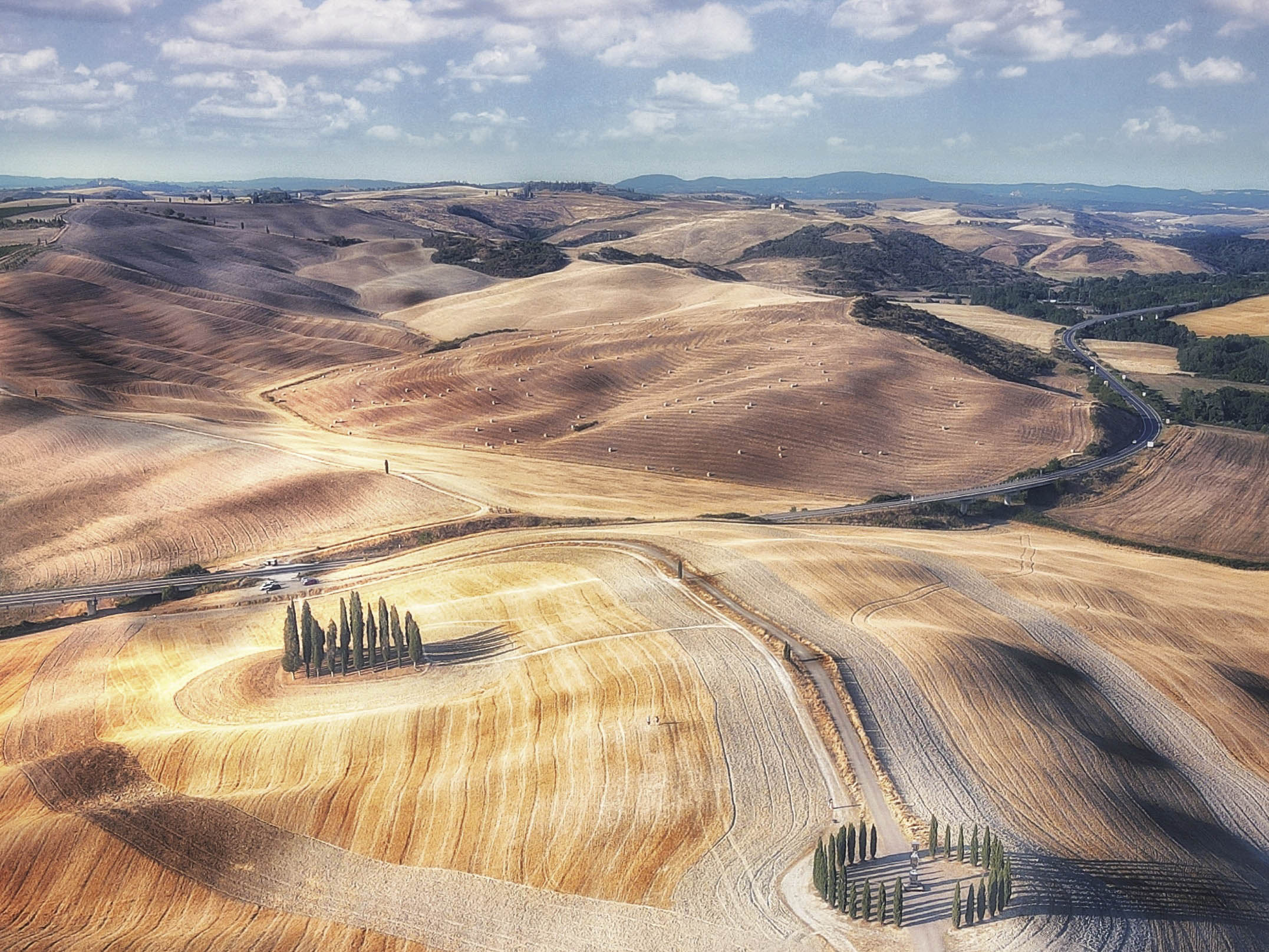 The cypress avenue at San Quirico d’Orcia — a landscape barely a century old, photographed as if it had always been there
A Landscape Is Never Just a Landscape
Landscape photography, more than almost any other genre, tends toward the ahistorical. A mountain, a coastline, a field of cypresses — these read as timeless, as if they simply exist outside of human events, waiting to be composed. It is one of the genre’s most persistent and least examined assumptions, and I think it is almost always false. The crete senesi, the bare clay hills south of Siena that photograph like something closer to the moon than to Italy, are bare precisely because centuries of agriculture stripped away the topsoil — the “otherworldly” landscape every photographer chases at dawn is, in fact, a record of erosion and land use going back to the Middle Ages.
I do not think a viewer needs to know any of this to feel something looking at a strong photograph. But I think the photographer needs to know it, or something like it, for the image to carry the weight it is capable of carrying. The alternative — treating every location as a blank surface for beautiful light to fall on — produces technically accomplished pictures that could, with minor variations, have been taken almost anywhere. History and culture are what make a place refuse to be interchangeable with any other place that happens to have good light that week.
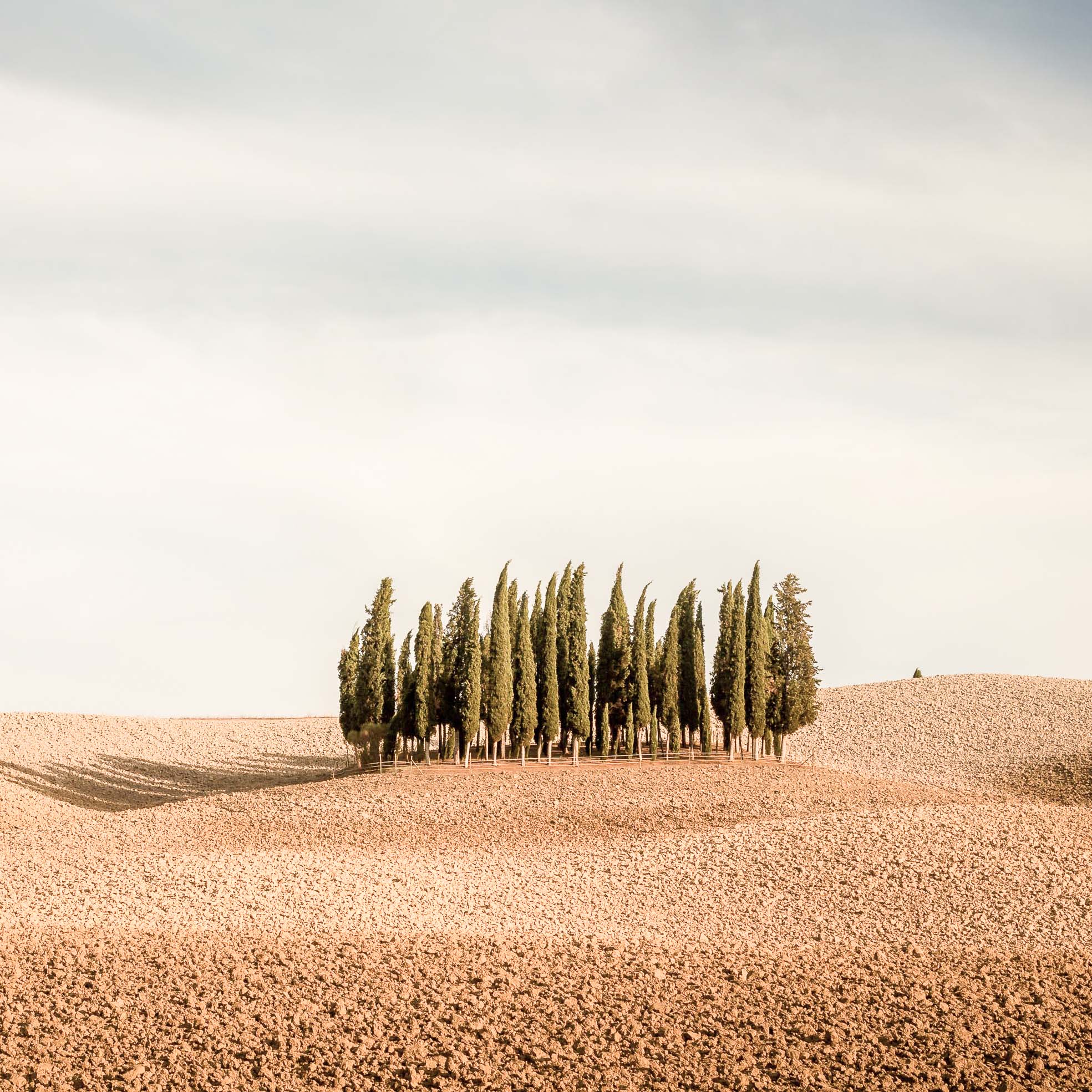
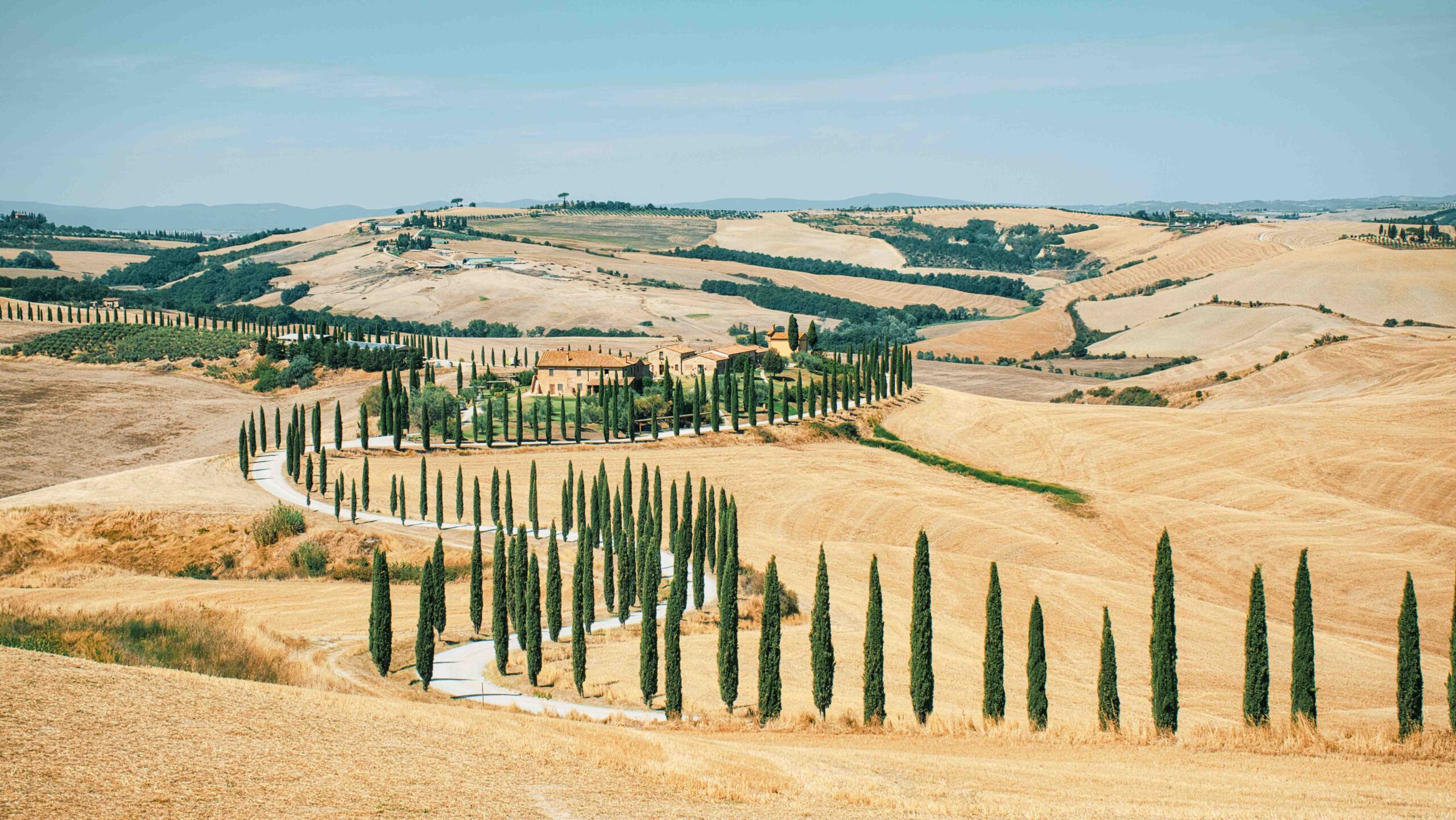 Crete Senesi, near Asciano — a landscape shaped by centuries of agriculture, not geology alone
The cypress is where I always start when I try to explain this to a workshop participant standing in front of one for the first time, camera raised, about to make the photograph everyone makes. I ask them to hold both things at once: the tree exactly as it appears, dark and vertical against the hill, and the three-thousand-year journey that put it there. The photograph does not look any different. But something about how you stand in front of it does.
The tree everyone photographs as the definition of Tuscany has never, in three thousand years, stopped being a visitor.
Tuscany Photography Workshop