Favorite spot to photograph in Tuscany
My Favorite Photography Spots in Tuscany
After fifteen years photographing Tuscany, these are the locations I return to. Not the places that appear first in every photography guide. The places that keep giving you something new — because the light is different every morning, because the season changes what you see, because a place you’ve visited thirty times can still surprise you at 5:30am on a foggy October morning.
This is not an exhaustive list. It is an honest one. Some of these locations are famous. Some of them almost no one photographs. All of them are part of how I understand Tuscany — and what I bring into my cultural photography tours.
Val d’Orcia — The One Everyone Knows, For Good Reason
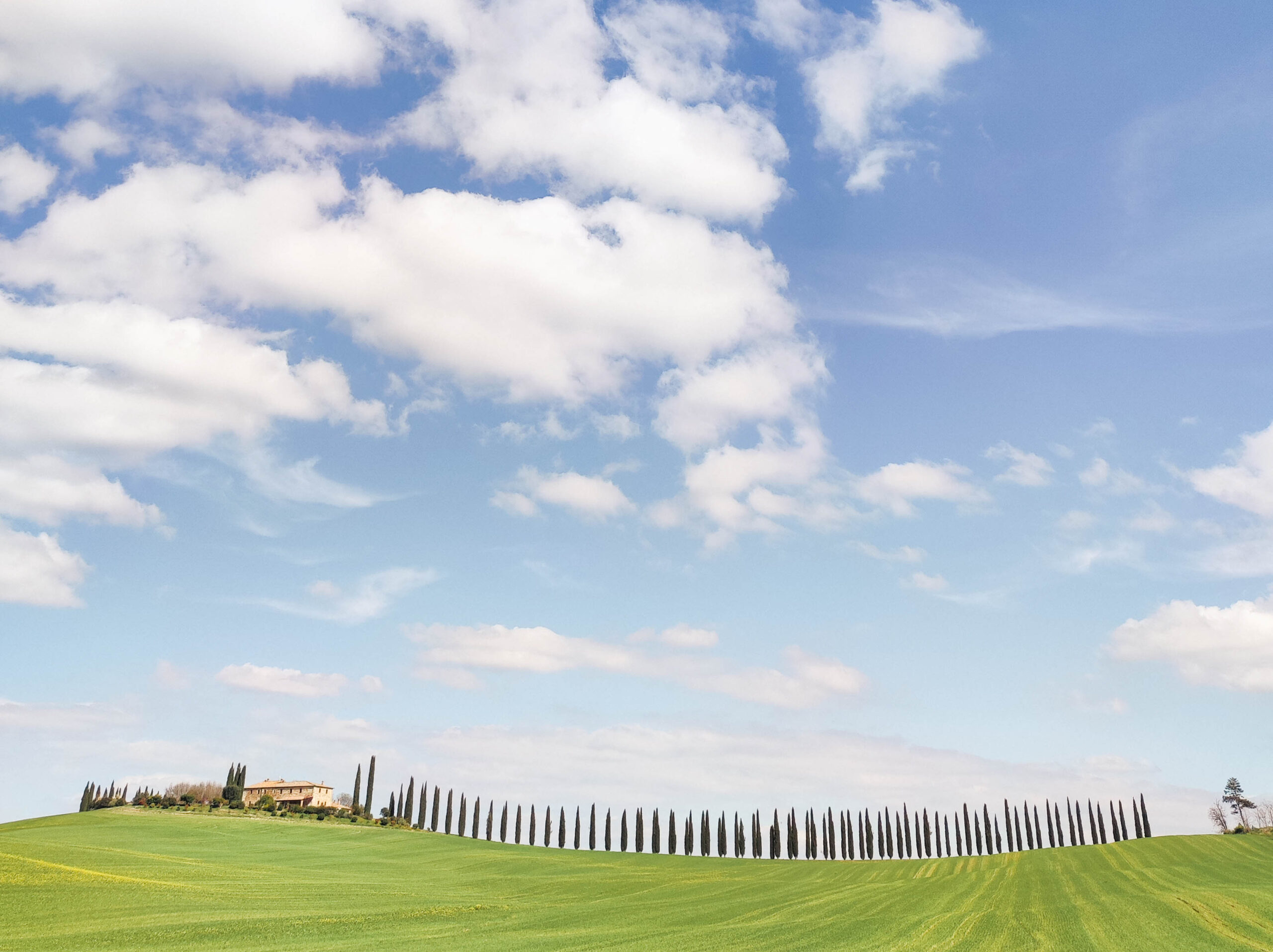
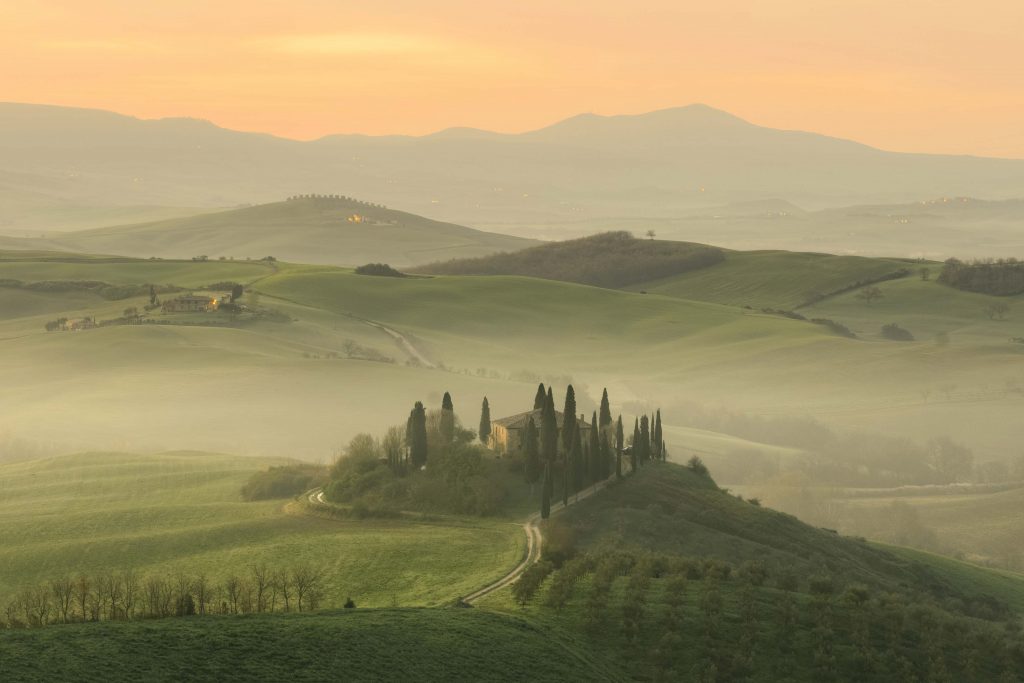
Val d’Orcia is the most photographed landscape in Tuscany. I know that. I still go back because I have never found anywhere else that rewards patience the way this place does. The golden triangle between San Quirico, Pienza and Monticchiello is not about finding the right viewpoint. It is about being there when the fog decides to cooperate — and knowing exactly where to go when it does.
The Belvedere farmhouse, the Cappella di Vitaleta, the cypress road at Poggio Covili. I have photographed them all in every season. The images from October at 6am are categorically different from the images any tourist takes at 10am in July. Same place. Different world.
Crete Senesi — Tuscany’s Most Underrated Landscape
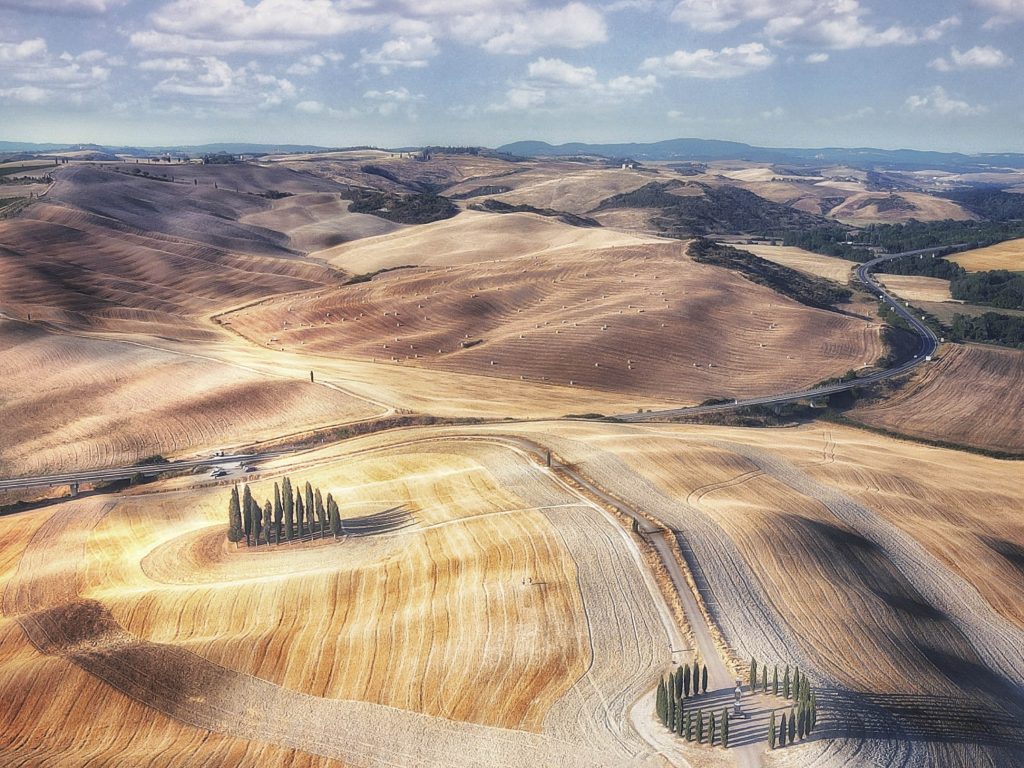
Twenty minutes south of Siena the landscape changes completely. The vineyards and cypress roads of Val d’Orcia give way to something stranger — a territory of soft clay hills, eroded gullies and isolated farmhouses rising from bare earth. The Crete Senesi are older-looking than the rest of Tuscany, as if the land had been worn down to its essential forms.
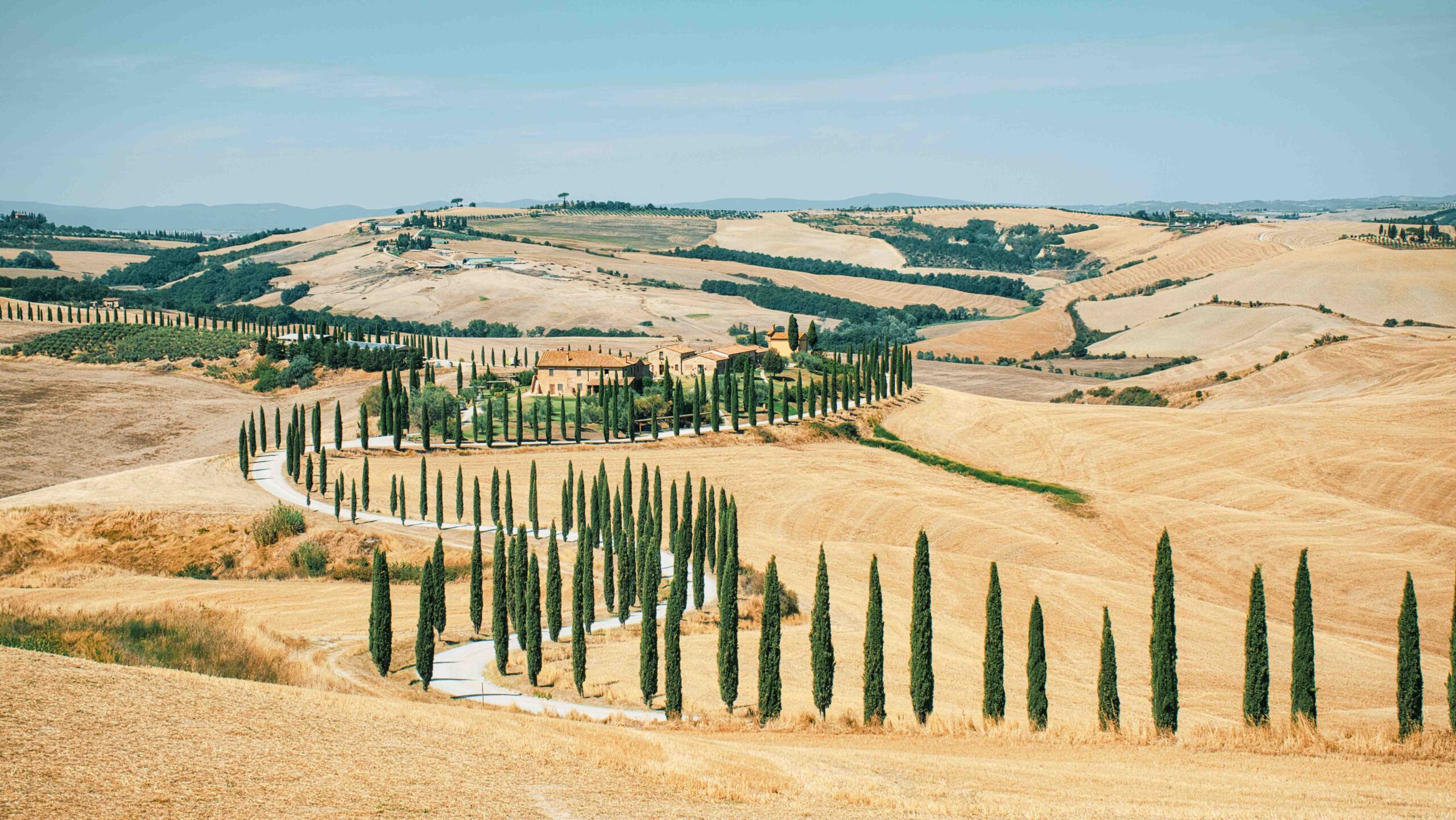
Photographically, this is the opposite of Val d’Orcia. There are no iconic viewpoints. The best images here come from wandering slowly on secondary roads and stopping when the geometry of the hills and the light do something unexpected. The farmhouse of Baccoleno, often photographed from the ground, looks completely different from different distances and at different times of day. The Crete Senesi reward abstraction — thinking in terms of shape, texture and tonal contrast rather than looking for the famous location.
Saturnia — The Dawn Nobody Photographs
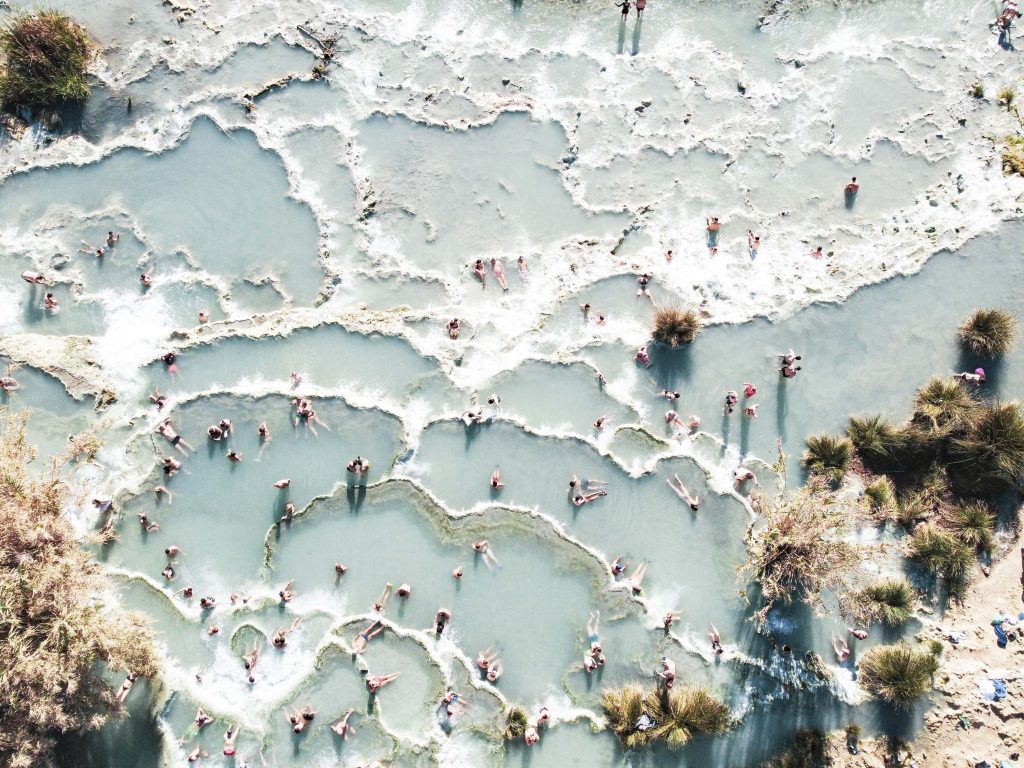
I have a rule about Saturnia: arrive before anyone else. The Cascate del Mulino are thermal waterfalls that cascade through travertine terracing into pools of turquoise water — in any conditions, it is one of the most visually extraordinary places in Tuscany. At 5:30am, before the first visitors arrive, the scene is something else entirely. Steam rises from the warm water into cold morning air. The light comes slowly. The silence is complete.
From the ground the pools create strong geometric compositions — the white travertine terracing, the blue-green water, the steam catching the first light. From a drone above, the cascading pools become an almost abstract pattern of concentric curves and natural color. I have photographed Saturnia in both ways and the images always stop people when I show them. This is a location that almost no one photographs well because almost no one arrives at the right time.
The Etruscan Coast — My Actual Favorite
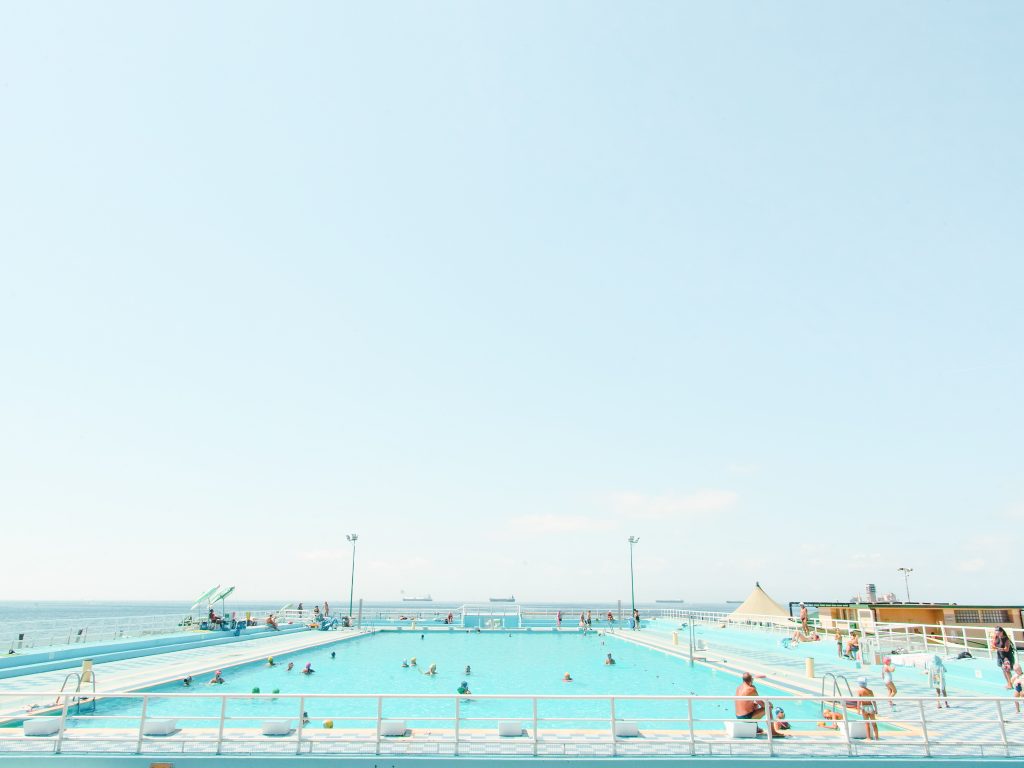
Less known to most photographers, the Etruscan Coast between Livorno and Piombino is one of the places I return to most. The combination of sea light, ancient villages like Bolgheri and Castagneto Carducci, cliffs, vineyards and the echoes of Etruscan civilization creates something that resists easy categorization. It is not purely landscape. It is not purely cultural. It is coastal light meeting deep history — and the photographs you make here look like nothing else from Tuscany.
The Apuane Alps and Carrara Marble Quarries
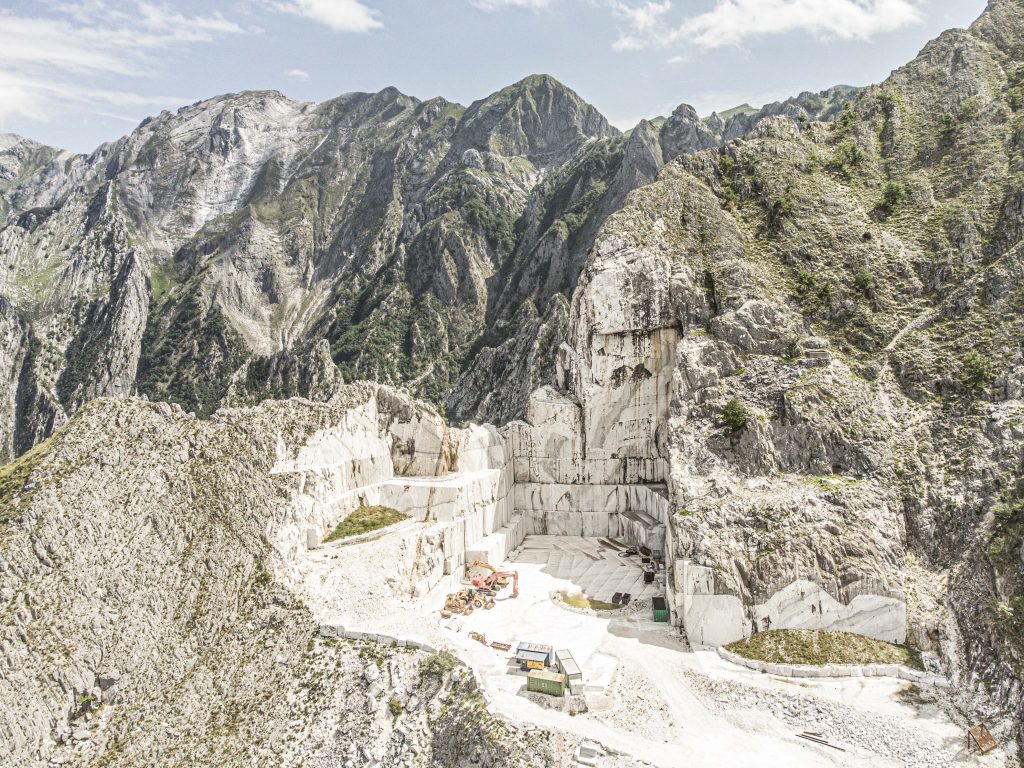
Known by artists since Roman times, less known by photographers. The Apuane Alps in northwestern Tuscany are a breathtaking mountain range of rugged peaks, dramatic cliffs and the marble quarries that Michelangelo visited to select the stone for the David. The quarries above Carrara are particularly extraordinary — white marble against blue sky, enormous scale, industrial machinery contrasting with geological time. I have photographed them from the ground and from the air with a drone. Both produce images that stop people mid-scroll.
Chianti — The Hidden Everyday Beauty
Chianti is not one dramatic location. It is an entire territory of winding roads, vineyard-covered hills, stone villages and cypress-lined driveways. The difference between Chianti and Val d’Orcia is the difference between a portrait and a landscape. Chianti rewards wandering — taking a smaller road without a destination, stopping when the vineyard rows catch the light at exactly the right angle. Greve, Radda, Castellina, Panzano, Volpaia — each has a different character.
Florence — Where I Started
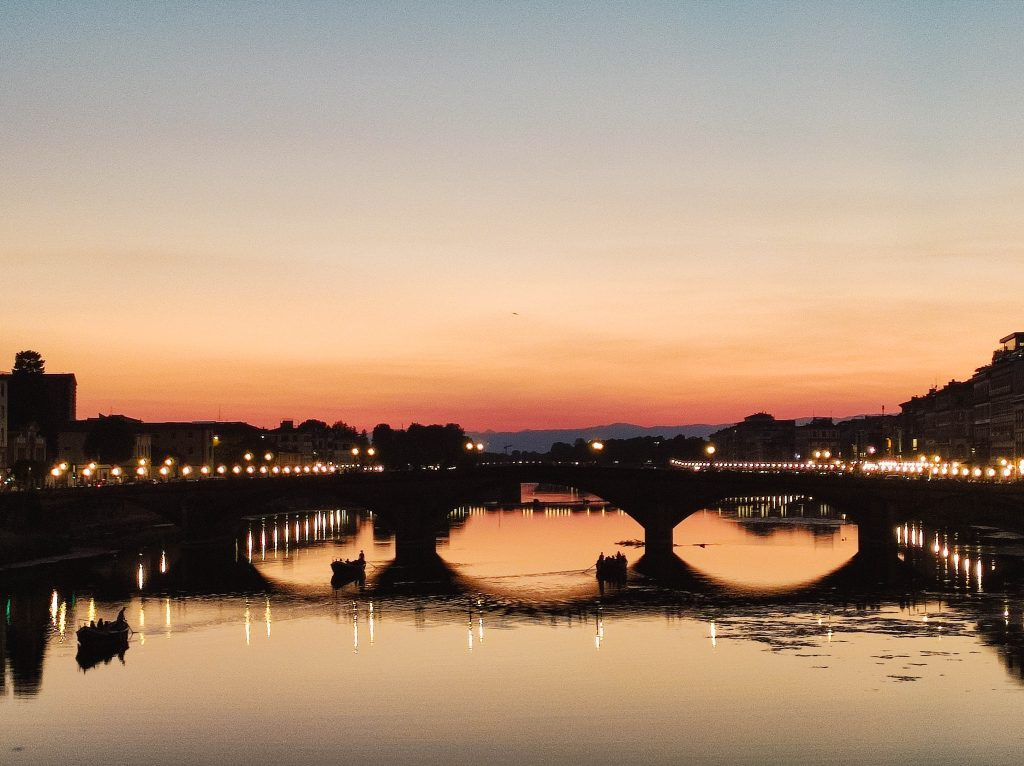
Florence is where I learned to photograph. Not at school — wandering. I know the specific quality of light on the Lungarno at 6am in November. I know which alley in Oltrarno catches the raking morning light in winter. I know where to stand on Ponte Santa Trinita to eliminate every tourist from the frame. A city you grow up in teaches you things a guidebook cannot. Some of the work now exhibited in my US galleries began here, on these streets, at these hours.
Join a private cultural photography
tour in Tuscany
Local guide. Max 4 photographers. Val d’Orcia, Crete Senesi, Saturnia, Chianti, Florence and more. Food and wine encounters included.
Exhibited in three US galleries
Limited edition prints on plexiglass — hand signed & numbered — edition of 10
The Hamptons, NY
Palm Beach, FL
Moving to Miami
Photography Expeditions
- Algarve & LisbonJune 10–16
- TuscanyOn request
- BrittanySeptember
- SicilyMid October
- RajasthanNovember
- KeralaJanuary
- CambodiaFebruary
Limited Editions
Printed on plexiglass. Hand-signed, numbered, certificate of authenticity. Edition of 10 per image. Available from the studio or through the three US galleries.
Raffaele Ferrari
Visual artist based in Tuscany. Trained in psychology. Fifteen years of expeditions across Italy, Europe and Asia. Exhibited in three US galleries.
“I travel to understand. The camera is how I show you what I found.”




3 Comments