Do You Still Find Joy in It?
Do You Still Find Joy in It?
A Question About Joy in Photography
During my last trip to Bangkok I met an old friend — a war photographer, a documentarian, a man whose images have been published across the world and recognised more than once by World Press Photo. We hadn’t seen each other in years. We ended up, as we always do, walking through Chinatown in the early evening, and within minutes, without either of us saying anything about it, our cameras were out.
Yaowarat at dusk does that to people. The gold shops lighting up one by one. The smoke from the street kitchens catching the last orange light before it disappears behind the shophouses. Neither of us was working — there was no assignment, no client, nothing to deliver. We were simply two photographers who happened to be standing in one of the most photogenic streets in the world, doing what we have both done for most of our adult lives.
Somewhere between the second and third roll of film, I asked him something I hadn’t planned to ask. It came out before I had decided to say it, the way honest questions sometimes do.
“Do you still find joy in it?”
I wasn’t asking casually. I had been carrying the question myself for months, quietly, the way you carry something you haven’t told anyone about. Years into this work — the travel, the workshops, the fine art prints, the constant looking — I had started to wonder whether the pleasure was still there, or whether it had been slowly replaced by something more like competence. Doing the job well without feeling the thing that made me start doing it in the first place.
My friend has spent more time in this particular stretch of the city than almost anywhere else he photographs, and it shows in how he moves through it — unhurried, half-distracted, as though he isn’t looking for anything and therefore sees everything. I have written elsewhere about what that kind of sustained, returning attention to Bangkok’s Chinatown actually demands of a photographer — it is not a place that rewards a single afternoon, and he is proof of what accumulates when you give it years instead.
An Answer That Wasn’t Really an Answer
He said it plainly, almost surprised by the question itself, and then lifted his Hasselblad toward the strip of sky still visible between the buildings — not framing anything in particular, just the gesture of a man checking the light out of instinct, the way you check your watch without needing to know the time.
 Yaowarat Road, before six in the morning — the hour neither of us mentioned that evening, but both of us know
I have thought about that answer more than almost anything said to me this year. Not because it resolved my doubt — it didn’t, not directly — but because of what it revealed about a different way of relating to a life’s work. He has photographed genocide, war, the aftermath of things most people are grateful never to witness. He has every reason, more than most, to have grown tired, cynical, or simply numb to the act of pointing a camera at the world. And yet the question of whether he still enjoyed it had never once occurred to him. Not because the answer was obviously yes. Because the question itself assumed a separation — between the self and the work — that he had never made.
I trained in psychology before I trained a lens on anything, and I recognise the shape of what he was describing, even if he would never put it in those terms. There is a difference between doing something because it brings you joy, and doing something because it is how you exist in the world. The first is fragile — it depends on the work continuing to deliver a feeling, and feelings are unreliable, seasonal, easily worn down by repetition. The second doesn’t ask to be enjoyed. It simply continues, the way breathing continues, whether or not you notice it that day.
I don’t think this makes joy irrelevant. I still want to feel it, and most days, when the light does something unexpected over a market or a coastline, I do. But I left Chinatown that evening with a slightly different question than the one I had arrived with. Not “do I still enjoy this,” but something closer to: is this simply what I am, regardless of what it gives me back that day?
 Chinatown, dawn — the light that only shows up if you’re already there waiting for it
What Chinatown Taught Me About the Joy of Photography
It is the question I find myself circling back to whenever a workshop participant asks, halfway through a long day of shooting in difficult light, whether the joy of photography ever stops feeling hard to hold onto. I used to answer with something reassuring about passion and patience. Now I tell them what my friend told me, more or less: stop asking whether you love it today. Ask whether it is simply what you do — and let the joy of photography arrive, or not, as its own separate weather.
He also reminded me, without meaning to, why the timing of a trip to this country matters so much less than people assume once you shift your attention from the calendar to the hour. I have written at length about when the light in Thailand actually rewards a photographer, and Chinatown at dawn is one of the clearest proofs of it — season matters far less than simply being there before the city decides to wake up.
Later that same trip, further south, I found myself thinking about him again in a small fishing town near the Malaysian border — the kind of place that never makes it onto anyone’s itinerary. I wrote about Songkhla and what it means to photograph a place tourists never reach, and I think it belongs in the same conversation as that evening in Chinatown: both are really about the same discipline, just practised in different light.
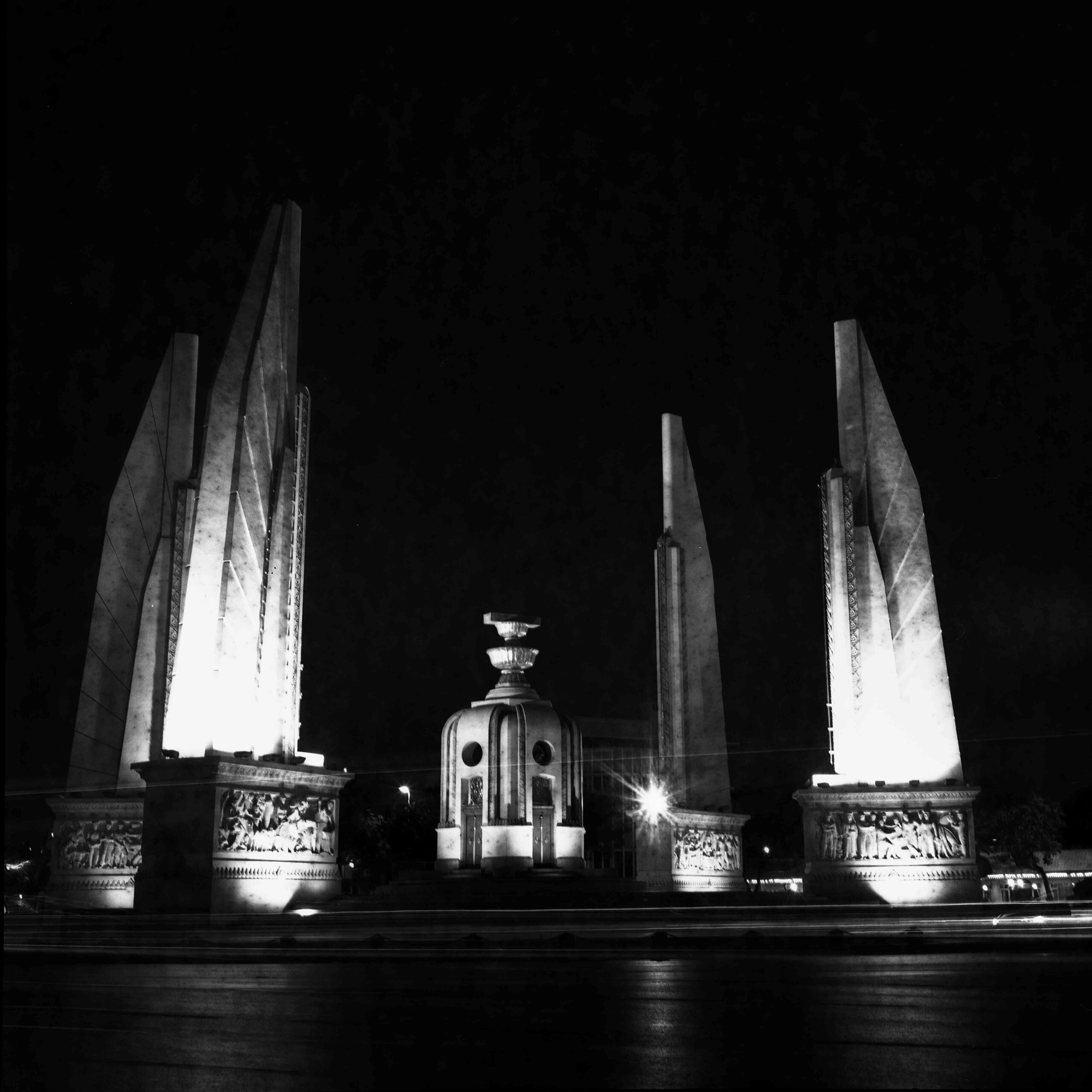 Songkhla, southern Thailand — the same discipline, a different coastline
Some of the conversations that matter most happen far from any camera at all — in this case, a question about joy in photography, asked in Chinatown, at dusk, with an old friend and a Hasselblad pointed at nothing in particular.
The Soul of Thailand Workshop


