Photograph Angkor Wat
Journal · Cambodia · Photography Guide
Photograph Angkor Wat:
Beyond the Sunrise Postcard
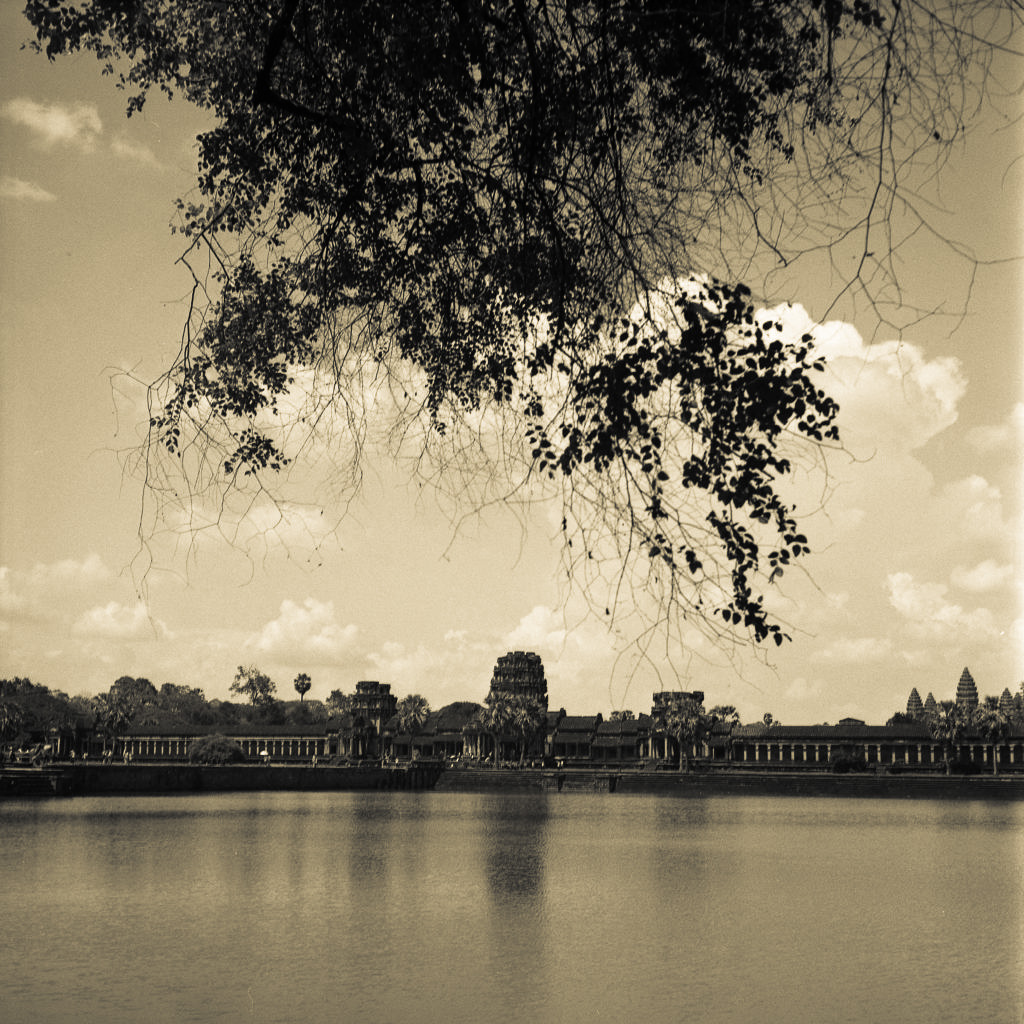
Every photographer who visits Angkor Wat photographs the sunrise. The image is famous before it is made — the five towers of the main temple reflected in the north moat, the sky moving from black to purple to orange behind the silhouette, the crowd of photographers arranged along the moat edge in the darkness before the light arrives. It is a genuinely beautiful photograph. It is also the photograph that ten thousand people make every morning.
The question worth asking is not how to photograph Angkor Wat at sunrise. The question is what to do for the rest of the day — and for the two days after that. Because the sunrise is the beginning of a three-day photography project, not its entirety. And the photographs worth keeping from Angkor are almost never the ones made at the moat.
Angkor Wat is one of the most extraordinary archaeological sites in the world. It is also one of the most thoroughly photographed. The original image — the one that communicates something about the place rather than simply confirming what everyone already knows it looks like — is almost always made away from the canonical viewpoint, at an unexpected hour, from an unexpected position.
Three days in Cambodia.
Angkor at sunrise. The life around it. The final portfolio.
The Soul of Thailand workshop combines five days in Bangkok with three days in Cambodia — including pre-dawn access to Angkor Wat and the documentary photography of the Siem Reap community. Maximum 6 photographers. €3,000.
Discover the Workshop →
The Sunrise — How to Make It Your Own
The sunrise at Angkor Wat is worth photographing. The reflection in the moat is genuinely beautiful, and on the mornings when the sky produces the right combination of cloud and clear — a thin layer of cloud that catches the colour without blocking it — the image available is extraordinary. The challenge is making a version of it that is yours.
Position matters more than equipment. The canonical position — the north reflecting pool, facing the temple — produces the canonical image. Moving along the moat to an off-centre position, finding an angle from which the towers have a different relationship to each other, incorporating a foreground element (the lotus flowers that grow at the moat edge, the figures of the monks who pass through the site at dawn) — these choices produce a version of the sunrise that is yours rather than the version that belongs to everyone who has stood in the same position.
Arrive ninety minutes before sunrise. This is not comfortable. It is necessary. The quality of the pre-dawn blue light on the stone of the causeway, in the thirty minutes before the sky begins to colour, is one of the most extraordinary light conditions at Angkor — and it is available only to the photographer who is already in position when it arrives.
The Inner Temple — After the Sunrise Crowd Leaves
By 8am, the majority of the photographers who arrived for sunrise have left. The tour buses begin arriving at 8:30. Between 8am and 9am — after the sunrise crowd and before the tour buses — the inner temple of Angkor Wat is almost empty. The galleries, the bas-reliefs, the central sanctuary with its view over the moat — all of this is accessible at a pace and in a quality of light that the crowded midday version cannot approach.
The gallery of bas-reliefs — 800 metres of carved narrative stretching around the inner courtyard — is one of the most extraordinary documentary photography subjects at Angkor. The raking light of the early morning, arriving at a low angle through the gallery openings, illuminates the carved stone in a way that the overhead light of midday destroys. These are not tourist photographs. They are documentary records of one of the great artistic achievements of the ancient world.

Bayon, Angkor Archaeological Park, Cambodia · © Raffaele Ferrari
Beyond Angkor Wat — The Larger Archaeological Complex
The Angkor Archaeological Park contains more than a thousand temples across an area of 400 square kilometres. Angkor Wat is the largest and most famous. It is not, for a photographer, necessarily the most interesting.
Bayon — The Face Temple
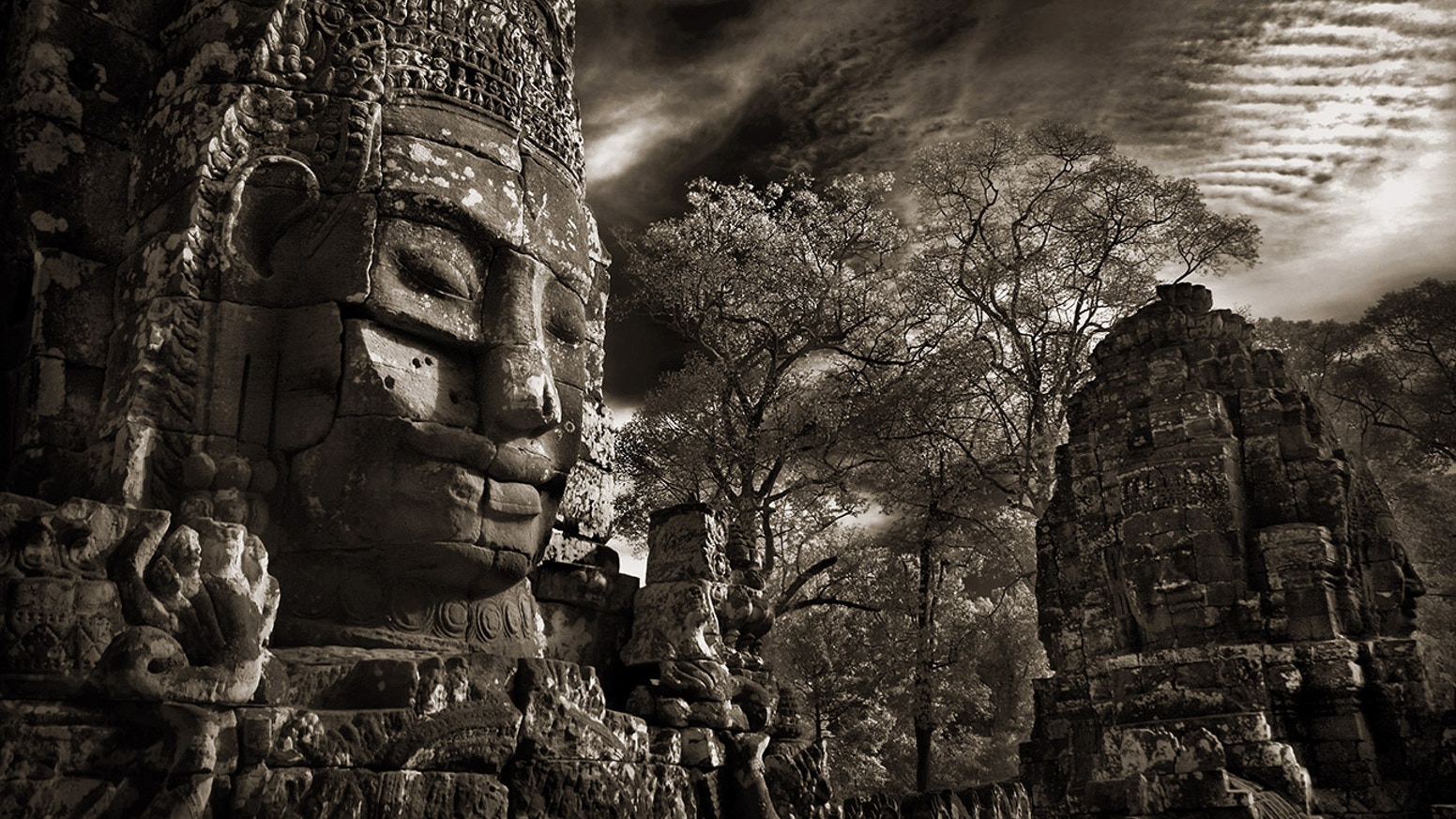
The Bayon, at the centre of Angkor Thom, is in many respects a more interesting photography subject than Angkor Wat. The 216 massive stone faces — carved on the towers of the temple, looking in four directions simultaneously — produce a visual environment unlike anything else in the world. The faces in the early morning light, emerging from the stone with the sun arriving from the east and casting deep shadows in the carved features, are one of the most extraordinary photography subjects I have worked with anywhere.
The Bayon also attracts significantly fewer photographers than Angkor Wat, which makes genuinely original work more accessible. Arriving at the Bayon for sunrise — rather than at the more famous temple — produces conditions of light, emptiness and visual intensity that the Angkor Wat sunrise crowd cannot offer.
Ta Prohm — The Tree Temple
Ta Prohm, Angkor, Cambodia · © Raffaele Ferrari
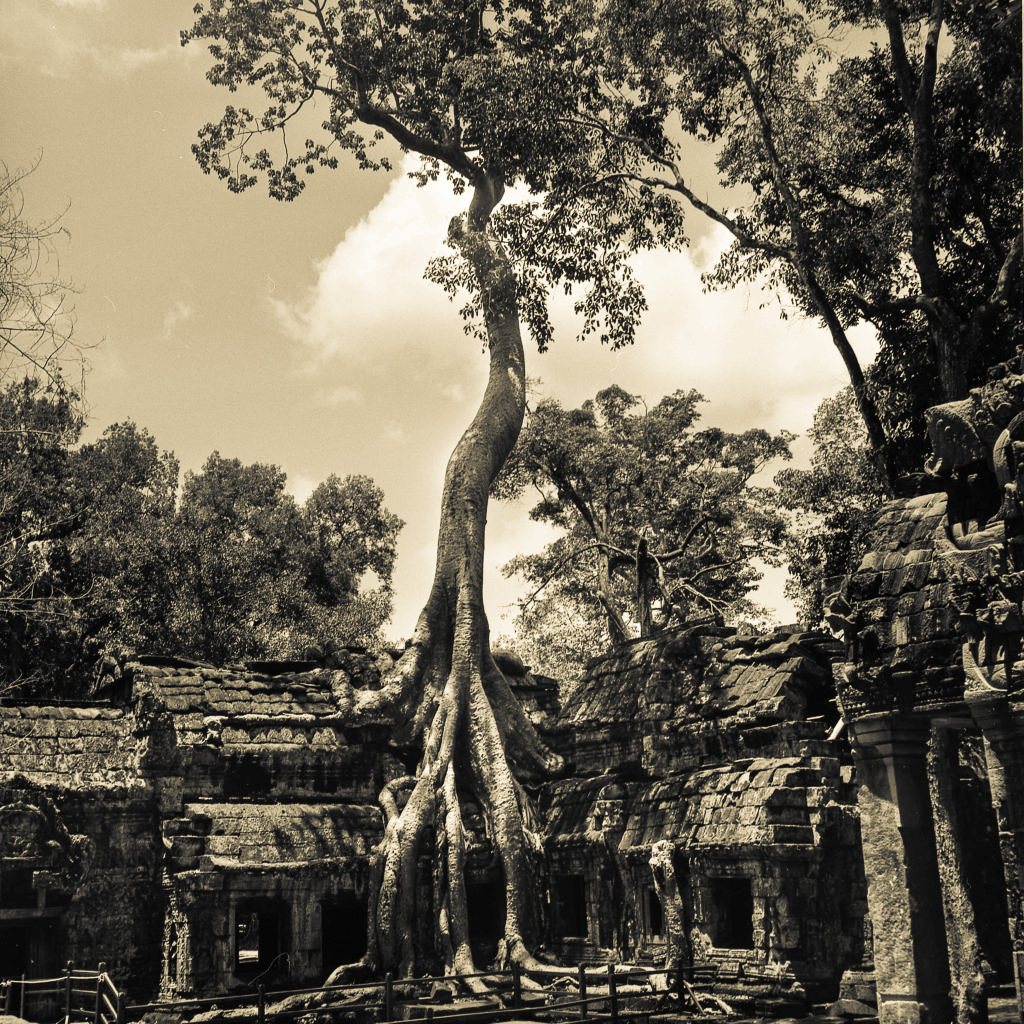
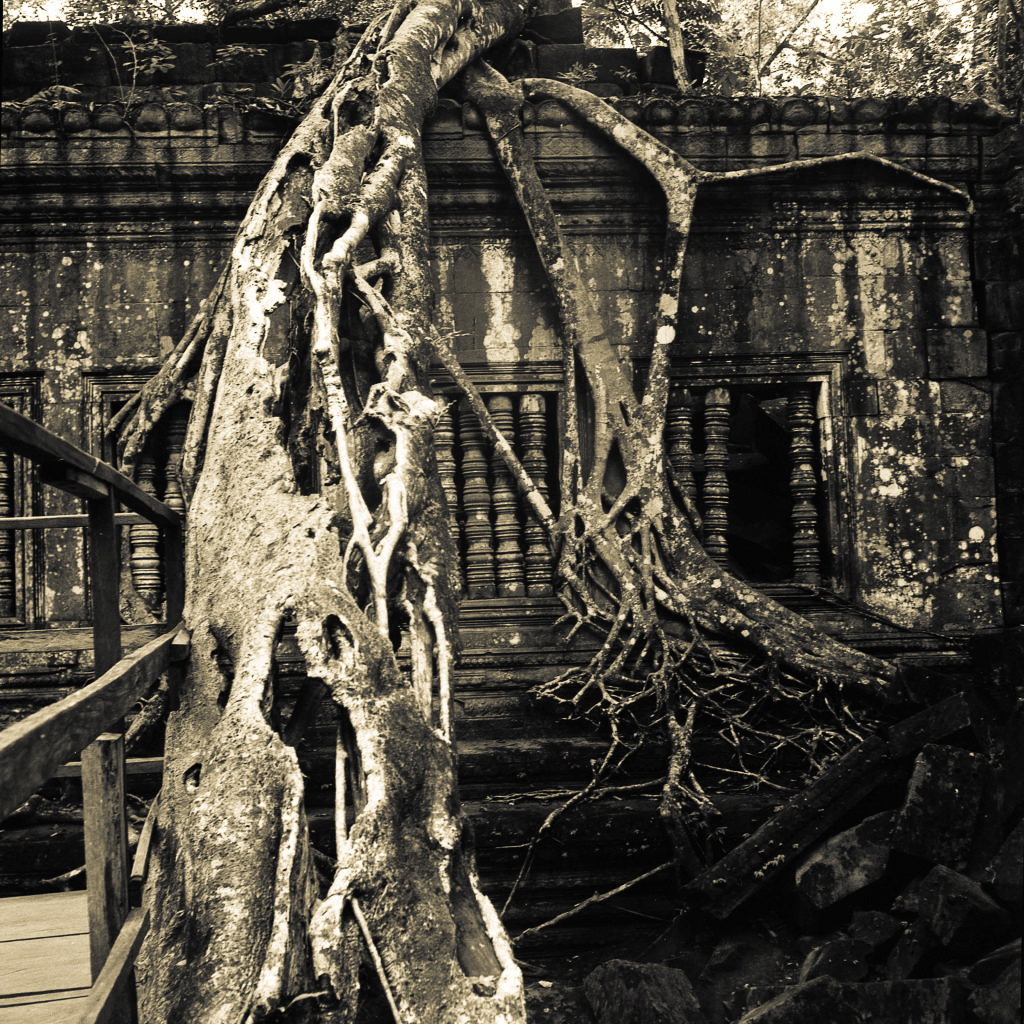
Ta Prohm is famous for the strangler fig trees that have grown through and over the temple structures over centuries, their roots embracing the stones in a visual relationship between nature and architecture that is genuinely unique. It is heavily visited and has been since the Tomb Raider films brought it to international attention. Photographing it originally requires arriving at opening time — 5:30am — and working the half-hour before the first tour groups arrive.
The Life Around Angkor — The More Important Subject
The most documentary-rich photography at Angkor is not inside the temples. It is in the communities that surround them — the villages that have existed alongside the ruins for centuries, the monks who use the temples as living religious spaces rather than tourist attractions, the daily market life of Siem Reap that operates according to its own rhythm regardless of the thousands of visitors passing through.
The Soul of Thailand workshop structures the Cambodia section around this principle: Angkor Wat at sunrise on the first morning, then two full days of documentary photography in the community life around the temples — the local market at pre-dawn, the villages along the road to Angkor, the floating communities of the Tonlé Sap lake. This is the photography that the temple-only itinerary misses entirely.
The Tonlé Sap — The Floating Villages
Angkor Archaeological Park, Cambodia · © Raffaele Ferrari
The Tonlé Sap lake, twenty kilometres from Siem Reap, is home to a population of floating villages — communities that live entirely on the water, their houses, schools and churches all built on floating platforms that rise and fall with the seasonal changes in the lake level. The visual character of these communities is completely unlike anything at Angkor — it is documentary photography of contemporary life rather than archaeological photography of ancient structures, and it requires a completely different approach: proximity, patience, genuine curiosity about the people rather than the visual effect.
Angkor at pre-dawn.
The Bayon in the first light.
The market at 4am in Siem Reap.
The floating villages at the hour when the lake is still.
This is what three days in Cambodia can produce.
Angkor Thom, Cambodia · © Raffaele Ferrari
When to Photograph Angkor
January is the optimal month — the dry season at its peak, the air clear after the monsoon, the light at dawn arriving at the low angle that produces the most extraordinary conditions on the stone of the temples. The January light at Angkor has a quality that the wet-season months cannot produce: clean, warm, arriving at exactly the angle that illuminates the bas-reliefs and the carved stone faces with the raking light that reveals their depth.
The wet season (June-October) offers dramatically different conditions — the jungle around the temples is fully green and intensely alive, the stone acquires a quality of dark saturation that the dry season removes, and the atmospheric conditions occasionally produce extraordinary light before and after the afternoon storms. For photographers willing to work in rain and humidity, the wet-season Angkor offers images unavailable in any other month.
The combination of Bangkok in January and Cambodia in the same trip — which is the structure of the Soul of Thailand workshop — produces the optimal conditions for both destinations simultaneously.
Five days in Bangkok.
Three days in Cambodia. Angkor at sunrise.
The documentary photography of Bangkok and Cambodia combined in ten days. Flower market at 2am, canal communities, Angkor at sunrise, Tonlé Sap floating villages. Maximum 6 photographers. Accommodation included. €3,000.
Discover the Soul of Thailand →
Continue reading:
Soul of Thailand Photography Workshop ·
Thailand Photography Guide ·
Documentary Photography in Bangkok Chinatown ·
Best Time to Photograph Thailand ·
Vietnam Photography Guide ·
Documentary Photography in Southeast Asia ·
All Photography Workshops
Angkor is one chapter — here is the full journey
Documentary Photography in Bangkok Chinatown — the five days that precede Cambodia
Thailand Photography Guide — the complete approach to the country
Best Time to Photograph Thailand — why January is optimal for Bangkok and Cambodia
Documentary Photography in Southeast Asia — the wider regional methodology
Stories of Vietnam — March 2027 — the natural continuation after Thailand and Cambodia


