Best Time to Photograph Thailand — A Visual Artist’s Guide
Journal · Thailand · Photography Guide
Best Time to Photograph Thailand:
A Visual Artist’s Honest Guide
The best time to photograph Thailand depends on what you want to photograph, where in the country you are going and — this is the answer that most guides avoid — what relationship you are willing to have with the light.
Most advice on when to visit Thailand is written for tourists. It weighs weather comfort, beach conditions and festival schedules. This guide is written for photographers. It weighs light quality, crowd density, atmospheric conditions and the specific visual opportunities that each season offers — not for the general visitor but for someone who wants to come home with images that communicate something.
The best time to photograph Thailand is not the most comfortable time to visit it. These two things are related but not identical — and understanding the difference is the beginning of better travel photography.
I have been returning to Thailand every winter for more than ten years. What follows is what I have actually learned about the light, the seasons and the visual opportunities available at different times of year — not from a single visit, but from the accumulation of many.
Thailand Photography by Season — Quick Overview
Nov — Feb
Dry season. Clear air, low light angle, excellent for Bangkok, Ayutthaya and Cambodia extension.
Mar — Apr
End of dry season. Heat haze begins. Strong light. Songkran in April — extraordinary documentary subject.
May — Sep
Monsoon. Dramatic clouds, rain, green landscapes. Difficult but rewarding for the prepared photographer.
Oct — Nov
Monsoon ending. Loi Krathong in November — the most photogenic festival in Thailand.
January — the best month for photography
in Thailand and Cambodia.
Bangkok flower market at 2am, canal communities, monks at dawn, Angkor at sunrise. Maximum 6 photographers. Individual mentoring. Accommodation included. €3,000.
Discover the Workshop →
The Dry Season — November to February
The dry season in Thailand is the most consistently productive period for photography — and within it, January and February are the strongest months. The monsoon has fully withdrawn by November. The air clears progressively through December. By January the atmosphere over Bangkok has the kind of clarity that produces extraordinary light at both ends of the day — the pre-dawn blue hour arrives clean and luminous, and the golden hour before sunset has a quality specific to Southeast Asia in the dry season: warm, directional, arriving at a lower angle than the same hour in the European summer.
November — Loi Krathong and the End of the Monsoon
November opens with Loi Krathong — the festival of floating lanterns, celebrated on the full moon of the twelfth lunar month. Across Thailand, people release krathong (small decorated floats) on rivers and lakes, and in Chiang Mai the sky is filled with khom loi (paper lanterns) released simultaneously at the moment of the full moon. The visual scale of this event is extraordinary — the sky above Chiang Mai at the peak of Yi Peng is genuinely one of the most spectacular things I have seen anywhere in the world. For a photographer it presents enormous challenges: the exposure conditions are extreme, the crowd density makes movement difficult, and the standard images of the festival are so widely distributed that making a genuinely original photograph requires real thought about position and approach.
The more interesting Yi Peng photographs are not of the sky full of lanterns but of the people releasing them — the faces illuminated by the flame of the lantern in the moment before release, the family groups on the riverbank, the monks performing the ceremony in the temple courtyard.
December — The Month Most Photographers Skip
December in Thailand is treated by most Western photographers as a gap month — the low season between the festivals of November and the strongest dry-season conditions of January and February. This is a mistake. The light in December in Thailand — particularly in the north, around Chiang Mai and Chiang Rai — has a quality that the hotter months cannot produce. The air is clear, the temperatures are manageable for full days on foot, and the tourist pressure at the archaeological sites of Sukhothai and Ayutthaya is significantly lower than in January.
For photographers interested in the hill communities north of Chiang Mai, December is one of the best months to work — the trekking season has not yet fully activated and access to some communities is easier than it will be in January and February.
January — The Best Single Month for Photography in Thailand
January is, in my direct experience, the best single month to photograph Thailand. The dry season is at its peak. The air quality over Bangkok — which in other months can be affected by pollution and humidity — is at its clearest. The light at dawn and dusk has the angle and the quality that produces the strongest images. The tourist crowds at the major archaeological sites are manageable, particularly at Ayutthaya and Sukhothai where the morning light is at its best before the tour buses arrive.
For documentary photography in Bangkok, January is optimal. The flower market at Pak Khlong Talat in January produces conditions that the monsoon months cannot match — clear darkness at 2am, the neon light of the market against a clean sky, the colours of the flowers at their most saturated in the cold early morning air. The canal communities, the Chinatown wholesale markets, the dawn ritual at the temples — all of these subjects are most accessible and most photogenic in January.
January is also the month that allows a natural extension to Cambodia. Angkor Wat in January offers the dry season clarity that the wet months cannot provide — the sunrise reflection in the moat is cleaner, the stone less covered with monsoon growth, the light arriving at exactly the low angle that illuminates the bas-reliefs of the galleries most effectively. The combination of Bangkok and Angkor in a single ten-day expedition is possible and highly productive in January — which is precisely the structure of the Soul of Thailand workshop.
February — The Month Before the Heat
February extends the dry season advantages of January but begins to show the first signs of the heat build-up that will intensify through March and April. The light quality remains excellent. The Thai New Year — Makha Bucha, celebrated in February — is a significant Buddhist festival that produces strong documentary photography material at the temples, particularly at dusk when the candlelit processions circumambulate the central Buddhist monument.
For photographers targeting the north of Thailand — the Golden Triangle, the hill communities, the temples of Chiang Rai — February is excellent. The smoke season that affects northern Thailand from March onward has not yet begun, and the visibility across the mountains is at its clearest.
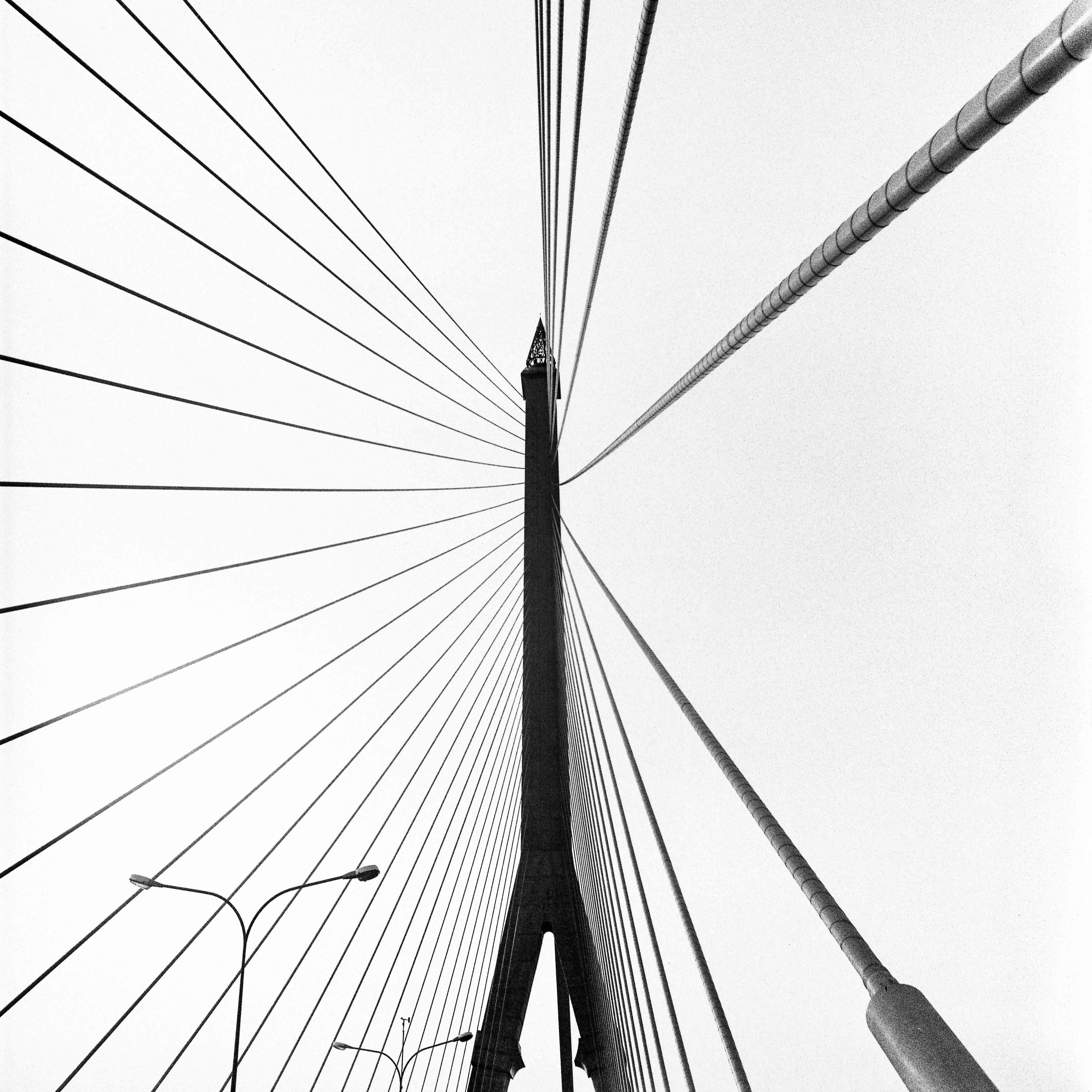
Bangkok, Thailand · Dry season · © Raffaele Ferrari
The Transition Months — March and April
March marks the beginning of the hot season in Thailand. Temperatures rise rapidly through the month, reaching 35-40°C in Bangkok by April. The light quality begins to deteriorate from the extraordinary clarity of January and February — the heat haze builds, the air pollution over Bangkok thickens, and the midday hours become effectively unworkable for serious photography.
What March and April offer that compensates for these difficulties is the end-of-dry-season light quality in the late afternoon and early morning — the golden hours remain excellent, and the increasing heat actually produces some atmospheric effects (heat shimmer, dust in the air) that can be photographically interesting if worked deliberately rather than avoided.
Songkran — April’s Extraordinary Documentary Subject
Songkran, the Thai New Year water festival, falls in mid-April and transforms Bangkok and every other Thai city into one of the most extraordinary documentary photography environments in Southeast Asia. For three to five days, the streets are a continuous water fight — organised, joyful, completely public and involving everyone from children to monks. The light during Songkran in Bangkok is difficult — harsh, overhead, midday — but the human energy and the visual density of the event produce images of a quality impossible at any other time of year.
The challenge of photographing Songkran seriously is protecting equipment from water while remaining mobile enough to work at close range. The photographers who produce the strongest Songkran images work with a single small camera and a single fast prime lens, sealed in a rain cover, and operate entirely on instinct. It is not a situation for deliberate composition.
The Monsoon — May to September
The southwest monsoon arrives in Thailand from May and dominates until September or October. The conventional advice is to avoid Thailand during the monsoon for photography. The conventional advice is wrong — or at least incomplete.
The monsoon does not produce continuous rain. It produces heavy rain in concentrated periods — usually in the late afternoon and evening — with clear or partly clear conditions in the morning and early afternoon. The atmosphere during the monsoon has qualities that the dry season cannot produce: dramatic cloud formations, the particular green of the landscape in full growth, the quality of light that exists immediately before and immediately after a monsoon downpour.
For documentary photography in Bangkok, the monsoon is not significantly more difficult than the dry season — the city operates normally, the markets function, the human life of the streets continues regardless of the weather. The flower market at 2am in the monsoon is a completely different visual environment from the January version: the rain on the corrugated roofs, the traders in ponchos, the flowers glistening under the bare bulbs — different, but not worse.
For landscape photography — particularly in the north and the northeast — the monsoon produces the most lush and green conditions of the year. The rice fields in July and August, fully planted and a shade of green that the dry season cannot match, offer landscape photography material that the January visitor never sees.

Bangkok, Thailand · Dawn · © Raffaele Ferrari
By Region — When the Best Time Varies
Bangkok — Best November to February
Bangkok is a year-round photography destination from a documentary perspective — the city operates at full intensity regardless of the season. But the light quality for pre-dawn and golden-hour work is unquestionably superior in the dry season months of November through February. January is the peak.
Chiang Mai and the North — Best November to February, Avoid March-May
The north of Thailand has two significant seasonal issues beyond the standard monsoon cycle. From February onward, agricultural burning in the region (and across the border in Myanmar and Laos) produces a smoke haze that can reduce visibility dramatically and turn the sky white by mid-morning. March, April and early May can be almost unworkable for landscape photography in the north. November through January is the clear window — before the burning season and after the monsoon.
Ayutthaya and Sukhothai — Best October to February
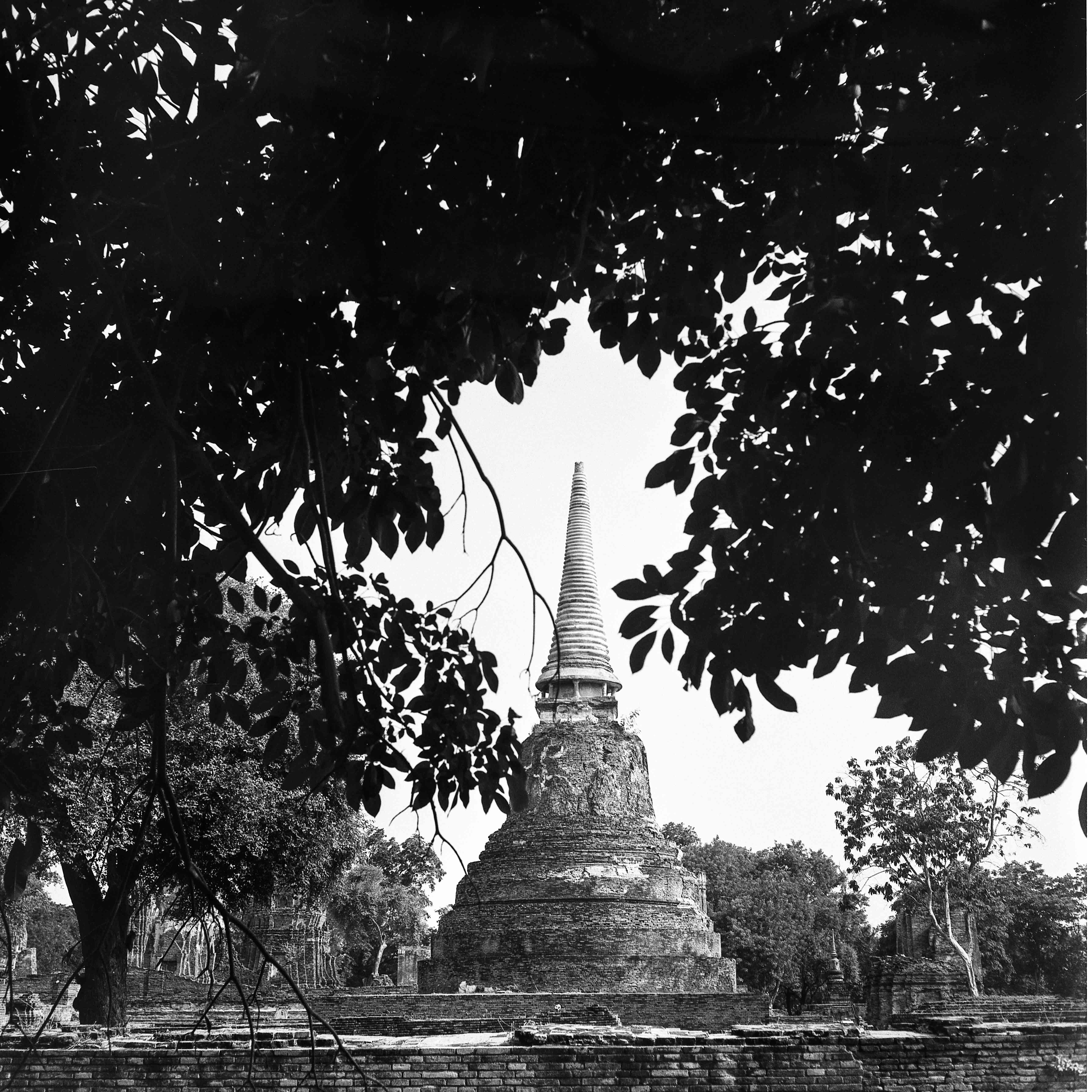
The ancient capitals of Thailand are at their most photogenic in the dry season morning light — the low angle illuminates the stone of the ruined temples and prang towers with the raking light that reveals their texture and form. October and November offer the additional advantage of lower tourist density than the peak months of December and January. The archaeological sites at first light in October — the monsoon just ending, the vegetation still green from the rains, the light arriving at the low angle of autumn — produce images that the January version cannot match exactly.
The Southern Islands — Different Rules Apply
The Gulf of Thailand coast (Koh Samui, Koh Phangan) and the Andaman Sea coast (Phuket, Krabi, Koh Lanta) operate on opposite monsoon cycles. The Gulf coast is best from November to April. The Andaman coast is best from November to April on the west-facing beaches, but the east-facing areas can be good year-round. For photographers specifically, the most interesting coastal light on both coasts is available in November and December — the water is clearest after the monsoon, the beaches are less crowded than January and February, and the light quality is excellent.
The Answer — January, With Context
If I had to identify the single best month to photograph Thailand — for Bangkok documentary work, for the ancient capitals, for a natural extension to Cambodia — the answer is January. Clear air, optimal light angle at dawn and dusk, comfortable working temperatures, the city at full operational intensity without the festival crowds of November or the heat of March.
But the honest answer is more nuanced. November offers Loi Krathong. April offers Songkran. The monsoon offers a completely different Thailand that the dry-season visitor never photographs. December in the north is quieter and in some ways more productive than January. The best time to photograph Thailand depends on what you are there to photograph — and that question is worth answering before you book the flight.
January for Bangkok and Cambodia.
November for the lantern festivals.
April for the water and the streets.
The monsoon for the Thailand nobody photographs.
The best month. The right cities.
Bangkok, Chinatown, canals, Angkor at sunrise.
A 10-day documentary photography workshop in Bangkok and Cambodia, departing in the optimal window for Southeast Asian photography. Maximum 6 participants. Accommodation included. €3,000.
Discover the Soul of Thailand →
Continue reading:
Thailand Photography — Essential Guide ·
Documentary Photography in Bangkok Chinatown ·
Soul of Thailand Photography Workshop ·
How to Photograph Angkor Wat ·
Vietnam Photography Guide ·
Stories of Vietnam Workshop


One Comment