How to Photograph Hoi An
Journal · Vietnam · Photography Guide
How to Photograph Hoi An:
Finding the Original Image in an Over-Photographed Place
Hoi An is one of the most photographed small towns in Southeast Asia. The yellow walls, the Japanese Covered Bridge, the lanterns reflected in the Thu Bon River at night — these images exist in their millions, made by tourists with smartphones and photographers with professional equipment who have all stood in the same places at the same hours and produced the same images.
The question worth asking is not how to photograph Hoi An well. It is how to photograph it originally — how to find, within a place that has been thoroughly documented by everyone who has ever visited it, an image that belongs to you rather than to the collective archive.
The most interesting photographs of Hoi An are not made in the Old Town. They are made at the edges of it — in the fishing village at dawn, in the countryside beyond the lantern shops, in the market streets that the tourist maps do not include.
This is a guide to photographing Hoi An with documentary intention — honestly, with patience, and with the understanding that the original photograph of any over-photographed place is almost always made by someone who looked further, arrived earlier and stayed longer than everyone else.
Two days in Hoi An.
The approach described in this guide — applied in the field.
Stories of Vietnam: Hanoi, Halong Bay, Hue and Hoi An. Maximum 4 photographers. Individual mentoring. Accommodation included. €3,000.
Discover Stories of Vietnam →
The Problem with Hoi An Photography
Hoi An became a UNESCO World Heritage Site in 1999. In the years since, it has been transformed by tourism in ways that are both obvious and subtle. The obvious transformation: the Old Town is now a pedestrian zone crowded with visitors for most of the day and all of the evening. The subtle transformation: the town has gradually reorganised itself around being looked at, which is precisely the condition that makes genuine documentary photography most difficult.
The yellow walls are genuinely beautiful. The lanterns at night are genuinely atmospheric. The Japanese Covered Bridge is genuinely historic. The photographs they produce are technically correct and visually pleasing and completely interchangeable with the photographs made from the same positions by the ten thousand photographers who visited the week before.
This is not an argument against photographing the Old Town. It is an argument for understanding why those photographs are difficult to make originally — and for spending at least as much time outside the Old Town as within it.
When to Arrive — The Hour That Changes Everything
The single most important advice for photographing Hoi An is to arrive in the Old Town before 6am. The streets are empty, or nearly so. The light is horizontal and low, arriving from the east and illuminating the yellow facades from a narrow angle that creates shadow and texture impossible at any later hour. The vendors are setting up their stalls. The local residents are moving through the streets on their way to the market or the river.
This Hoi An — the one that exists between 5am and 7am before the tourist infrastructure activates — is the one worth photographing. It requires an early alarm and the willingness to walk streets that feel almost uncomfortably quiet. It produces images that the midday visitor cannot make, because by midday this version of the town no longer exists.
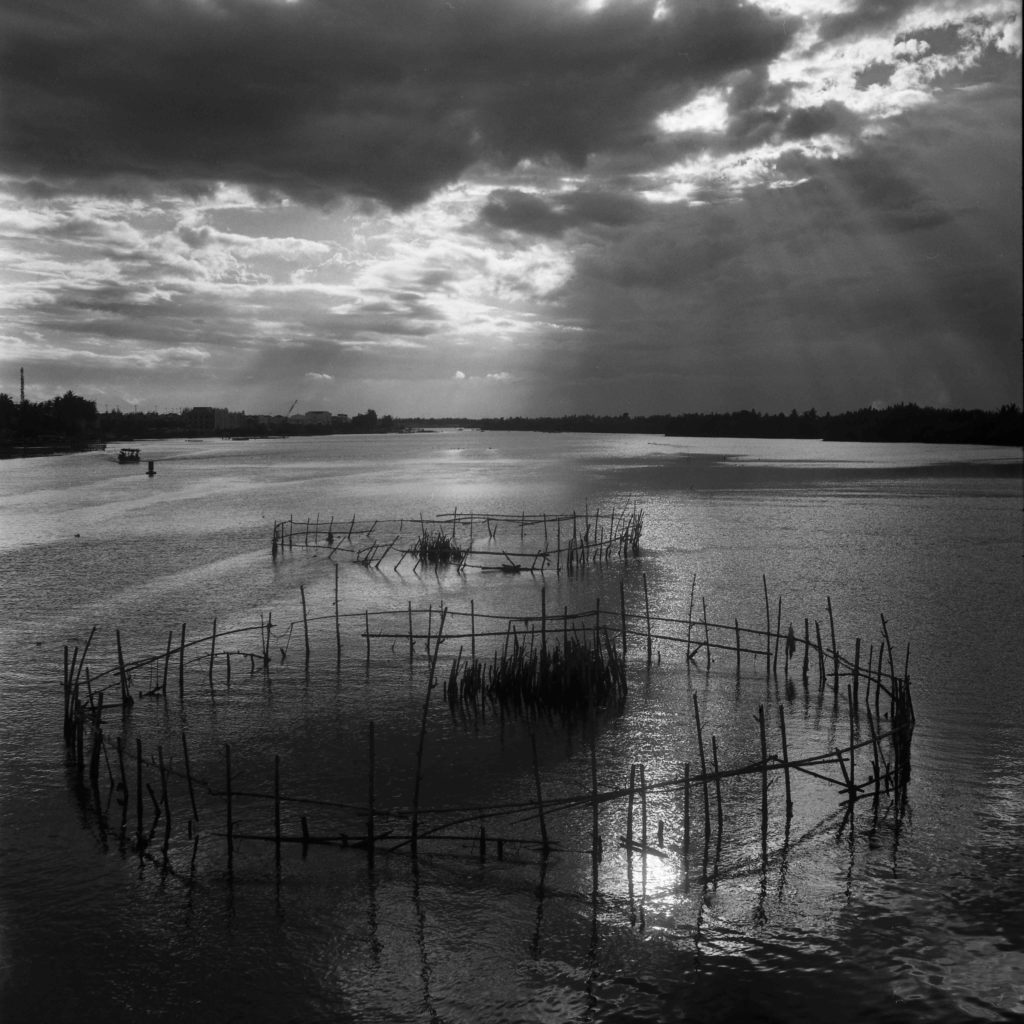
Hoi An, Vietnam · Fishing village · © Raffaele Ferrari
Beyond the Old Town — Where the Photographs Live
The Fishing Village — Cam Thanh and the Coconut Forest
Three kilometres from the Old Town, the community of Cam Thanh maintains a fishing culture that predates the tourist economy of Hoi An by centuries. The round basket boats — thung chai — are one of the most distinctive visual elements of the central Vietnamese coast, and they are here in genuine use, not as tourist props. The fishermen who work the water coconut forest at dawn are not performing for photographers. They are doing what they do every morning, in the way their families have done it for generations.
The light in the coconut forest at dawn is extraordinary — filtered through dense canopy, arriving in shafts across dark water, illuminating the basket boats from unpredictable angles that shift with every minute. This is the photography that Hoi An offers to the photographer who goes further than the Old Town. It requires arriving at first light and being willing to navigate the water by small boat, which the local fishermen provide for a modest fee.
The images made here are not images of Hoi An’s architecture. They are images of a way of life that is genuinely at risk — the fishing communities of the central coast have been under pressure from tourism development and changing economic conditions for decades. Photographing them with honesty and respect is both a documentary opportunity and a responsibility.
An Bang Beach — The Morning Before the Cafés Open
An Bang Beach, five kilometres from the Old Town, is well known as a tourist destination. What is less well known is what it looks like at 5am, when the fishing boats are returning from the night catch and the light is arriving across the South China Sea at the angle that painters dream about. The fishermen sorting their catch on the beach, the boats pulled up on the sand, the particular quality of early morning light reflected off moving water — this is a completely different subject from the beach café scene that the midday visitor encounters.
The morning market that assembles on the road behind An Bang Beach as the fishing boats come in is one of the most vibrant and least photographed markets in the Hoi An area. The transactions are fast and the light is low and the visual material is extraordinary for any photographer willing to be there at the right hour.
The Countryside — Rice Fields and Rural Life
The road west from Hoi An toward the mountains passes through a landscape of rice fields, small villages and agricultural life that has very little in common with the tourist town. This countryside — flat, intensely cultivated, crossed by irrigation channels and narrow farm roads — is the landscape that defines central Vietnam at its most essential. The visual register is completely different from the architectural photography of the Old Town: open, horizontal, with the mountains as a distant backdrop and the sky as the dominant element of every composition.
In the early morning, the light across the rice fields is extraordinary — low-angled, warm, picking out the texture of the paddies and the figures of the farmers beginning their day. The women who work the fields in the early morning hours, in the traditional non la hats that provide protection from the sun that will arrive later, provide a visual connection to the agrarian culture of central Vietnam that the Old Town’s lantern shops cannot offer.
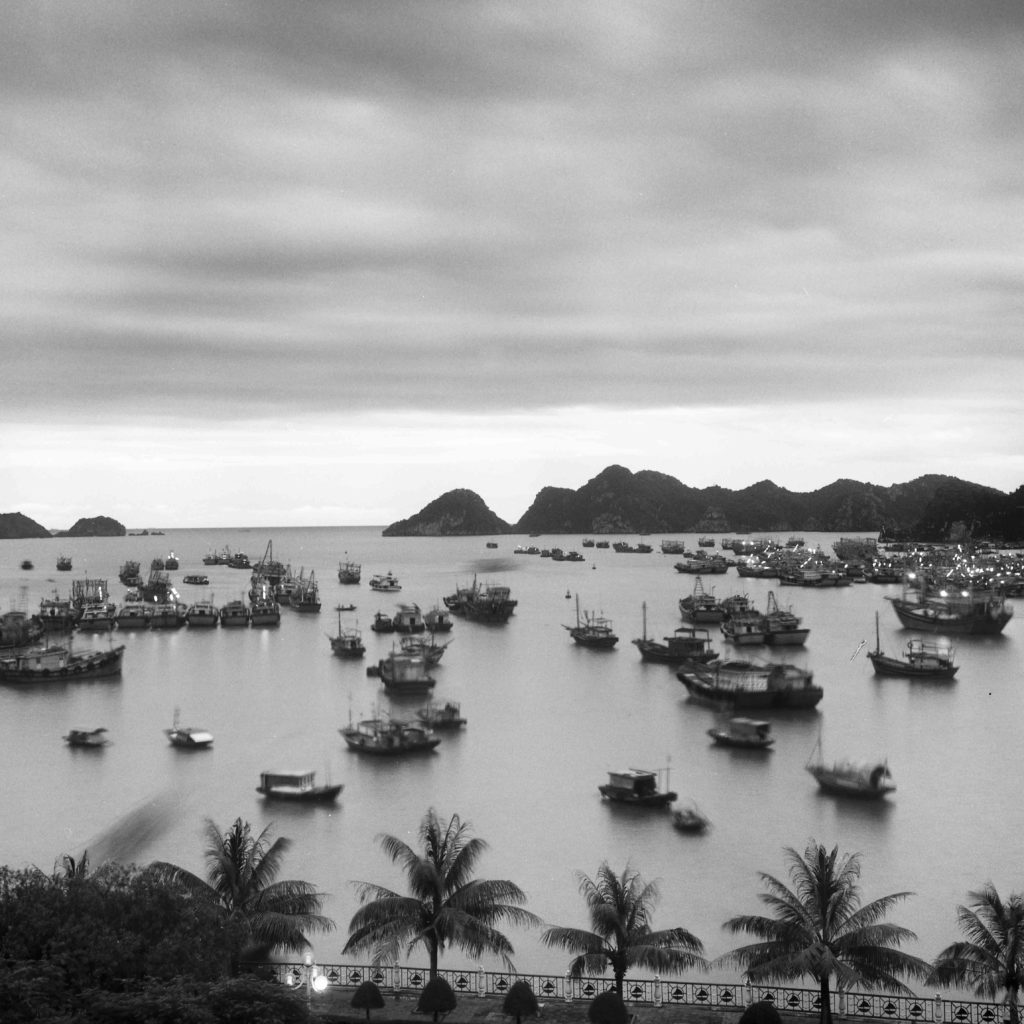
Hoi An surroundings, Vietnam · © Raffaele Ferrari
Photographing the Old Town — How to Do It Differently
The Old Town of Hoi An is not a subject to be avoided. It is a subject to be approached differently from how most photographers approach it. The difference is entirely a function of timing, position and the willingness to look past the obvious composition.
The Yellow Walls — Light and Shadow as Compositional Tools
The yellow facades of the Old Town are most commonly photographed in direct sunlight, which produces the warm, saturated colour that defines the Instagram version of Hoi An. The more interesting images are made in the conditions that require more patience: the shade of early morning, when the colour is cooler and the shadows are deeper; the overcast light of a rainy day, when the yellow walls reflect the grey sky and produce a completely different atmosphere; the very last light of the day, when a few windows and lanterns are already illuminated against a sky that has not yet gone fully dark.
The yellow walls as a background — with a local resident, a bicycle, a flower vendor passing through the frame — produce a more complete image than the yellow walls alone. The architectural detail without the human presence documents the town. The architectural detail with the human presence documents the life within it. These are different photographs and they communicate different things.
The Japanese Covered Bridge — The Other Side
The Japanese Covered Bridge is photographed from the same position by virtually every visitor to Hoi An — standing on the bank, facing the bridge from the east. The other side, the west bank, offers a completely different perspective: the bridge in context, with the old town behind it and the river in the foreground. The bridge from the water, photographed from a small boat at dawn, offers a third perspective that almost no photographer uses. The bridge interior — the wooden structure, the dim light, the small temple within it — offers a fourth. There are more original photographs of the Japanese Covered Bridge available than the canonical tourist image suggests. They require looking for a different position rather than a different subject.
The Market — Before It Performs for Tourists
The central market of Hoi An, in the street behind the riverfront, is at its most photographically interesting between 5am and 7am, when it is supplying the town’s restaurants and households rather than performing for visitors. The wholesale transactions, the women arranging the produce, the particular quality of the market light in the early morning — all of this is available to the photographer who arrives at the right hour. By 9am, the market has reorganised itself into a tourist experience and the original documentary material has largely disappeared.
The Lanterns at Night — How to Move Beyond the Cliché
The lantern photography of Hoi An at night is one of the most clichéd subjects in Southeast Asian travel photography. Thousands of images of coloured lanterns reflected in the Thu Bon River exist in every possible variation — long exposure, wide angle, telephoto compression, reflection and non-reflection. Making a new and original lantern photograph of Hoi An requires either a completely new position or a completely new subject within the familiar material.
The most interesting lantern photographs are not of the lanterns themselves but of the people in relation to them. The vendors who sell them, the children who carry them, the faces of the worshippers at the full-moon lantern festival — the human element transforms the lantern from a decorative object into a cultural document. This requires proximity and patience and the kind of respectful engagement with subjects that produces genuine portraits rather than candid snapshots.
The full-moon lantern festival — held on the fourteenth day of each lunar month, when the electric lights of the Old Town are turned off and the streets are lit by lanterns only — is the most extraordinary photographic event that Hoi An offers. The quality of the light during the two hours of the festival is unlike anything available on any other evening. It requires knowing when it occurs and being in position before it begins.
When to Go — The Season That Makes the Difference
Hoi An has two distinct photographic seasons and one period to avoid.
February to May is the best period for photography — dry, clear skies, manageable temperatures and the flowering of the bougainvillea that covers many of the Old Town’s walls in spectacular colour. The light in March and April has a quality specific to central Vietnam in the dry season — clean, warm and directional at the hours that matter.
September and October bring the rainy season to central Vietnam, which most photographers avoid and which offers some of the most interesting atmospheric conditions of the year. Hoi An floods periodically during this period — the river rises and enters the ground floors of the Old Town buildings, and the residents navigate the streets by boat. This flooding, which has been part of Hoi An’s life for centuries, is one of the most extraordinary documentary photography subjects in Vietnam and one of the least photographed by foreign visitors.
June to August is the period to approach with most caution — the heat is extreme, the tourist pressure is at its maximum and the light in the middle of the day is flat and harsh. If you must visit in summer, the 5am arrival is not a suggestion but a necessity.
The Stories of Vietnam workshop departs in March — the optimal window for the central coast. Two full days in Hoi An are part of the itinerary, structured around the early morning and late evening hours when the town is most photographically available.
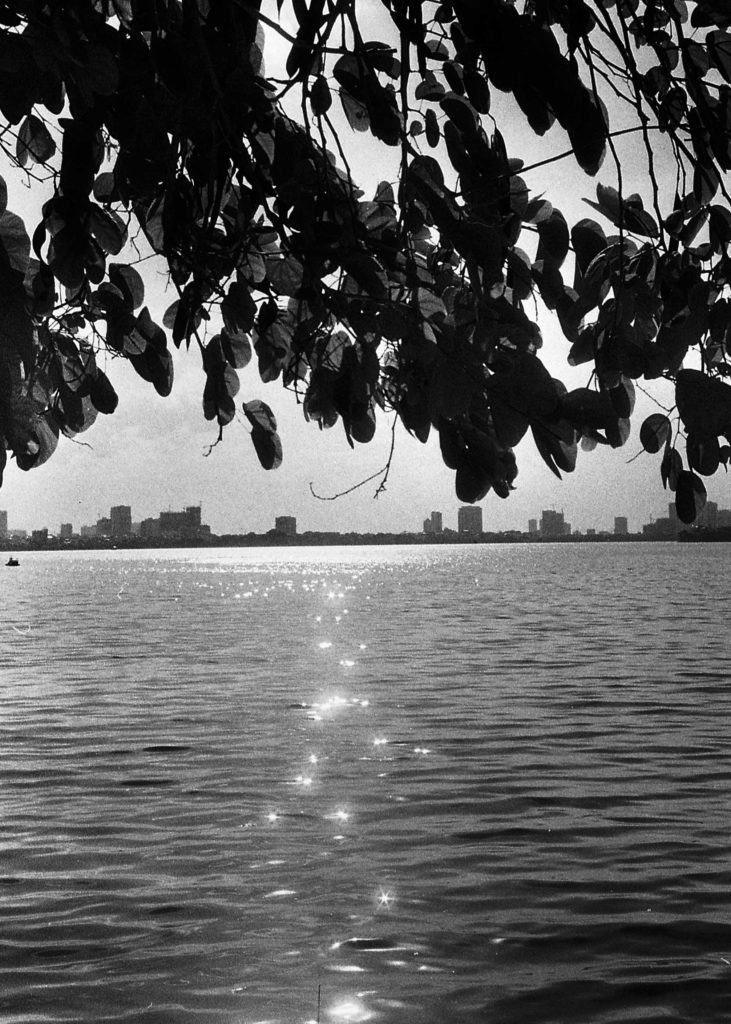
Hoi An area, Vietnam · © Raffaele Ferrari
A Documentary Approach — Five Principles for Photographing Hoi An
Arrive before the performance begins. Hoi An at 5am and Hoi An at 10am are completely different places. The earlier version is not performing for anyone. The later version has fully activated its tourist infrastructure and is presenting itself in the way it has learned visitors want to see it. The documentary photographs of any place are almost always made before the performance begins.
Go beyond the edges of the map. The fishing villages, the countryside, the morning markets on the roads beyond the Old Town — these are the places where Hoi An’s daily life continues unaffected by the tourist economy. They are accessible by bicycle, which is the correct way to move through the Hoi An area for a photographer.
Return to the same location. The alley you walked through once and could not photograph because the light was wrong, the market vendor you saw but could not approach because you were with a group, the boat you noticed on the river at an angle that would have been perfect an hour earlier — return. Hoi An rewards the photographer who comes back.
Photograph the edges of the famous subjects, not the subjects themselves. The Japanese Covered Bridge is fully photographed. The person crossing it at 6am, in the particular light of that specific morning, is not. The lanterns are fully photographed. The woman arranging them in her shop at dusk, before the river fills with tourists, is not.
Spend as much time outside the Old Town as within it. The UNESCO designation is for the architecture. The photography is in the life. The life is largely outside the protected zone, in the villages and fields and fishing communities that make the region what it actually is.
The original photograph of Hoi An
is not in the Old Town at midday.
It is at the edge of the coconut forest at dawn.
It is in the market before the tourists arrive.
It is in the face of someone who is not performing for the camera.
Two days in Hoi An.
The fishing villages. The dawn market. The original photograph.
Stories of Vietnam covers Hanoi, Halong Bay, Hue and Hoi An. Maximum 4 photographers. Individual field mentoring. Accommodation included. €3,000 per person.
Discover Stories of Vietnam →
Continue reading about Vietnam photography:
Vietnam Photography Guide ·
Stories of Vietnam Photography Workshop ·
Thailand Photography Guide ·
Documentary Photography in Bangkok ·
Why Small Group Photography Workshops ·
All Photography Workshops


2 Comments