Guide to photographing Georgetown Penang
Journal · Malaysia · Photography Guide
Photographing Georgetown Penang:
Where Four Cultures Share One Light
Georgetown is one of the most photogenic cities in Southeast Asia — and one of the most underestimated by photographers who plan their regional itineraries around Bangkok, Hanoi and Bali without stopping here.
The UNESCO World Heritage Site on the northeastern tip of Penang island is a city built from four distinct cultures: Chinese, Malay, Indian and British colonial. They arrived at different times and for different reasons, and they have been living alongside each other for two centuries without fully merging. The visual result of this particular coexistence — the Chinese shophouses next to the Tamil temple next to the mosque next to the colonial administration building — is a documentary photography environment of extraordinary density and richness.
Georgetown does not present itself to the camera. It simply continues being itself, in four languages simultaneously, and the photographer who learns to move between those layers will find more material here than in a week in a more famous city.
I have visited Georgetown several times over the years, approaching it always as a documentary subject rather than a scenic destination. What follows is what I have learned about how to photograph it seriously.
Georgetown sits between Bangkok
and the rest of Southeast Asia.
The Soul of Thailand workshop covers Bangkok and Cambodia in 10 days — a natural extension from or to Georgetown. Maximum 6 photographers. Individual mentoring. Accommodation included. €3,000.
Discover Soul of Thailand →
Why Georgetown Is a Serious Photography Destination
Most photographers who come to Georgetown photograph the street art. The murals commissioned by the Penang State Government from 2012 onward — Ernest Zacharevic’s children on a bicycle being the most famous — have become the primary visual identity of the city in travel photography. They are genuinely well-made, genuinely photogenic, and genuinely irrelevant to understanding Georgetown as a place.
The street art photographs Georgetown as it performs for visitors. The documentary photographs of Georgetown are made in the places where the city is simply being itself — the wholesale markets before dawn, the clan jetties on the eastern waterfront, the Hindu temple at Deepavali, the Chinese clan houses during the festivals of the lunar calendar, the old trades that still operate in the shophouses of Armenian Street and Love Lane.
Georgetown rewards the photographer who ignores the obvious subject and looks for the one that requires more attention to find. The city has been lived in continuously for two hundred years. The layers of that habitation are visible everywhere — in the architecture, in the street life, in the faces and the daily rhythms of communities that have maintained their cultural practices through colonial rule, Japanese occupation, independence and the tourism economy that has remade parts of the city in the last decade.
The Light in Georgetown — What Makes It Distinctive
Georgetown sits at 5 degrees north of the equator. The light here behaves differently from the light in the temperate cities where most Western photographers develop their visual instincts. The sun rises and sets at almost the same time year-round — around 7am and 7pm — and it rises and sets fast, reaching a high angle quickly after dawn. The golden hour window is narrow: perhaps thirty minutes at each end of the day.
Within that window, the light on the Georgetown shophouses — the east-facing facades catching the morning sun, the west-facing facades illuminated in the late afternoon — is extraordinary. The warm tones of the painted plaster, the deep shadows under the covered walkways, the interplay of direct and reflected light in the narrow streets — all of this is available only in those brief windows at the beginning and end of the day.
The rest of the day presents the challenge that equatorial light always presents: harsh overhead illumination that flattens everything. The response is to use the midday hours for the subjects that benefit from it — the interiors of temples, the covered markets, the five-foot ways under the shophouse verandahs where the light is always soft and indirect.
Georgetown, Penang · © Raffaele Ferrari
Where to Photograph in Georgetown — Beyond the Tourist Map
Little India — Colour, Devotion and the Morning Market
The Tamil quarter of Georgetown — centred on Market Street, Queen Street and Chulia Street — is most interesting to a documentary photographer in the early morning, before the tourist activity of the day begins. The flower garland sellers who supply the temples set up before dawn. The Sri Mahamariamman Temple on Queen Street receives its first worshippers before 7am, in conditions of devotional intensity that the midday tourist visit cannot replicate.
The colour palette of Little India — the marigold yellow of the garlands, the deep red of the temple facade, the saffron and white of the devotees’ clothing — is extraordinary in the horizontal light of early morning. By 10am the same colours are bleached and flattened by the overhead sun. The photographs worth making here are available for perhaps ninety minutes after dawn.
The textile shops, the spice merchants, the small restaurants where the Tamil community eats their morning meal — these are subjects that require patience and a genuine curiosity about the culture rather than the picturesque surface of it. The best portrait of a Georgetown Tamil man or woman is not made with a telephoto from across the street. It is made with a 35mm after a conversation, however brief and however broken by the language barrier.
Armenian Street and the Chinese Quarter — Architecture and Daily Life
Armenian Street and the surrounding blocks constitute the heart of the Chinese quarter that gave Georgetown much of its commercial character for a century and a half. The Hokkien clan houses, the kongsi (clan association buildings), the Chinese temples operating on the lunar calendar — these are the documentary subjects that most reward sustained attention.
The Khoo Kongsi — the most elaborate clan house in Georgetown, built by the Khoo clan in the early 20th century — is architecturally extraordinary and photographically very difficult. The interior courtyard, open to the sky, produces extreme contrast between the lit areas and the shadow under the roofline. The best light in the Khoo Kongsi courtyard is on overcast days, when the diffused light removes the contrast and illuminates the carved woodwork and painted decoration evenly.
Armenian Street on a Saturday evening transforms into a night market — crafts, street food, occasional live music. The photography here requires working in artificial light: the mixed colour temperatures of the bare bulbs, the neon signs of the surrounding shops, the occasional flash of a phone camera. This is not elegant light. It is the light of a city conducting its commerce after dark, and it produces images of a completely different character from the daylight photography of the same streets.
Armenian Street, Georgetown, Penang · © Raffaele Ferrari
The Clan Jetties — The Last Waterfront Community
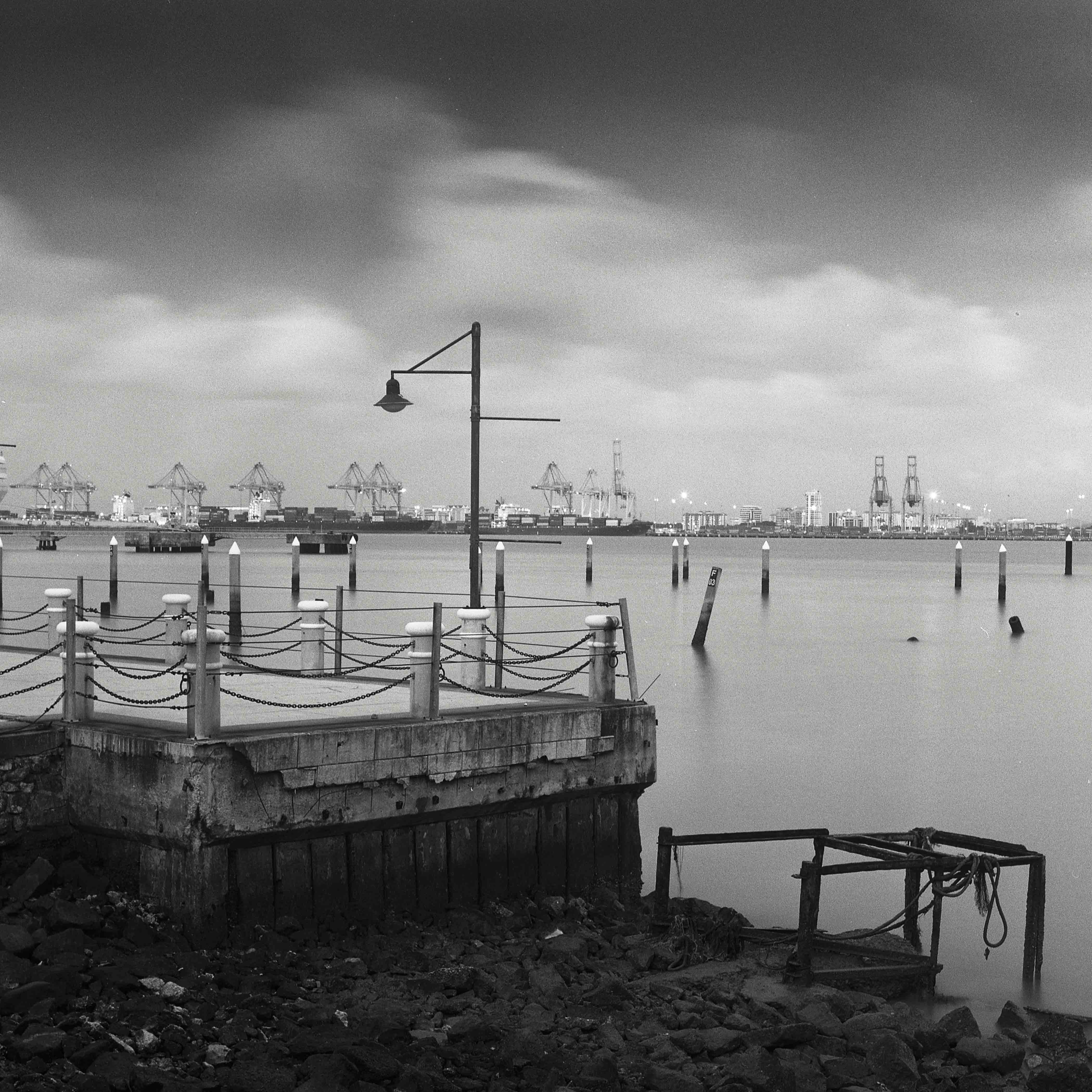
The clan jetties on the eastern waterfront of Georgetown are among the most extraordinary documentary photography locations in Malaysia. Six extended wooden piers project into the Penang Strait, each one occupied by a different Chinese clan community whose ancestors built the jetties in the 19th century to have direct access to the sea for their fishing and trading businesses.
The jetty communities have been under pressure from tourism development for years and some have been significantly altered. The Chew Jetty — the largest and most visited — has become a tourist attraction with souvenir shops and entrance charges. The smaller jetties — the Tan, Lee and Lim jetties — are quieter and more authentic. The photography at the smaller jetties requires permission and respect: these are private residential communities, not tourist sites, and the “no photography” signs where they appear must be obeyed.
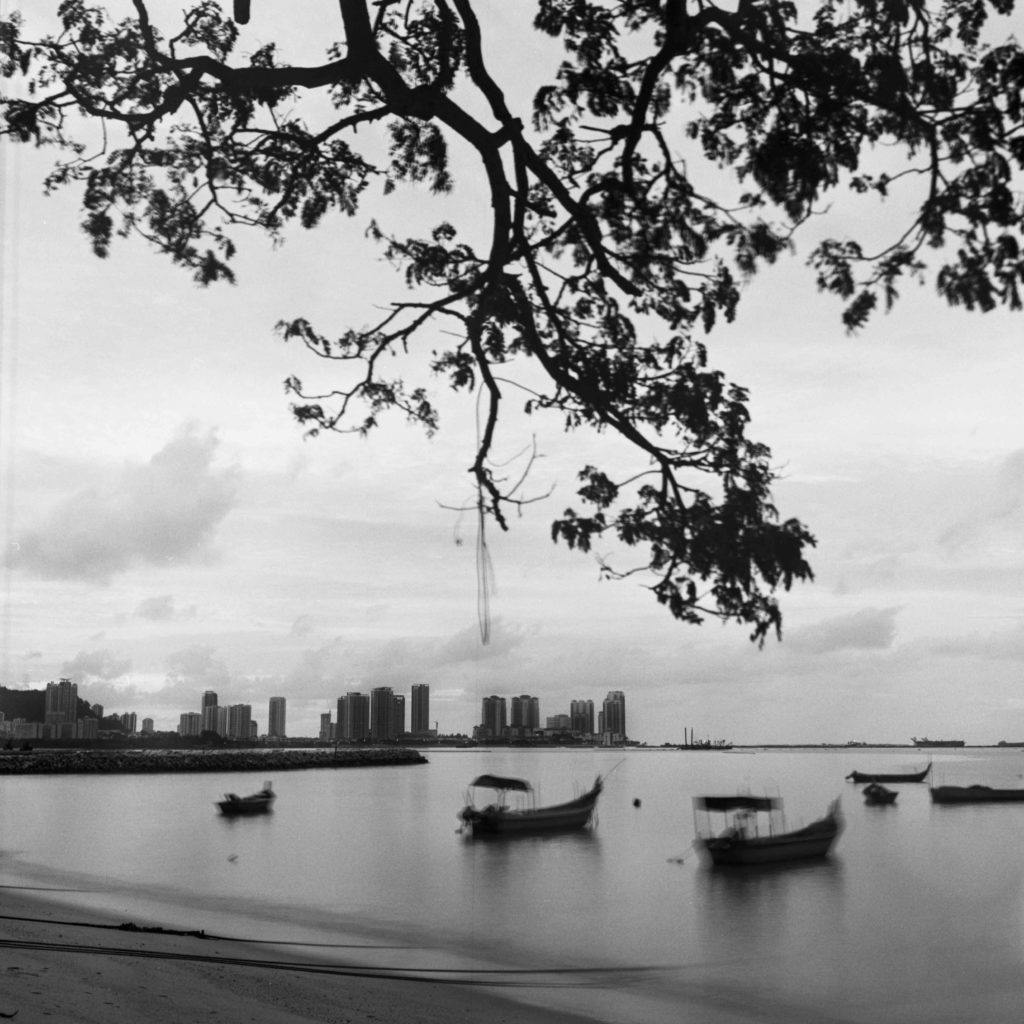
The best light at the clan jetties is at sunrise, when the morning sun arrives from the east across the Strait and illuminates the waterfront houses directly. The silhouettes of the boats against the sunrise, the washing hung between the houses drying in the first light, the elderly residents beginning their morning routine on the wooden walkways — this is the material that rewards the photographer who arrives before 7am.
The Botanic Garden — A Different Register
The Penang Botanic Garden at Jalan Kebun Bunga provides a complete change of visual register from the urban photography of the Heritage Zone. Established by the British in 1884, the garden is one of the finest examples of colonial botanical planning in Southeast Asia — the mature trees, the waterfall, the formal planting mixed with the encroaching tropical jungle at the edges of the maintained areas.
For photographers, the Botanic Garden is most interesting in the early morning (it opens at 5am) when the light filters through the canopy and the garden belongs entirely to the local residents using it for their morning walk and exercise. The monkeys — long-tailed macaques that move through the upper canopy — are a secondary subject that requires patience and a longer lens. The primary subject is the quality of the tropical garden light in the first hour after dawn.
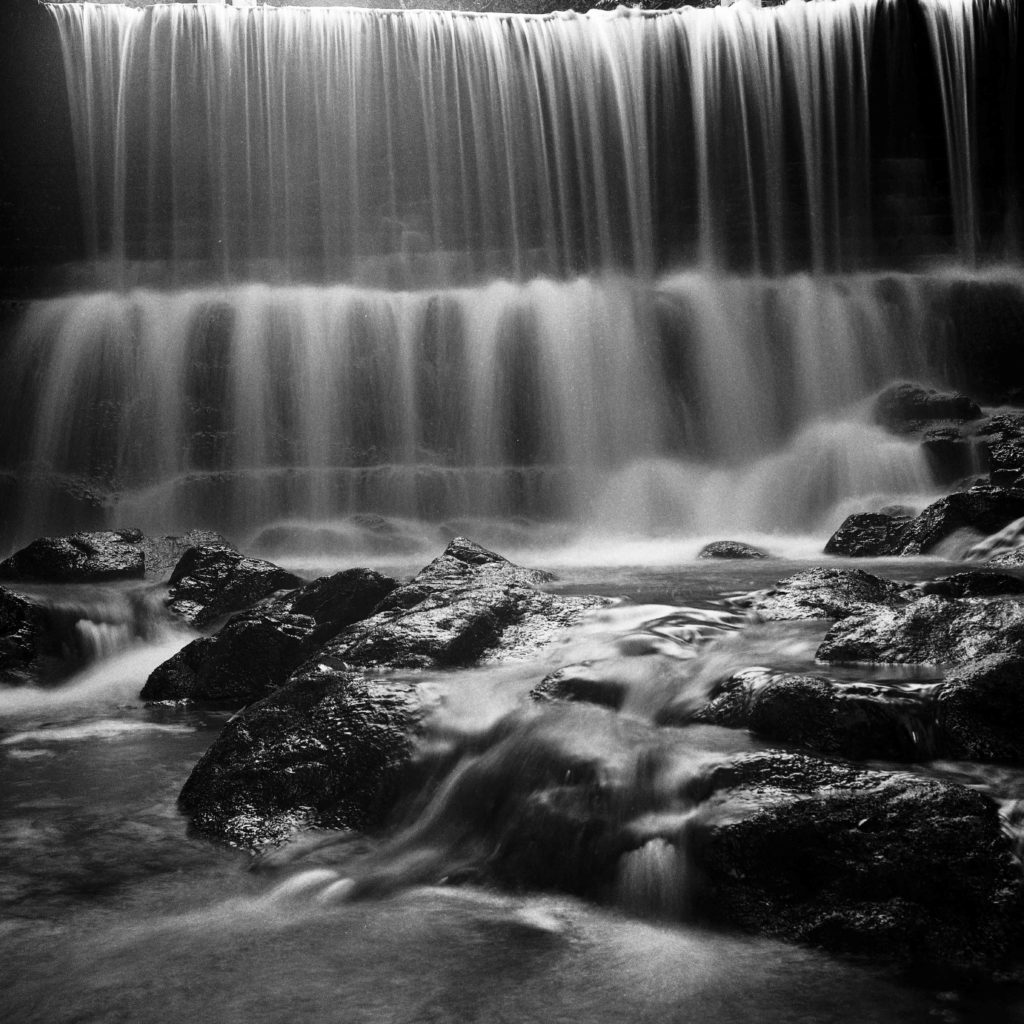
Botanic Garden, Georgetown, Penang · © Raffaele Ferrari
When to Photograph Georgetown
Georgetown is a year-round photography destination — the equatorial climate produces consistent conditions throughout the year, with the distinction being between the drier northeast monsoon months (November to March) and the wetter southwest monsoon months (May to September).
The most photographically interesting periods are tied to the festival calendar rather than the weather. Chinese New Year (January or February, depending on the lunar calendar) transforms the Chinese quarter with red lanterns, lion dances and the particular energy of a community celebrating its most important annual festival. Thaipusam (January or February) brings the Tamil community to the streets in a procession of remarkable visual intensity. Deepavali (October or November) illuminates the Hindu temples and the Little India quarter with a quality of light and devotional atmosphere that no other time of year replicates.
Georgetown is also a natural stop on the Thailand-Malaysia photography route. Arriving by train from Bangkok or Kuala Lumpur, spending three to four days in the city before continuing by ferry to the mainland — this is a itinerary that allows Georgetown to be photographed at the pace it deserves rather than as a half-day excursion from the beach resorts of Penang island.
A Documentary Approach to Georgetown
The most common mistake photographers make in Georgetown is trying to photograph all four cultures in a single day. The city is compact — you can walk from Little India to the Clan Jetties in twenty minutes — but the photographic material of each quarter requires time to access properly. Rushing between the Tamil temple and the Chinese clan house and the Malay kampung produces a folder of competent documentary photographs and nothing more.
Choose one area per day. Arrive before the light is established. Walk without the camera first — understand the geography, the rhythm, the faces that will be there tomorrow morning as well. Return the following day knowing what you are looking for and where to position yourself when the light arrives at the angle that makes it visible.
Georgetown is a city that reveals itself slowly.
The first morning you see four cultures.
The third morning you begin to see
what they share.
Georgetown is the beginning
of a longer Southeast Asian journey.
Bangkok, Chinatown, canal communities, Cambodia and Angkor at sunrise. The documentary approach that works in Georgetown works in Bangkok. Maximum 6 photographers. Accommodation included. €3,000.
Discover Soul of Thailand →
Continue reading about Southeast Asia photography:
Photograph Malaysia — Essential Guide ·
Thailand Photography Guide ·
Documentary Photography in Bangkok Chinatown ·
Soul of Thailand Workshop ·
Vietnam Photography Guide ·
All Photography Workshops