Photography Ayutthaya an essential guide
Raffaele Ferrari · Thailand Photography · Photography Essays
Ayutthaya Photography — How to Photograph Thailand’s Ancient Capital
Not a temple checklist. A photographer’s guide to the light, timing and approach that makes Ayutthaya genuinely worth the day trip from Bangkok.
Ayutthaya is not a difficult place to photograph. It is a difficult place to photograph well — and that distinction matters more here than almost anywhere else in Thailand.
The historical park covers a broad area on an island formed by three rivers north of Bangkok. The ruins it contains — prang towers, seated Buddhas, crumbling chedi, the famous sandstone heads entwined in tree roots — have been photographed millions of times, from roughly the same positions, at roughly the same times of day. The result is a visual vocabulary so thoroughly established that arriving at Ayutthaya with a camera almost guarantees you will make images you have already seen. The challenge — and the opportunity — is to look past that established vocabulary and find the version of this place that is genuinely in front of you.
I have been photographing Ayutthaya for more than a decade, in different seasons and at different hours, and I keep coming back. Not because it reveals something new every time — though it does — but because it is one of those rare places where the quality of attention you bring to it is directly proportional to the quality of the photographs you take away. Rush through it and you make tourist images. Stay, observe, wait for the light to do something specific to a particular surface — and you make something else entirely.
A City That Was Burned — and What That Means for Photography
Ayutthaya was founded in 1350 and became the second capital of the Siamese Kingdom, growing over four centuries into one of the largest and most cosmopolitan cities in the world. It was a centre of global diplomacy and commerce — the Portuguese, Dutch, French, Chinese and Japanese all maintained trading posts here. In 1767 the Burmese army sacked and burned it completely, forcing the population to abandon the city permanently. It was never rebuilt in the same location.
What this history means photographically is that Ayutthaya has a specific quality of ruination that differs from other ancient sites. These are not simply old structures that have aged gradually. They are the remains of a deliberate destruction — truncated towers, decapitated Buddhas, walls that end abruptly where fire or war determined they would. This violence is visible in the material, and the photographer who understands it will approach the ruins differently from the one who sees them simply as picturesque decay.
The most honest photographs of Ayutthaya are not the beautiful ones. They are the ones that acknowledge what actually happened here.
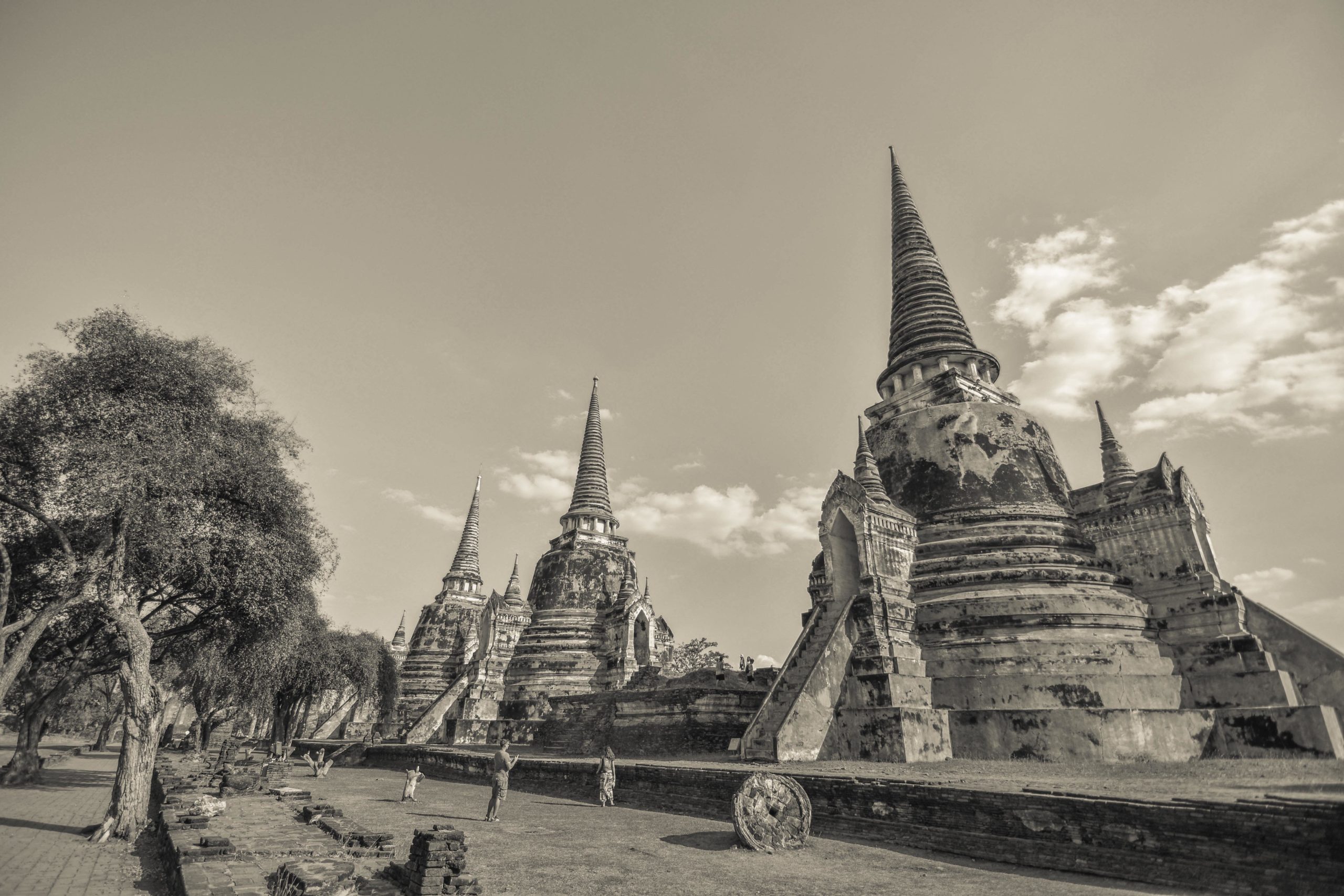
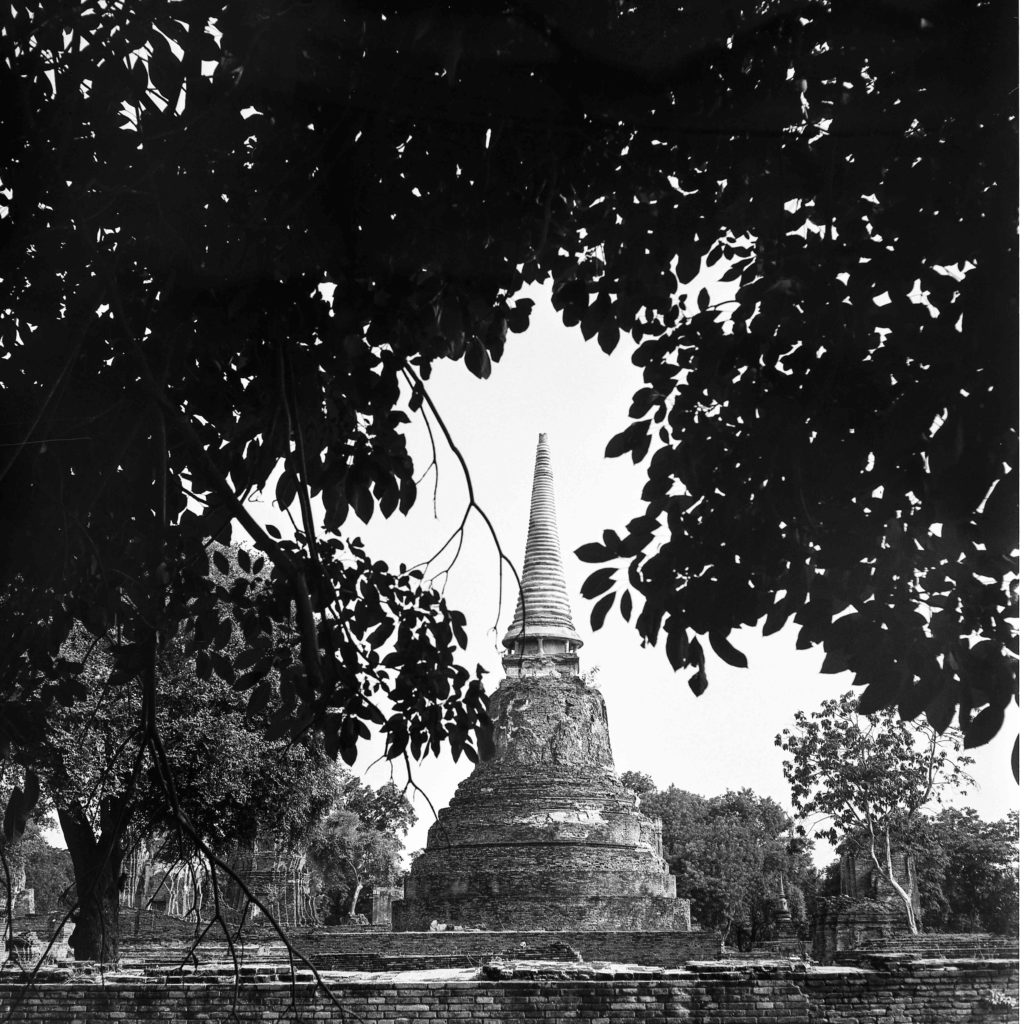 Ayutthaya. The sandstone that absorbed four centuries of heat and one catastrophic night — and still holds a quality of presence that no amount of tourist photography has diminished.
Light, Timing and the Case for Arriving Before Sunrise
Ayutthaya’s climate is tropical savanna. The dry season from November through February is the best period for photography: the air is clear, the temperatures manageable — typically 25–32°C during the day — and the morning light arrives at a low angle that makes the sandstone textures legible in a way that the flat midday light entirely destroys. March and April become very hot, with temperatures reaching 36°C. The monsoon season from May through October brings heavy rains and cloud cover that, while occasionally producing dramatic light, makes planning difficult.
The single most important decision a photographer can make in Ayutthaya is to arrive before sunrise. Not at sunrise — before it. The fifteen minutes before the sun clears the horizon produce a quality of blue light on the sandstone and the surrounding water that disappears quickly and completely once the sun is up. The Buddhist monks who walk through the park in the very early morning — collecting alms, moving between the temples — provide the human presence that the ruins themselves cannot offer. And the complete absence of other tourists in that first hour is, in practical terms, irreplaceable.
The second productive window is the hour before sunset. The angle of the western light on the east-facing temple facades creates long shadows that make the carved surfaces three-dimensional in a way they are not at any other time of day. The colours warm significantly in the last forty minutes before dusk. And the park begins to empty — the organised tour groups depart, the hawkers pack up — leaving the ruins in a relative quietness that makes patient, considered photography possible again.
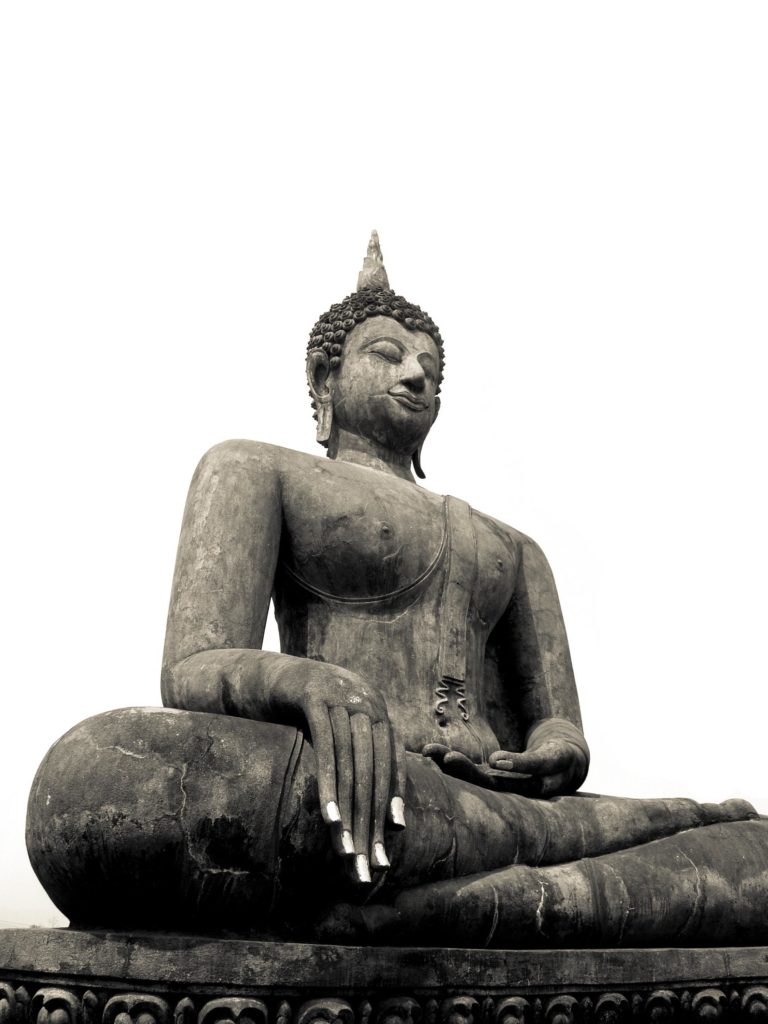 Ayutthaya. The ruins reward the photographer who stays long enough to understand what the light does to a specific surface at a specific hour.
Ayutthaya. The sandstone that absorbed four centuries of heat and one catastrophic night — and still holds a quality of presence that no amount of tourist photography has diminished.
Photography Workshop · Thailand & Cambodia
The Soul of Thailand — Documentary Photography Workshop · January 2027
Ayutthaya is a half-day from Bangkok. The Soul of Thailand workshop is built around the same philosophy described in this article — arriving before the light, waiting for the human moment, building a series rather than collecting single images. Bangkok and Cambodia. January 20–30, 2027. Maximum 6 participants.
Discover The Soul of Thailand Workshop →
The Temples — What to Look for Beyond the Obvious
One mistake I see photographers making at Ayutthaya is treating the park as a checklist — moving from Wat Phra Sri Sanphet to Wat Mahathat to Wat Ratchaburana in the order suggested by the tourist map, spending twenty minutes at each, and leaving with a complete set of recognisable images of all the major sites. The photographs are technically correct. They are also visually indistinguishable from those made by the previous thousand photographers who followed the same route.
A more productive approach is to choose one or two locations and spend the equivalent time there — understanding how the light moves across the surface across two or three hours, finding the positions that the standard viewpoints do not suggest, and waiting for the human elements that transform an architectural study into a documentary photograph.
Wat Phra Sri Sanphet — The Grand Structure at Dawn
The three restored chedi of Wat Phra Sri Sanphet are the most recognisable structures in Ayutthaya — and among the most photographed Buddhist monuments in Thailand. They sit within the grounds of the former Royal Palace, and their scale, when encountered in the pre-dawn light with no other visitors present, is genuinely impressive. The challenge is to find a relationship to these structures that is not simply a record of their existence. Working at ground level, from closer than feels compositionally comfortable, and including the details of the weathered brickwork alongside the broader silhouette produces images with more specificity than the wide, symmetrical composition that everyone takes from the standard position.
Wat Mahathat — The Buddha Head in the Tree Roots
The sandstone Buddha head entwined in the roots of a bodhi tree at Wat Mahathat is the single most photographed subject in Ayutthaya — and one of the most interesting photographic challenges in Thailand. The image exists in so many versions that making a new version requires either an exceptional quality of light, an unusual approach to the subject, or — most productively — the patience to photograph not the head itself but the relationship between the head and the people who come to photograph it. The tourists circling the tree with their phones, the monks pausing to look, the moment when everyone has moved on and the stone face returns to its own stillness: these secondary subjects are often more interesting than the primary one.
Wat Ratchaburana — The Less Visited Prang
Wat Ratchaburana, founded in 1424, contains one of the finest surviving prang towers in Ayutthaya — a tall corn-cob shaped spire that catches the early morning light on its eastern face with particular beauty. It receives fewer visitors than Wat Mahathat, which makes it more accessible for patient, unhurried photography. The interior of the prang can be entered and contains murals that, while damaged, retain enough of their original quality to be photographically interesting in the low, available light that filters through the entrance.
Wat Thammikarat — The Lions and the Silence
Wat Thammikarat is believed to predate the Ayutthaya period itself, which gives it a different quality of age from the other major temples in the park. The central chedi is surrounded by sculptures of guardian lions — worn by centuries of weather into something more abstract and more interesting than they were when newly carved. This temple is among the quieter ones in the park, and in the early morning it is often entirely empty. The combination of the weathered lion sculptures, the overgrown stonework and the quality of the pre-dawn light makes it one of the most productive locations in Ayutthaya for the patient photographer.
Ayutthaya. The ruins reward the photographer who stays long enough to understand what the light does to a specific surface at a specific hour.
How to Approach Ayutthaya as a Documentary Photographer
Choose depth over coverage. The park is large enough that trying to photograph everything produces nothing. Choose two or three locations and spend serious time at each. The images that reward attention are available at every major temple — but only to the photographer who stays long enough to find them.
Photograph the people as much as the ruins. The most interesting documentary material at Ayutthaya is not the architecture — it is the relationship between the architecture and the people who come to it. The monks at dawn, the Thai school groups in their uniforms, the elderly woman making offerings at a shrine that most tourists walk past without noticing: these human elements give the ruins a context that the standard architectural photography cannot provide.
Use a prime lens. A 35mm or 50mm equivalent prime forces you to move rather than zoom, which produces better compositional decisions and keeps you physically closer to your subjects. A wide-angle lens is useful for the interior spaces of the prangs, where the low ceilings and narrow chambers make composition difficult with a standard focal length. A long zoom is almost never necessary and tends to produce the detached, touristic images that distinguish themselves from everything else by their lack of presence.
Stay until closing. The park closes at dusk, and the final thirty minutes — when the light is lowest and warmest and the cleaning staff are making their rounds through the empty temples — produce conditions that nobody who leaves at four in the afternoon ever sees. These last photographs are often the best of the day.
Return a second day. One day at Ayutthaya produces first impressions. Two days produces understanding. If you are serious about photographing this place, the second morning — when you already know which direction the light moves and which position you want to be in when it arrives — is incomparably more productive than the first.
Getting There and Practical Information
Ayutthaya is approximately 80 kilometres north of Bangkok. The most atmospheric way to arrive is by train from Hua Lamphong or Bang Sue stations — the journey takes between 1 hour 30 minutes and 2 hours depending on the service, and the approach by rail gives you a different perspective on the city and its water than the road does. Buses from Bangkok’s northern terminal take approximately one hour. Once in the city, bicycles are the ideal way to move through the park — the scale is manageable by bike in a way that it is not entirely on foot, and cycling between temples allows you to stop wherever the light suggests rather than wherever a tour itinerary dictates.
The park entrance fee is modest. The major temples have individual entry fees that are also modest. The practical advice that matters most is not about transport or tickets — it is about timing. Leave Bangkok by five in the morning at the latest to be in position at the first temples before the sun rises. The train that departs Hua Lamphong at 5:45am puts you in Ayutthaya at approximately seven-thirty — which is already too late for the best light. Take the first available departure, or consider spending the previous night in Ayutthaya.
For photographers who want to combine Ayutthaya with broader Thailand photography work, it pairs naturally with time in Bangkok — the Bangkok photography guide covers the flower market, the canal communities and the documentary approach to the city that complements a day trip to Ayutthaya. For the deeper documentary work that Southern Thailand offers, the Songkhla photography guide describes a completely different register of Thai visual life.
Ayutthaya and the Larger Thailand
Ayutthaya is one chapter in a much larger visual story about Thailand — a country that rewards the photographer who understands how different its regions and registers are from each other. The ruins of Ayutthaya, the canal communities of Bangkok, the fishing ports of the south, the temple life of Chiang Mai: these are not variations on the same visual theme. They are different countries within the same border, each requiring a different quality of attention and a different photographic approach.
What I have learned from years of photographing Thailand is that the standard itinerary — Bangkok, Chiang Mai, the northern temples, the beaches — covers the most accessible surface of the country without touching its documentary depth. The places that produce the most interesting photography are almost always the ones that are slightly inconvenient to reach, require patience to understand, and offer no immediate reward to the photographer who arrives without an intention. Ayutthaya, approached correctly — before dawn, with a single focal length and no plan beyond the willingness to wait — is one of those places.
Read the complete essay on visual storytelling in travel photography for the approach that underlies everything described in this guide.
Ayutthaya Photography — Frequently Asked Questions
What is the best time of day to photograph Ayutthaya?
The hour before and after sunrise is the most productive window — the blue pre-dawn light on the sandstone, the monks walking through the park, and the complete absence of other tourists create conditions that are impossible to replicate at any other time of day. The hour before sunset offers a second productive window, when the western light warms the temple facades and the park begins to empty. Midday light is flat, harsh and photographic mainly for documentary work that requires visible shadow geometry.
What is the best time of year to photograph Ayutthaya?
November through February — the dry season — offers clear air, manageable temperatures (25–32°C) and the low-angled morning light that makes the sandstone textures most legible. December and January are optimal: the air is at its clearest and the morning light arrives at the most productive angle. March and April are very hot. The monsoon season from May through October brings unpredictable weather and diffuse light that can occasionally be interesting but is difficult to plan around.
How do I get from Bangkok to Ayutthaya for photography?
Train from Hua Lamphong or Bang Sue station is the most atmospheric option — 1h30 to 2 hours depending on service. Bus from Bangkok’s northern terminal takes approximately one hour. To photograph at sunrise, take the earliest possible departure — ideally spending the previous night in Ayutthaya rather than attempting the pre-dawn journey from Bangkok. Once in Ayutthaya, rent a bicycle: the park is large enough that walking between temples wastes photographic time.
Which camera and lens is best for photographing Ayutthaya?
A compact mirrorless system with a 35mm or 50mm prime is ideal for most of the park — it forces you to move rather than zoom, keeping you physically closer to your subjects and producing better compositional decisions. A wide-angle lens (24mm equivalent) is useful for the interior spaces of the prangs. A camera with good high-ISO performance is essential for the pre-dawn work in the first hour before sunrise. A tripod or monopod helps for the interior shots and the low-light conditions of the very early morning.
How many days do I need in Ayutthaya for serious photography?
Two days is the minimum for serious work. The first day is orientation — learning the layout, understanding the light directions, making the inevitable first-impression images. The second day is where the real work begins: you know where you want to be when the light arrives, which positions you want to occupy, and which moments you want to wait for. If you have only one day, arrive the evening before, photograph at dusk, sleep in Ayutthaya, and start again before dawn.
Is Ayutthaya only good for architectural photography?
No. The most interesting photography at Ayutthaya is documentary rather than architectural. The monks walking through the park at dawn, the Thai school groups and their relationship to the ruins, the vendors and guides at the entrance, the workers maintaining the park in the early morning — these human elements give the ruins a context and a contemporary dimension that pure architectural photography cannot provide. Ayutthaya is most productively approached as a documentary environment that happens to contain extraordinary architecture, rather than as an architectural subject that occasionally has people in it.
How does Ayutthaya compare to Angkor Wat for photography?
Angkor is larger, more elaborate and carries more visual drama — particularly at sunrise on Angkor Wat itself. Ayutthaya is smaller, more intimate and significantly less crowded, which makes patient, unhurried photography more practically accessible. The ruins at Ayutthaya have a rawer quality of destruction that Angkor — which was never burned or abandoned in the same way — does not possess. Both reward the early-morning approach and the willingness to work beyond the standard compositions. The Cambodia extension of the Soul of Thailand workshop includes Angkor; Ayutthaya is naturally combined with the Bangkok component.
Is there a photography workshop that covers Ayutthaya or central Thailand?
The Soul of Thailand Photography Workshop (January 2027) is based in Bangkok, from which Ayutthaya is a natural day trip. The workshop applies the same documentary philosophy described in this article — arriving before the light, working with patience, building a series rather than collecting single images — to ten days in Bangkok and Cambodia. Maximum 6 participants. No deposit required to enquire.
The Soul of Thailand · Documentary Photography Workshop · January 2027
Go Deeper into Thailand
If Ayutthaya has made you curious about what a slower, more documentary approach to Thailand photography looks like — the pre-dawn markets, the canal communities, the quiet temples before the tourist day begins — The Soul of Thailand workshop is built around exactly that. Bangkok and Cambodia. January 20–30, 2027. Maximum 6 participants. No deposit required.
Discover The Soul of Thailand Workshop
Or read: How to Tell Better Stories Through Travel Photography
·
Songkhla Photography Guide


2 Comments