Pushkar Camel Fair Photography
Pushkar Camel Fair Photography
The World’s Most Extraordinary Festival
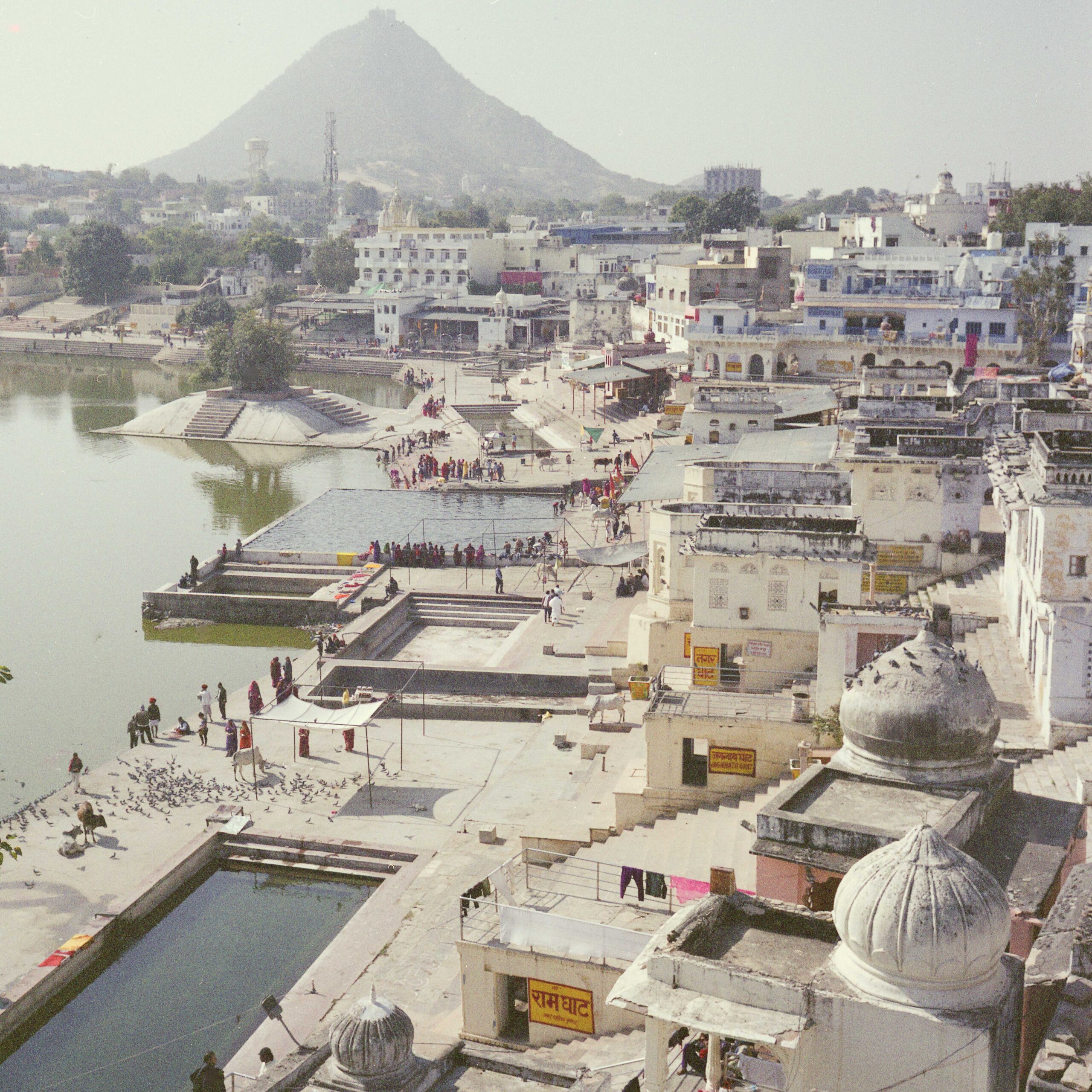
I have been to Pushkar more times than I can count. The first time was 2008, arriving by motorcycle on a dirt road through the Aravalli hills with no particular plan. The town appeared below — a cluster of white buildings around a sacred lake, ringed by low hills with a Brahma temple on one side and the desert opening toward the horizon on the other. By evening I had decided to come back every year.
Pushkar is one of the most revered Hindu sites in the world. It is also, for ten days each autumn, the site of the largest camel fair on earth — one of the most extraordinary concentrations of photographic subject matter I have encountered anywhere in my travels.
Pushkar — The Town Beyond the Fair
Most photographers arrive in Pushkar for the Camel Fair and miss what makes the town extraordinary the rest of the year. Pushkar is built around a sacred lake — one of the few natural lakes in Rajasthan — and has been a pilgrimage destination for thousands of years. The ghats around the lake are the photographic heart of the town at any time of year.
Pilgrims arrive daily to bathe in the sacred waters. Before dawn, the ghats fill with people carrying marigolds and incense toward the water. The priests begin their rituals as the light comes. The lake catches the first reflections. The town moves slowly, purposefully, with the rhythm of religious practice rather than tourism.
- The ghats at dawn — pilgrims, flowers, light on the lake
- Brahma Temple — one of the few Brahma temples in the world
- Street markets leading to the temples — spices, textiles, local life
- The hilltop Savitri Temple — panoramic view over the lake and town
- Sunset from the western ghats — extraordinary light over the water
The Pushkar Camel Fair — What It Is
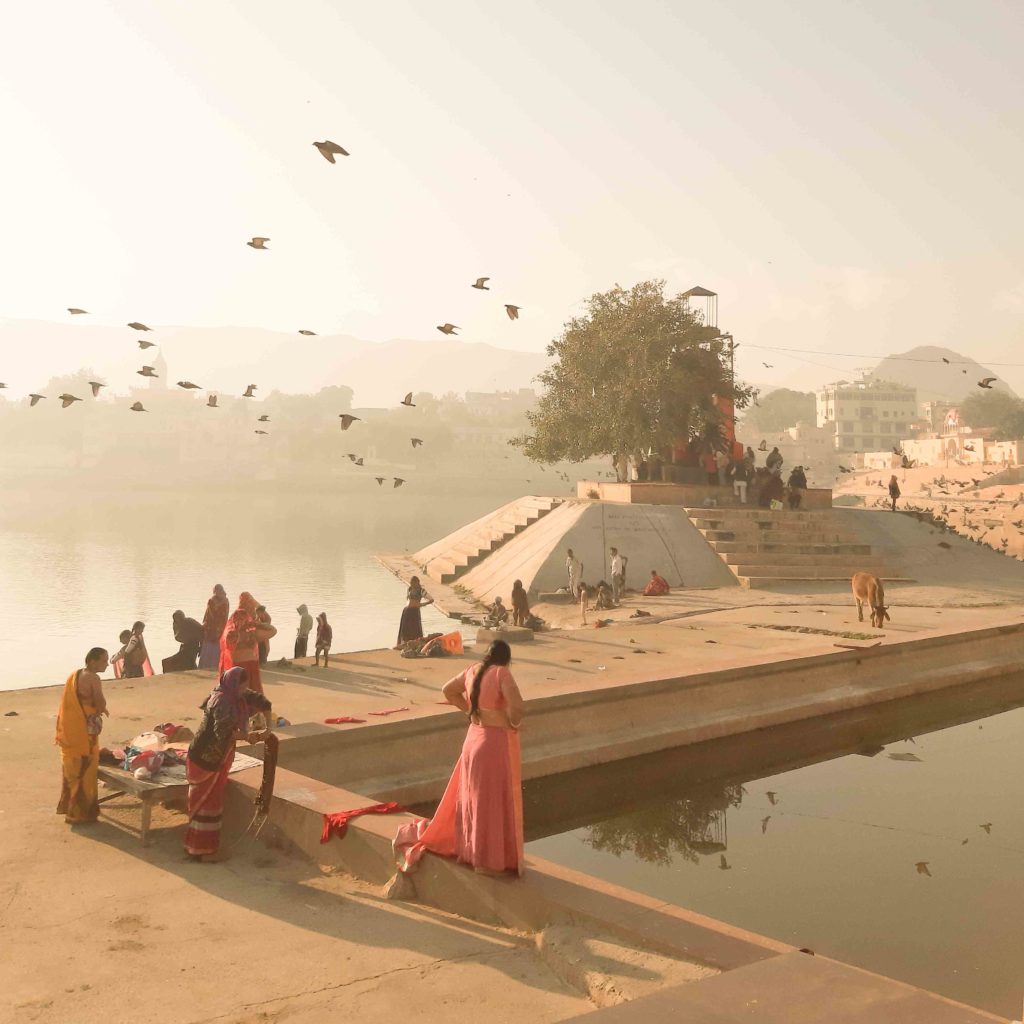
Once a year, in October or November, Pushkar transforms completely. The desert plain outside town — empty the rest of the year — fills with tens of thousands of camels, horses and cattle. Traders arrive from across Rajasthan and beyond. The smell of desert dust and animal dung mixes with incense, cooking fires and the sound of drums and singing that continues through the night.
The fair has two components. The trading fair lasts the first week — this is when the density of camels, the colour of traders’ turbans, the decorated animals and the raw life of commerce are at their most intense photographically. The religious pilgrimage builds toward the full moon in the final days, when hundreds of thousands of pilgrims bathe in the sacred lake. Both are extraordinary. They are also very different from each other.
How to Photograph the Camel Fair
Arrive One Week Before the Official Opening
This is the single most important advice for Camel Fair photography. The official fair begins five to six days before the full moon. But the traders begin arriving a week before that. In the first days of setup, the atmosphere is completely different from the peak fair. Fewer tourists, more traders, the camels arriving in lines across the desert at sunrise. Some of the strongest photographs I have ever made in India happened in those first days before the crowds arrived.
Dawn at the Fair Grounds
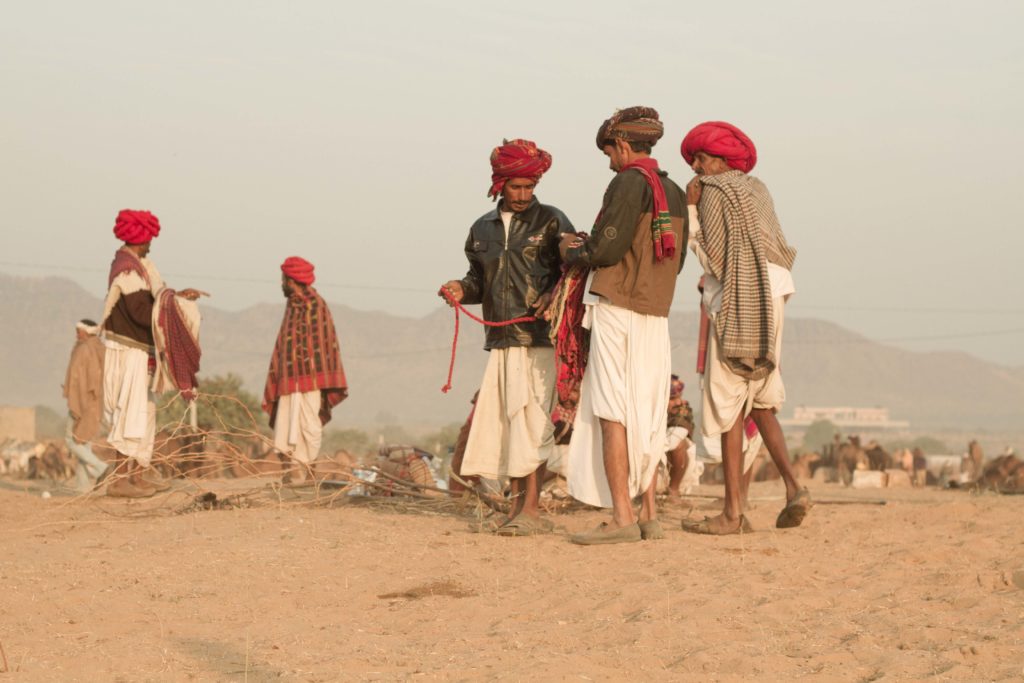
The camel trading grounds are best photographed in the first two hours of daylight. The light is golden, the traders are active, the camels are being decorated and groomed for competition. By 10am the tourist crowds arrive and the atmosphere changes. Set your alarm.
Portraits and Cultural Approach
Rajasthani people are generally open to being photographed — but respect matters. Approach with patience, make eye contact, gesture rather than photograph immediately. Learn a few words of greeting in Hindi. The portraits that result from genuine interaction are categorically stronger than stolen shots. This is the approach I teach in the workshop — photography as encounter, not extraction.
The Pilgrimage at Full Moon
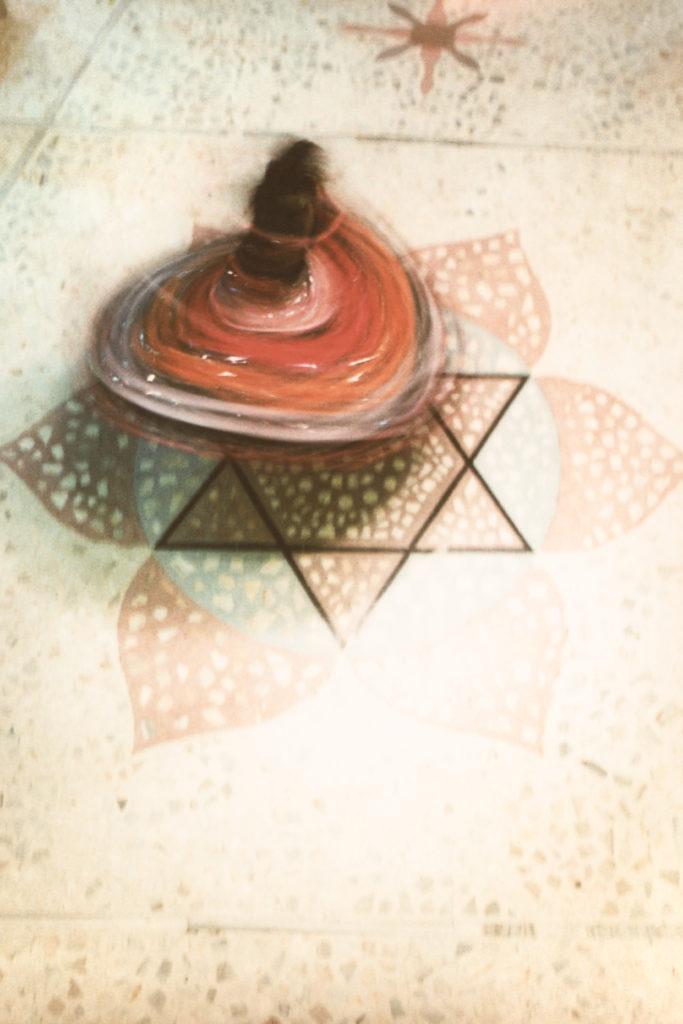
The religious dimension of the fair peaks at the full moon. The ghats fill with pilgrims bathing in the sacred lake. The atmosphere is genuinely overwhelming — the density of devotion, colour and human presence is extraordinary. Work the edges of crowds, use a longer lens to isolate moments, and stay later than you think you need to as the light fades over the water.
Join the Rajasthan
Photography Expedition
Seven days across Jaipur, Jodhpur and Pushkar — arriving one week before the Camel Fair for the most authentic photography conditions. Max 4 photographers.
See the Rajasthan Expedition →
Practical Information for Pushkar Photography
Getting There
Fly to Jaipur, then take a train to Ajmer (2 hours), then a taxi or local bus to Pushkar (30 minutes). Alternatively, hire a private car from Jaipur — about 3 hours. The most atmospheric arrival is by motorcycle, if you are comfortable with Indian roads.
Respect and Ethics
Pushkar is a holy town. Alcohol is prohibited. Dress conservatively near the temples and ghats. Remove shoes before entering any temple. Ask before photographing in religious spaces. The locals are welcoming but the spiritual dimension of the place deserves genuine respect — and photographs made with that awareness are invariably better than those that ignore it.
Exhibited in three US galleries
Limited edition prints on plexiglass — hand signed & numbered — edition of 10
Photography Expeditions
- Algarve & LisbonJune 10–16
- TuscanyOn request
- BrittanySeptember
- SicilyMid October
- RajasthanNovember
- KeralaJanuary
- CambodiaFebruary
Limited Editions
Printed on plexiglass. Hand-signed, numbered, certificate of authenticity. Edition of 10 per image. Available from the studio or through the three US galleries.
Raffaele Ferrari
Visual artist based in Tuscany. Trained in psychology. Fifteen years of expeditions across Italy, Europe and Asia. Exhibited in three US galleries.
“I travel to understand. The camera is how I show you what I found.”


One Comment