How photograph Kerala, a simple guide
Kerala Photography Guide: Light, Culture and Visual Storytelling in South India
Kerala is one of those rare places where photography becomes something slower, deeper, and more observational.
It is not a destination to document. It is a place to experience through light, movement and human presence. From the quiet backwaters of Alleppey to the early morning fishing nets of Fort Kochi, and the mist-covered tea plantations of Munnar, Kerala offers a constant shift between landscape, culture and everyday life that creates one of the richest visual environments in Asia.
I have been returning to Kerala since 2013. Every expedition I photograph less, but I see more. This guide is not about where to point the camera. It is about how to see.
Why Kerala Is One of the Most Photographic Regions in India
Kerala is different from other regions of India because it does not overwhelm you in a single direction. Instead, it unfolds slowly.
Light changes constantly — between the soft humidity of the coast at dawn, the sharp mountain clarity of Munnar at altitude, and the dense, saturated atmosphere of the backwater channels at midday. People move with a rhythm that is connected to daily life rather than to any kind of performance. There is no sense of being watched watching.
For photographers, this creates something essential: time to observe. The strong human presence in everyday scenes, the layered landscapes between water, land and sky, the balance between documentary instinct and fine art composition — Kerala holds all of these simultaneously, and does not force you to choose between them.
This is why it remains, after more than a decade of expeditions, the Indian destination I return to most consistently.
Best Places to Photograph in Kerala: Four Locations as Visual Problems
These are not sights to visit. They are visual conditions to read — each requiring a different relationship between light, timing and proximity.
-
Fort Kochi — Colonial Layers and the Fishing Nets at Dawn
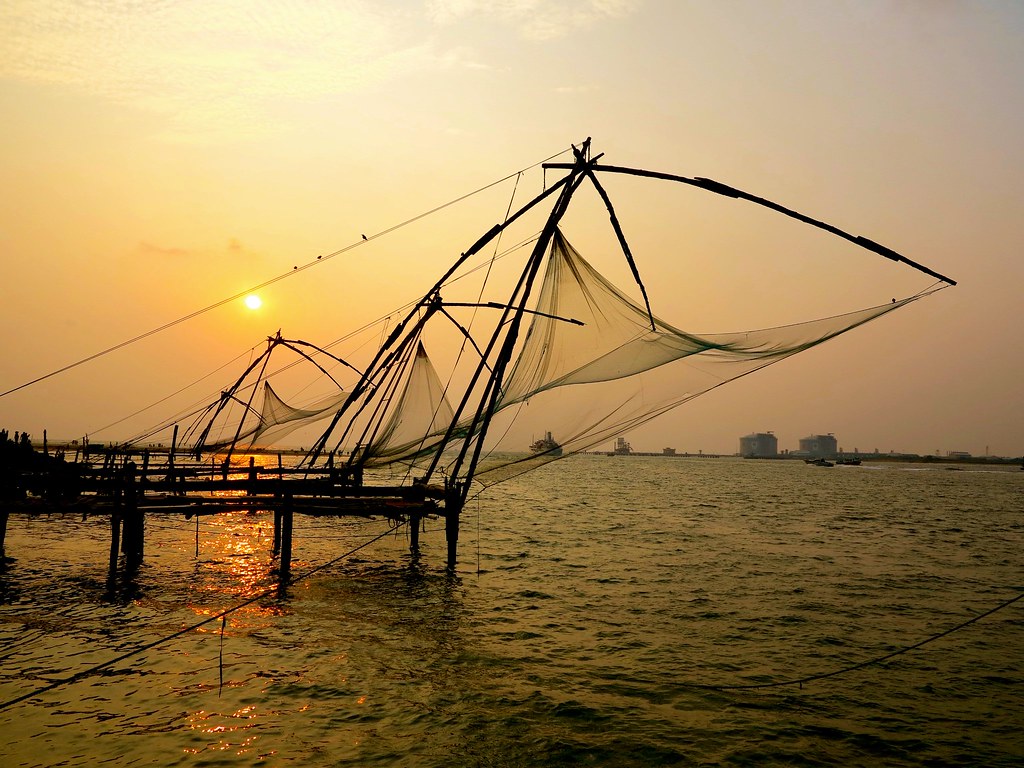
Fort Kochi is where I begin every Kerala expedition. Colonial architecture, fishing culture and street life coexist in a visual rhythm that is unlike anything else in India. Early mornings around the Chinese fishing nets — when low light catches the teak poles and the water beneath — offer minimal but powerful compositions. The back streets of Mattancherry and the fish market before 7 AM are where the real character of the city appears. Arrive at 5:30 AM. Move slowly. Work without a tripod. -
Munnar — Where the Landscape Becomes Abstract
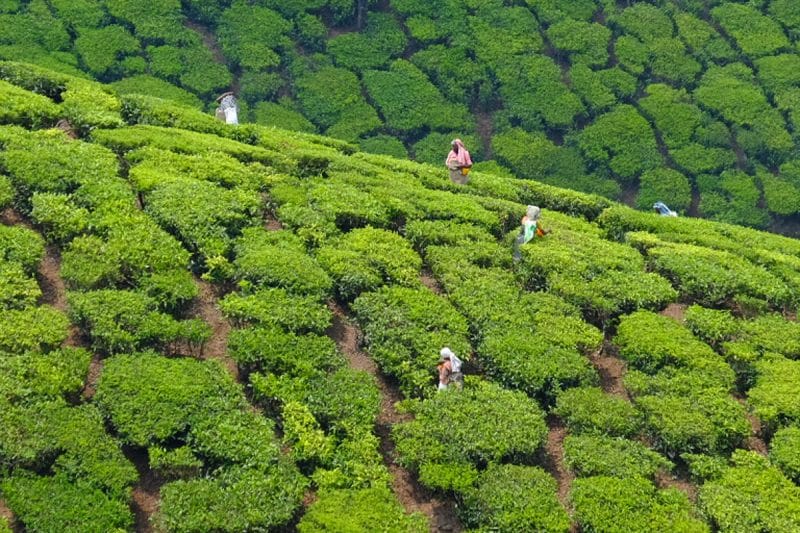
Munnar offers a completely different visual language. At 1,600 meters the tea plantations become geometric abstractions — curves and layers of green shaped by light and mist. This is a place where patience is more important than movement. The best images often come when you stop searching for them. Position yourself in the plantation rows before 6:30 AM and wait for the mist to move. Return the following morning and photograph the same scene differently. -
Kerala Backwaters — Silence, Rhythm and Reflection
The backwaters of Alleppey are about silence and rhythm. Boats move slowly through narrow canals where life happens directly on the water. Photographically, this is a space for storytelling — reflections, gestures, quiet human moments that do not announce themselves. Hire a local canoe rather than a houseboat. Lower to the water, slower, with access to the narrower channels where the domestic life of the villages continues regardless of visitors. -
Varkala — Cliff, Sea and Sacred Presence
Varkala combines coastal cliffs with daily life scenes. The Janardhana Temple sits above the sea; pilgrims descend at sunrise for ritual bathing, creating compositions where the sacred and the natural coexist in the way Kerala does better than almost anywhere else in India. This is one of the most interesting places in the state for observing natural movement and human interaction without forcing the frame. Use a medium telephoto — 85 to 135mm — and work from a distance.
Best Season to Photograph Kerala: Light and Atmosphere by Month
Kerala changes significantly with the seasons, especially in terms of light quality and atmospheric conditions. Understanding this before you travel determines almost everything about the images you will make.
| Season | Conditions | What to Photograph | Best For |
|---|---|---|---|
| Jan – Mar ★ | Dry and clear. Green from the retreating monsoon. Temple festival season at peak. Low humidity. Best light quality of the year. | Temple festivals, elephant processions, Fort Kochi waterfront, backwaters at dawn, Munnar morning mist. | Best overall window. January is my first recommendation — festivals at peak, landscape green, light perfect. |
| Oct – Dec | Post-monsoon. Landscape intensely green. Some residual rain in October. Festival season beginning from November. | Backwater reflections, lush coastal landscape, early festival season from November onward. | Good alternative. Less crowded than January. Landscape at its most saturated green. |
| Apr – May | Hot and humid. Pre-monsoon light can be dramatic at dawn and dusk. Thrissur Pooram in April or May. | Thrissur Pooram elephant festival — one of the greatest visual events in India. Early morning landscape only. | Specialist visit for Thrissur Pooram only. Not recommended as a general photography window. |
| Jun – Sep | Monsoon season. Heavy rain. Dramatic skies. Transport unpredictable. Landscape extraordinarily green. | Monsoon light on backwaters, abstract cloud formations, rain on the Fort Kochi fishing nets. | Advanced photographers comfortable with complete unpredictability. Atmospherically extraordinary. |
Photographing People in Kerala: Timing, Presence and the Ethics of Proximity
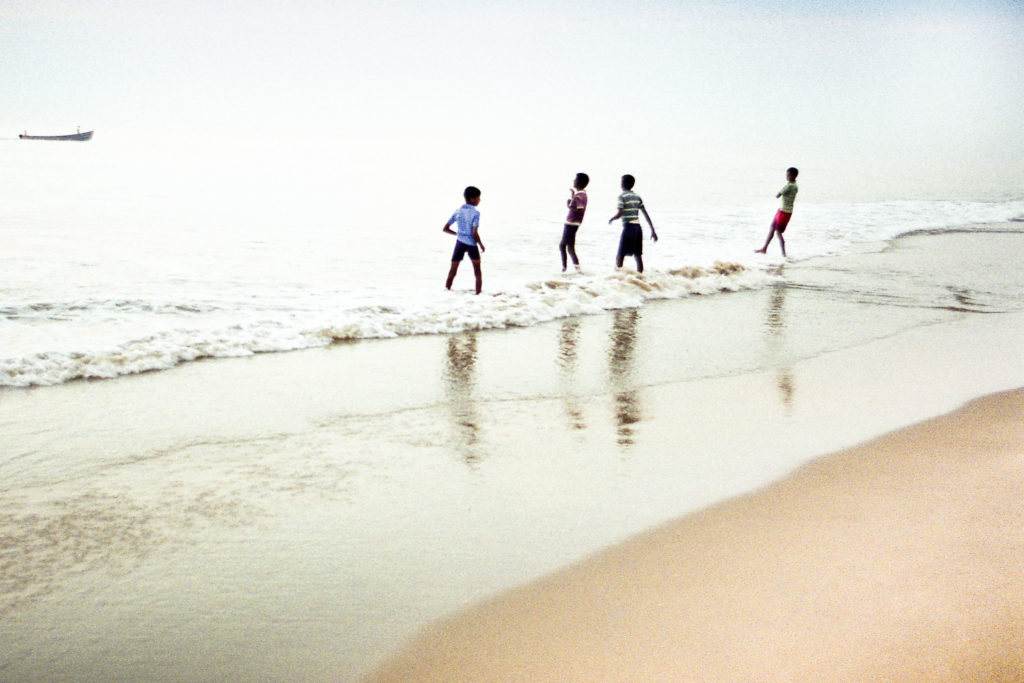
One of the most important aspects of photographing Kerala is understanding people — not as subjects, but as part of the environment.
Photography here is not about intrusion. It is about timing and presence. You learn to wait, observe and respond rather than direct. The camera becomes a tool of attention rather than of extraction.
Some of the strongest images come from the simplest interactions — a glance, a pause, a gesture that lasts only a second. These moments do not happen because you positioned yourself correctly. They happen because you stayed long enough in one place for your presence to become unremarkable.
Practical note: dress conservatively at temples, cover shoulders and knees, remove shoes at the entrance. Learn three words of Malayalam. Ask before photographing individuals. These are not bureaucratic requirements — they are the practical conditions for the visual access that makes a photograph matter.
Photograph Kerala With Someone Who Has Led Expeditions Here Since 2013
Small groups allow us to work closely with light, atmosphere and timing — adapting each day to real conditions rather than fixed itineraries. The focus is not only on where we go, but on how we approach each scene. Fort Kochi at pre-dawn, backwaters by local canoe, Munnar tea hills in mist, temple elephant processions in January festival season.
What Kerala Teaches You as a Photographer: Slowness as Method
Every time I return to Kerala, I photograph less, but I see more.
The region teaches a different approach — one based on patience, awareness and reduction. Instead of searching for strong compositions, you begin to recognise them as they appear naturally. The image comes to you, rather than the other way around. This sounds passive. It is, in fact, the most demanding form of photographic discipline.
My training in psychology before I became a photographer gave me a framework for this: the quality of what you observe is determined almost entirely by the speed at which you move through a place. Kerala slows you down against your will at first, then teaches you why the slowness was necessary.
Instead of looking for strong compositions, you begin to wait for them. Instead of moving through five locations in a morning, you return to one location on five consecutive mornings and discover what changes and what stays constant. This shift — from coverage to attention — is what makes Kerala such a powerful environment for photographic growth.
On gear: One camera body. A 35mm or 50mm prime for streets, markets and human situations. A 70–200mm for the backwaters, plantation compression and festival photography. A polarising filter for the backwater channels. Nothing else is necessary. The complexity is in the reading, not the equipment.
Beyond the Postcard: The Real Visual Experience of Photographing Kerala
Kerala is often presented through tropical landscapes and bright travel imagery. The real experience of photographing here is much more subtle.
It is found in the rhythm of daily life on the backwater channels, in the atmospheric conditions of a Munnar morning that changes completely in twenty minutes, in the space between moments at the Fort Kochi fish market where the transaction is already over before you raise the camera.
For photographers, this is where the real work begins. Learning to see beyond the obvious. Working with what is present rather than what is expected. Accepting that the most powerful image of the day was made not at the famous viewpoint but at the ordinary jetty forty minutes before, while you were still finding your position.
Kerala does not reward the photographer who arrives with a shot list. It rewards the one who arrives with time.
Frequently Asked Questions
What is the best time to photograph Kerala?
The best period is October to March when light is softer, humidity is lower, and travel conditions are stable. January is the single best month — dry season, landscape green from the retreating monsoon, and temple festival season at its peak.
Is Kerala good for photography workshops?
Yes. Kerala offers a unique combination of landscape, culture and documentary photography opportunities in one compact geography. The January festival season adds a ceremonial and visual intensity that makes it one of the richest workshop environments in Asia.
What type of photography is Kerala best for?
Kerala is ideal for travel photography, documentary work, landscape photography and visual storytelling. The combination of backwaters, colonial city life, highland tea plantations and temple festivals creates a range of subject matter that supports very different photographic approaches within the same trip.
Do I need advanced skills to join a Kerala photography workshop?
No. The focus is on developing your visual approach and learning to see — not on technical complexity. Participants at all levels of experience find the Kerala workshop productive because the work centres on observation, timing and light reading rather than camera settings.
What makes Kerala different from other destinations in India?
Kerala is more atmospheric, slower and visually balanced compared to most other regions of India. It does not overwhelm in a single direction. The combination of coastal, highland and waterway environments within a compact geography creates a photographic range that no single location in India quite replicates.
Can I join the Kerala photography workshop alone?
Yes. Most participants join individually and work within a small group environment of maximum 4 photographers. The Kerala Photography Workshop runs every January, led by Raffaele Ferrari who has been leading photography expeditions in Kerala since 2013.


2 Comments