Photograph Rajasthan an essential guide

Photographing Rajasthan: The Living Geometry of Colour, Light and the Human Face
Rajasthan is not a destination. It is a chromatic argument.
I have been visiting and photographing this state since 2008 — on buses, on trains, on a Royal Enfield, and in recent years by private car with a local driver who knows the light better than any GPS. In that time I have come to understand Rajasthan not as a collection of palaces and festivals but as an extended study in the relationship between equatorial light and saturated pigment — a visual environment unlike anything in Europe or Southeast Asia.
The light here is not gentle. It is vertical and demanding. By 9 AM in November it is already architectural, casting shadows so hard they could have been drawn with a ruler. The colours the Rajasthani people choose to wear — saffron, cobalt, crimson, the deep green of a wedding sari — are not decorative choices. They are responses to this light, evolved over centuries of human life in a landscape that offers no visual softness.
To photograph Rajasthan seriously is to study the interaction between these two forces — light and colour — and to find, within that study, the human presence that gives the geometry its meaning.
The Psychology of Monochromatic Space: Jodhpur and Jaipur as Visual Studies
Jodhpur is the most photographically coherent city in India. This is not an aesthetic accident. The cobalt blue that covers the houses of the old city — applied originally by Brahmin families as a caste marker, then adopted by the entire neighbourhood as a thermal solution against the desert heat — creates a visual field of extraordinary uniformity. From the ramparts of Mehrangarh Fort at dawn, the city reads not as a collection of buildings but as a single blue surface, broken only by the terracotta orange of the fort walls above and the pale sand of the Thar Desert at the edges.
The challenge in Jodhpur is not to find a good composition. It is to resist the obvious one. The aerial view of blue rooftops from the fort has been made thousands of times. The more interesting photographs happen at street level, inside the blue city, where the colour stops being a panoramic spectacle and becomes a spatial condition — an alley so saturated with blue that the light bouncing between the walls takes on a quality you cannot reproduce in any other location in the world.
Jaipur operates differently. The pink of the old city — a warm terracotta rose applied to the facades in 1876 for the visit of the Prince of Wales — is less dominant than Jodhpur’s blue, but the Hawa Mahal and the bazaar streets around it offer a completely different visual problem: how to photograph a dense, chaotic urban environment and find the geometric clarity within it. The answer, almost always, is patience and focal length. A 200mm lens from the far end of a bazaar street compresses the façades into a single plane of colour and pattern. The chaos of the foreground disappears. What remains is architecture as pure graphic surface.
Practical note: in both cities, the best light for architectural photography is the first ninety minutes after sunrise. By 9 AM the streets fill with vehicles and the light goes flat. By 7 AM in October you can photograph the Hawa Mahal in complete silence with raking light across the latticed façade. The image exists only in that window.

Anthropological Portraiture and the Ethics of the Gaze in Rajasthan
The most powerful photographs made in Rajasthan are portraits. This is also where the most serious ethical questions arise.
My background in psychology informs how I approach a human subject before lifting the camera. In Rajasthan particularly — where the density of visually extraordinary faces, the colour and weight of traditional dress, and the intensity of public life in the markets and ghats create an almost irresistible photographic pressure — the temptation to photograph quickly and move on is constant. This approach produces technically competent images with no interior life. The person in the frame knows they have been taken, not seen.
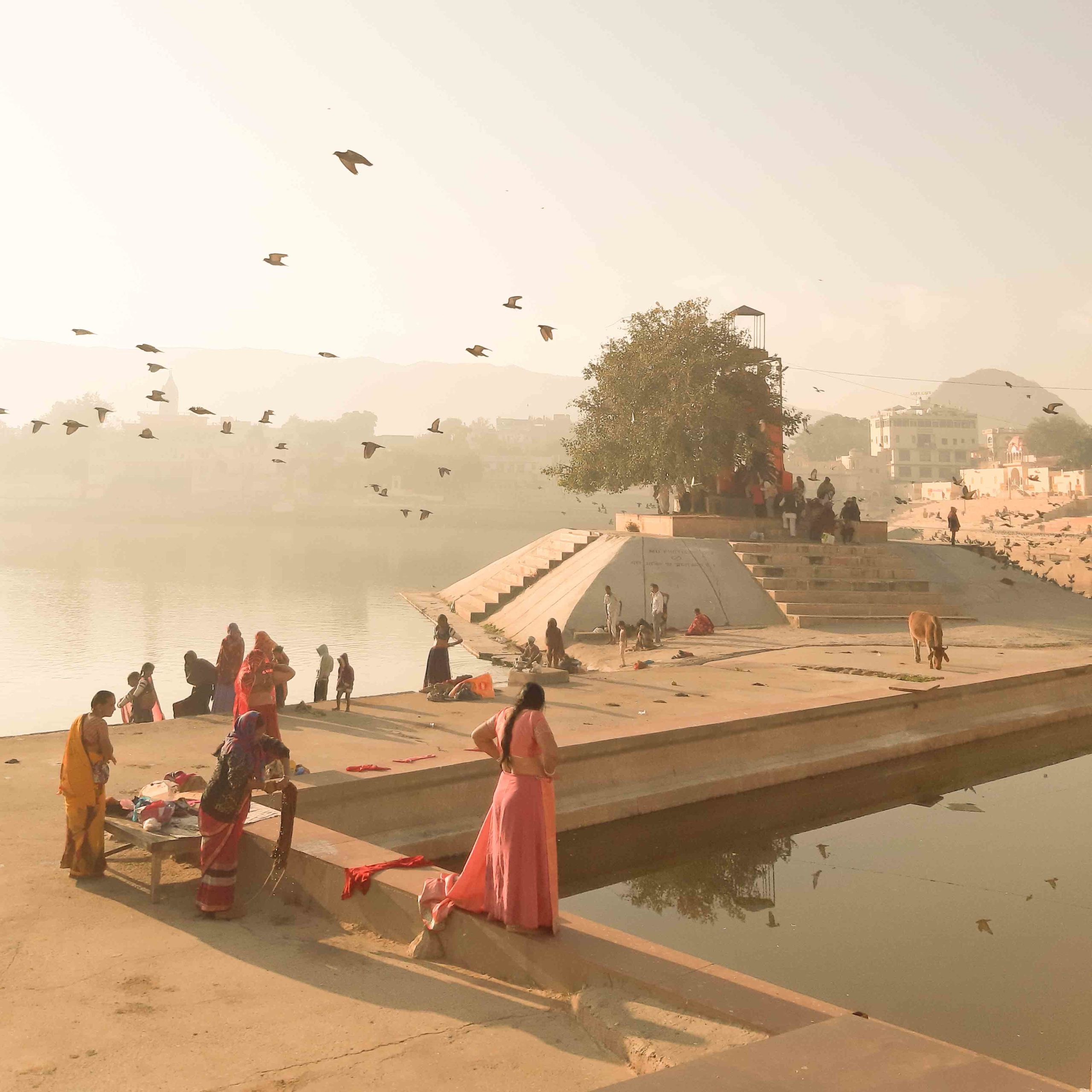
The alternative requires a different quality of time. It requires arriving at a location before there is anything obvious to photograph. Sitting. Drinking tea. Accepting that the first hour is not for photography but for presence — for becoming part of the visual field of the place rather than an observer outside it. In a camel market at Pushkar at 6 AM, this means watching the traders examine animals, sharing a chai with a group of herdsmen from Jaisalmer who have travelled three days to be there. It means putting the camera away long enough for your presence to become unremarkable.
The portraits that come from this patience are not stolen images. They are the result of a silent agreement — a moment where the subject has chosen to be seen, not been caught unaware. The difference is visible in the image. It is also the difference between a photograph and a record.
Ask before photographing individuals whenever possible. Learn three words of Hindi or Rajasthani. Carry prints of previous portraits to show — nothing opens a conversation with a Rajasthani elder faster than seeing themselves in a photograph made by a stranger who returned to show them. At temples and sacred sites, put the camera away entirely and observe.
Photograph the Pushkar Camel Fair With Someone Who Has Been Going Since 2008
The Pushkar Camel Fair is one of the most visually concentrated events anywhere in Asia — five days of trading, ceremony and human presence in the desert, timed to the full moon of November. Ten thousand camels. Rajasthani traders from across the Thar Desert. A level of visual density that requires preparation, patience and the right ethical approach to portrait photography. We work in small groups of maximum four, with daily editing sessions and direct guidance on timing and portraiture.

The Geometry of Rajput Architecture: Forts, Chiaroscuro and the Logic of Stone
The hill forts of Rajasthan — Mehrangarh in Jodhpur, Amber Fort near Jaipur, the golden sandstone citadel of Jaisalmer — are among the most complex architectural subjects in India. Not because they are large, though they are. Because the relationship between their geometry and the quality of the desert light creates a photographic problem that rewards sustained attention rather than wide-angle documentation.
Mehrangarh is the most extreme example. The fort walls — built from the same pale grey volcanic rock as the hill on which they stand — are practically indistinguishable from the geology at midday when the light is overhead. At dawn, with raking directional light across the battlements, the walls read as a sequence of surfaces at different angles to the sun, each catching the light differently, creating a chiaroscuro of enormous complexity. The carved lattice windows of the inner chambers, which at noon are simply decorative elements, become at 6 AM projectors of geometric shadow patterns across the sandstone floors — patterns that last four minutes before the sun moves.
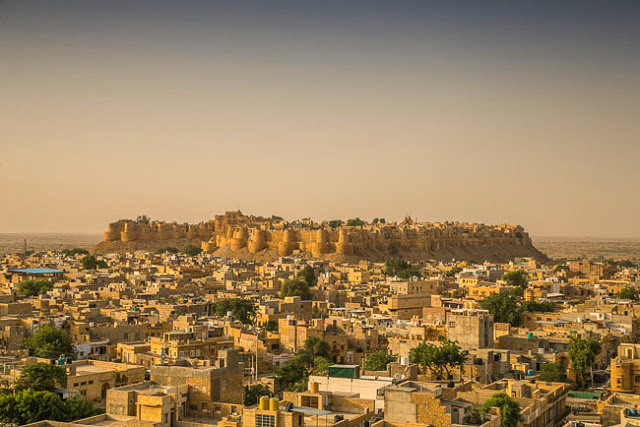
Jaisalmer operates in the opposite register. The yellow Jaisalmer stone — technically known as Jurassic limestone — absorbs and reflects light in a way that is unique in Indian architecture. At golden hour it glows from within rather than simply reflecting surface light. The fort, inhabited since the twelfth century and still a living city today, offers a photographic environment of extraordinary intimacy: narrow lanes, carved havelis, the smell of spices and the sound of prayer from within the fort walls. Use a 50mm prime here. Move slowly. The best images happen in the lanes, not at the formal viewpoints.
Best Locations to Photograph Rajasthan: A Practical Visual Guide
Each location requires a different approach. These are not interchangeable stops on a tourist circuit — they are distinct visual environments, each demanding a specific understanding of light, architecture and human presence.
| Location | Visual character | Best for | Best timing |
|---|---|---|---|
| Jodhpur | Cobalt blue city, Mehrangarh Fort, bazaar alleys | Architectural abstraction, street portraiture, chiaroscuro | Dawn for fort view; early morning for blue city lanes |
| Jaipur | Pink terracotta façades, Hawa Mahal, Amber Fort | Architectural surface, colour compression with telephoto | First 90 min after sunrise. Amber Fort at dawn before crowds |
| Pushkar ★ | Sacred lake, ghats, November Camel Fair | Anthropological portraiture, festival ceremony, desert landscape | November Camel Fair; early morning at the ghats year-round |
| Udaipur | Lake palaces, narrow lanes, white marble and water | Reflection photography, intimate street scenes, evening light | Golden hour on the lake; early morning in the old city |
| Jaisalmer | Golden sandstone fort, carved havelis, Thar Desert | Stone texture and light, living fort city, desert dunes | Golden hour — the stone glows from within. Dawn for the dunes |
| Shekhawati | Painted havelis, abandoned palaces, open-air fresco art | Architectural detail, fresco documentation, solitude | Any daylight — this is the least visited and most empty location |

Best Season to Photograph Rajasthan: Light, Festivals and Atmospheric Conditions by Month
Rajasthan has two photographic seasons and one exceptional event. Understanding which matches your visual intentions determines the quality of everything you make here.
-
October – November — The Best Window
The post-monsoon landscape is green, the light has recovered its directionality after the humidity of summer, and the festival season begins. The Pushkar Camel Fair — held in late October or early November depending on the lunar calendar — is the single most concentrated photographic event in Rajasthan. October temperatures are bearable. The light at dawn is extraordinary. This is my first recommendation without qualification. -
December – February — Clear and Cold
The best light quality of the year. Clear skies, low humidity, exceptional atmospheric clarity. Cold mornings — near zero in December in the desert — mean complete solitude at the famous viewpoints before 8 AM. The landscape lacks the green of the monsoon months but the architectural photography is at its most precise in this light. -
March – April — Festival Season Continues
Holi in March transforms Rajasthan into one of the most intense colour events on earth. The festival of colours, photographed in the streets of Pushkar or Jaipur, produces images that exist nowhere else in the world. The light is warm. The crowds are manageable before 10 AM. A telephoto lens and a camera you don’t mind covering in powder. -
May – September — Avoid
The pre-monsoon heat (45°C in May) and the monsoon itself (June–September) make photography difficult and in some months impossible. Some photographers find the monsoon landscape — the desert transformed briefly into green — visually extraordinary. For a first visit, this is not the window.
Shekhawati and the Art of Photographing What Has Been Abandoned
Between Delhi, Jaipur and Bikaner lies a triangle of territory that most itineraries skip entirely. The Shekhawati region — a cluster of small towns including Mandawa, Nawalgarh and Fatehpur — contains the largest concentration of painted havelis in the world. Merchant families of the eighteenth and nineteenth centuries decorated their houses with elaborate frescoes on every available surface: mythological scenes, portraits of Maharajas, and — with a visual anachronism that is genuinely extraordinary — paintings of early automobiles, steam trains and colonial officials made by artists who had never seen these things, working only from description.
The havelis are largely abandoned now. Some are slowly being restored; most are not. The peeling paint, the broken courtyards open to the sky, the frescoes surviving under layers of dust and pigeon activity — this is not a landscape of preservation but of slow dissolution. As a photographic subject it is unlike anything else in Rajasthan. The colour is faded rather than saturated. The silence is total. You will often be entirely alone.

Spend at least two days here. The area is spread across approximately 100 kilometres — Mandawa is the most photogenic base. The locals are extraordinarily welcoming and not yet accustomed to the commercial photography tourism that has reorganised the experience of Pushkar and Jodhpur. The portraits here have a quality of genuine encounter that is increasingly difficult to find in the more visited parts of Rajasthan.
Rajasthan Is One of Many Visual Worlds We Work In Together
The same principles that govern how I approach portraiture in Pushkar or architectural photography in Jodhpur — patience, perception, the ethics of the gaze — apply to every expedition I lead. From the fog of Val d’Orcia to the festival light of Kerala, from the backwaters of Alleppey to the cliff villages of the Amalfi Coast. One mentorship, many landscapes.
Frequently Asked Questions
What is the best time to photograph Rajasthan?
October and November are the best months overall — post-monsoon light, green landscape, festival season at its peak and the Pushkar Camel Fair. December through February offers the best light clarity and complete solitude at major viewpoints. Avoid May through September (extreme heat and monsoon).
What are the best photography locations in Rajasthan?
Jodhpur for the cobalt blue city and Mehrangarh Fort, Jaipur for the Hawa Mahal and Amber Fort, Pushkar for the Camel Fair and sacred lake, Jaisalmer for the golden sandstone fort and desert landscape, Udaipur for the lake palaces, and the Shekhawati region for painted havelis and complete solitude.
What camera and lens should I bring for Rajasthan photography?
A 70–200mm telephoto for compressing architectural facades and compressing the colour fields of the bazaars. A 35mm or 50mm prime for the street portraiture and the intimate lanes of Jodhpur and Jaisalmer. A wide angle (16–24mm) for the interior courtyards of the forts. Protect all equipment from dust — the Thar Desert generates significant fine particles.
How do I photograph people in Rajasthan ethically?
Spend time in a location before photographing. Ask before making portraits of individuals. Learn a few words of Hindi or Rajasthani. Put the camera away at temples and sacred sites. The Pushkar ghats are explicitly off-limits for photography — respect this without exception. The portraits that come from patience and genuine human contact are always more powerful than images taken without permission.
What is the Pushkar Camel Fair and when does it happen?
The Pushkar Camel Fair is an annual livestock market and religious festival held in late October or early November (the date varies with the Hindu lunar calendar). It is one of the largest camel fairs in the world — approximately ten thousand camels, traders from across Rajasthan and a level of visual intensity that has no equivalent in India. The Rajasthan Photography Expedition is timed specifically to the Fair each November.
Can I join a photography workshop in Rajasthan?
Yes. The Rajasthan Photography Expedition runs every November, timed to the Pushkar Camel Fair. Maximum 4 photographers. Led by Raffaele Ferrari who has been photographing Rajasthan since 2008. The itinerary covers Jodhpur, Pushkar, Jaipur and the desert landscape, with an optional Varanasi extension.


One Comment