How to Photograph Jodhpur
Journal · Rajasthan · Photography Guide
How to Photograph Jodhpur:
The Blue City and the Light That Defines It
Jodhpur is called the Blue City for reasons that are visible from the moment you reach the ramparts of Mehrangarh Fort and look down at the old city spread below. The indigo-painted houses of the Brahmin quarter create a visual effect that is unlike anything else in Rajasthan — a sea of blue punctuated by the ochre and terracotta of the older buildings, contained within the medieval walls of the old city and dominated by the extraordinary mass of the fort above.
It is also one of the most photographed cities in India. The aerial view from Mehrangarh — looking down over the blue rooftops toward the horizon — has been made by every photographer who has ever visited, and it appears in every travel magazine that has ever featured Rajasthan. The challenge of photographing Jodhpur is not finding the subject. It is finding something within the subject that has not already been said.
The aerial view of Jodhpur from Mehrangarh is a starting point, not a destination. The photograph worth making is almost always found at street level — in the lanes of the old city, in the daily life of the Brahmin quarter, in the quality of the blue walls in the specific light of early morning.
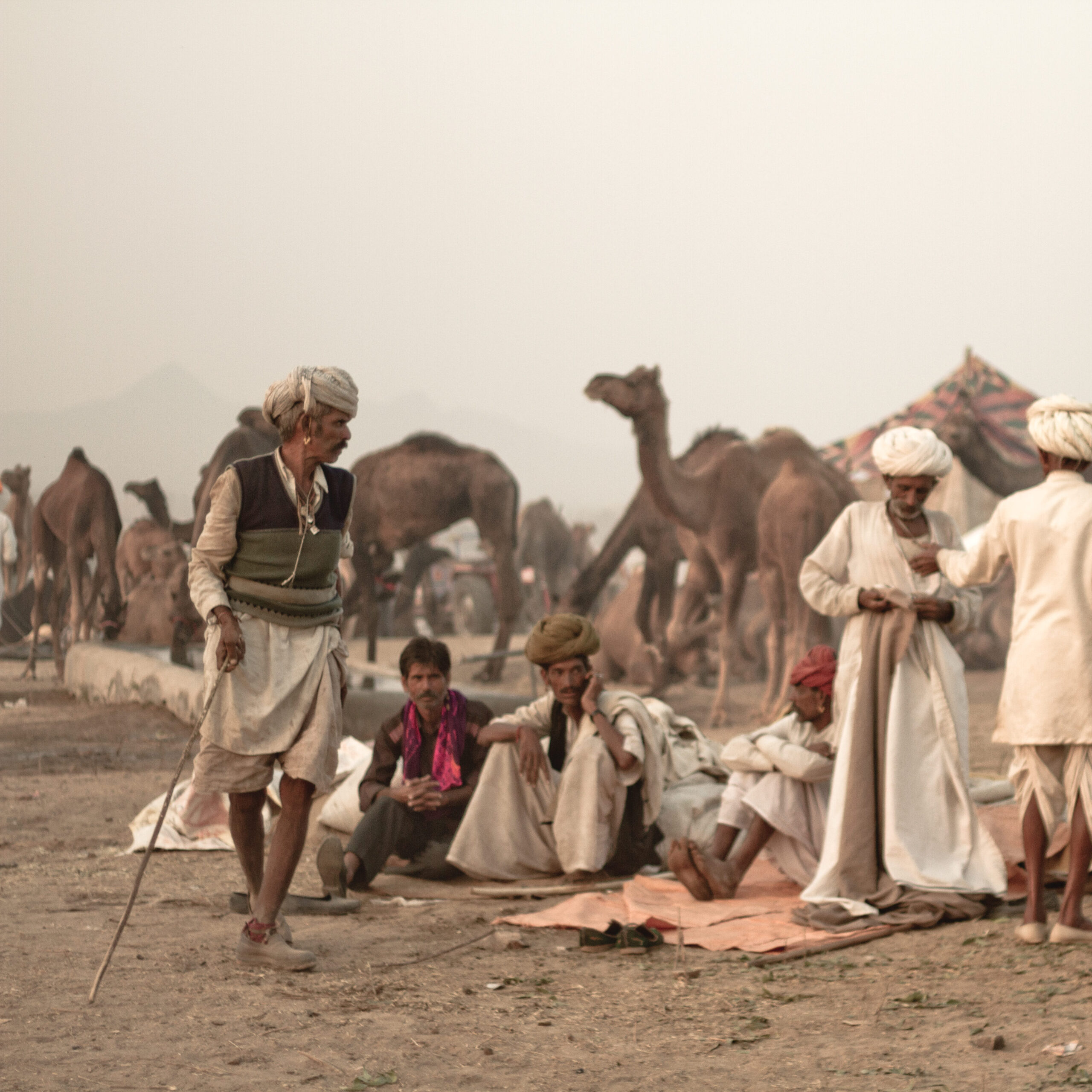
Jodhpur at dawn. Pushkar Camel Fair.
Jaipur. Agra. Maximum 4 photographers.
The Rajasthan photography expedition includes three days at the Pushkar Camel Fair and pre-dawn photography in Jodhpur’s Blue City. Heritage accommodation included. €3,000.
Discover the Rajasthan Expedition →
The Blue City — Understanding the Colour Before You Photograph It
The blue of Jodhpur’s old city is not a single colour. It ranges from the deep indigo of freshly painted walls to the pale, washed-out grey-blue of walls not painted in decades, through every intermediate shade. The mixture changes with the light — in the harsh midday sun the blue walls look flat and bleached; in the early morning light they carry a depth and saturation that is genuinely extraordinary.
The tradition of painting the Brahmin quarter blue is associated with the Brahmin caste identity — blue was both a practical colour (indigo paint repels insects) and a social marker. Today the painting continues partly as tradition and partly because the Blue City has become an economic asset, drawing tourists whose spending supports the local economy. This is the cultural context that makes the colour meaningful rather than decorative — and understanding it changes how you photograph it.
The Fort — Mehrangarh from Above and Below
Mehrangarh Fort dominates Jodhpur from every angle and at every hour. The view from the ramparts at dawn — the city spread below, the blue quarter visible, the desert plain stretching to the horizon beyond the walls — is genuinely one of the great panoramic views of India. The standard photograph of this view, made in flat morning light from the most accessible rampart, is widely distributed. The more interesting version requires arriving at the fort before sunrise and finding the specific angle from which the low horizontal light illuminates the blue rooftops from below the plane of the fort walls.
The fort itself — the interior courtyards, the carved sandstone facades, the museum galleries — is a photography subject of extraordinary richness that most visitors move through too quickly. The carved jali screens, the intricate stonework of the Zenana courtyard, the quality of light in the interior spaces at different hours — these require time and a wide-angle lens and the willingness to return to the same space in different light.
Below the fort, the old city lanes that run between the base of the rock and the main bazaar offer the most authentic street photography in Jodhpur. These are the lanes where the daily life of the old city operates without the tourist infrastructure of the fort and the clocktower market — quieter, more residential, with the particular quality of light that arrives in the narrow lanes at specific hours of the morning.
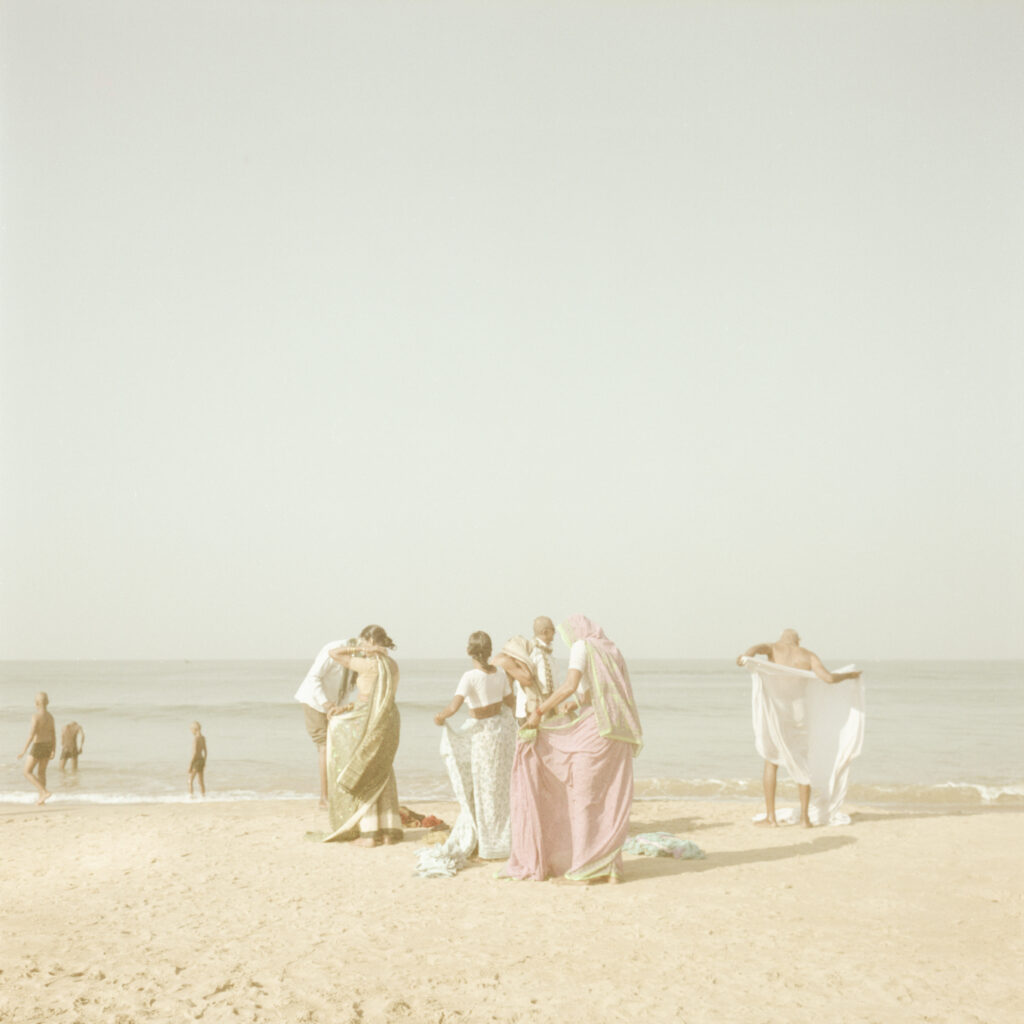
Rajasthan, India · © Raffaele Ferrari
Pre-Dawn in the Blue Quarter — The Hour That Changes Everything
The most productive hour for photographing Jodhpur is the thirty minutes before and after sunrise. The pre-dawn blue light, arriving before the sun clears the horizon, produces a quality on the blue walls that no other hour can replicate — a deep, cool saturation that the warm sunlight of even early morning immediately begins to dilute. This is the light that the greatest photographs of Jodhpur have been made in, and it requires an alarm at 4:30am and the willingness to navigate the old city lanes in near-darkness.
The rooftop cafés of the old city provide elevated positions from which to photograph the blue quarter in this pre-dawn light. Several offer direct views toward Mehrangarh that include the blue rooftops in the foreground and the fort illuminated above. The best of these positions are not the ones advertised as photography viewpoints — they are found by climbing to rooftops and identifying the angle from which the composition works rather than accepting the first available elevated position.
The Clocktower Market — Dawn to Midday
The Sardar Market around the Ghanta Ghar clocktower is the most accessible photography location in Jodhpur’s old city — and the most crowded. The spice stalls, the textile traders, the vegetable sellers who assemble in the lanes surrounding the tower, the chai vendors who operate from their fixed positions at the base of the market — all of this provides rich documentary photography material that rewards the photographer who arrives before the tourist coaches and stays past the comfortable hour.
The market photography of Jodhpur is most productive in the first two hours after dawn and in the late afternoon before sunset. The midday hours produce harsh overhead light that flattens every texture and empties the shadows of any detail. The dawn market, when the day’s produce is arriving and the traders are setting up, has a documentary quality that the midday version cannot offer.
When to Photograph Jodhpur
Jodhpur is part of the Rajasthan photography expedition that I lead in November — which is, in my direct experience, the optimal month for photography across the region. The monsoon has ended, the air is clear, the temperatures are comfortable for full days on foot and the light at dawn and dusk has the quality specific to the Indian dry season: warm, directional, arriving at a low angle that illuminates the architecture and the human subjects of the old city with the raking light that reveals their texture and form.
The connection between Jodhpur and the Rajasthan photography expedition is direct: the expedition opens in Jodhpur, spending the first days in the Blue City before moving to Pushkar for the Camel Fair and then to Jaipur and Agra. The sequence is deliberate — Jodhpur teaches the visual language of Rajasthan before the more intense and complex documentary environment of the Camel Fair.
Dawn in the Blue Quarter.
The fort before the tourists arrive.
The market in the first hour of morning.
These are the photographs Jodhpur offers
to anyone willing to wake before the light.
Jodhpur, Pushkar Camel Fair,
Jaipur and Agra. Ten days.
The Rajasthan photography expedition is structured around the best light, the best access and the documentary approach that produces images beyond the tourist archive. Maximum 4 photographers. Heritage accommodation included. €3,000.
Discover the Rajasthan Expedition →
Continue reading about Rajasthan and India photography:
Rajasthan Photography Expedition — Pushkar Camel Fair ·
Kerala Photography Workshop ·
Kerala vs Rajasthan — Which Workshop Is Right for You? ·
Documentary Photography in Southeast Asia ·
Why Small Group Photography Workshops ·
All Photography Workshops
From the Blue City to the wider Rajasthan expedition
Kerala vs Rajasthan Photography Workshop — which India expedition is right for you?
Kerala Photography Workshop — January 2027 — the other India: backwaters, coast, temple culture
Photograph Rajasthan — Essential Guide — the complete overview of the region
Why Small Group Photography Workshops — the methodology behind every expedition


4 Comments