Photograph the hills of Florence

Journal · Tuscany · Florence · Photography Guide
Photograph the Hills of Florence:
Beyond Piazzale Michelangelo
Every photographer who comes to Florence eventually finds their way to Piazzale Michelangelo. The terrace above the Oltrarno, the panoramic sweep of the Arno and the Duomo, the golden hour crowds with tripods and selfie sticks — it is one of the most visited photography locations in Italy and one of the most difficult to photograph well precisely because of that.
The hills of Florence extend far beyond this single viewpoint. Fiesole to the northeast. Settignano further along the ridge. San Miniato and the Bardini Garden above the Oltrarno. The Belvedere Fort and the road that runs along the southern heights. Each one offers a completely different relationship with the city below — a different angle, a different quality of light, a different hour at which the composition becomes extraordinary.
Florence from the hills is not one photograph. It is many different photographs, made at different hours and from different positions, each one asking a different question about the city.
This guide is about how to photograph the hills of Florence seriously — the locations that matter, the timing that makes the difference, and the approach that produces images beyond the standard panoramic postcard.
Florence, Chianti, Val d’Orcia
and the hills you never photograph alone.
The Tuscany photography workshop includes Florence at dawn and the surrounding hills. Maximum 4 photographers. Individual mentoring. From €1,000.
Discover the Tuscany Workshop →
The Problem with Piazzale Michelangelo
Piazzale Michelangelo is not a bad photography location. The view of Florence from the terrace — with the Ponte Vecchio, the Duomo and the hills beyond the city all visible in a single frame — is genuinely beautiful and impossible to replicate from inside the city. The problem is not the viewpoint. It is what happens there in the hour before and after sunset.
Between April and October, Piazzale Michelangelo is crowded with photographers from mid-afternoon. Tripods compete for position. The light, when it finally arrives, is photographed simultaneously by hundreds of people from essentially the same angle. The resulting images look like each other because they were made from the same point, at the same moment, in the same conditions.
The solution is not to abandon Piazzale Michelangelo entirely — it is to use it differently, or to find the other viewpoints on the same ridge that offer the same quality of light with a fraction of the competition.
San Miniato al Monte — The Better Alternative Above the City
Two hundred metres uphill from Piazzale Michelangelo, the Romanesque facade of San Miniato al Monte sits above a terrace that offers a view of Florence that is almost identical to the one below — but without the crowds. The church itself, in black and white Florentine marble, is one of the most beautiful Romanesque facades in Italy and photographs beautifully in the late afternoon light that arrives at an angle from the northwest.
The cemetery behind the church — the Cimitero delle Porte Sante — is one of the most extraordinary photography locations in Florence that almost no tourist visits. Nineteenth-century funerary monuments of extraordinary elaborateness, cypress trees, the light filtering through the stone in the late afternoon. It requires a different kind of attention from the panoramic photography of the terrace below, but it rewards that attention completely.
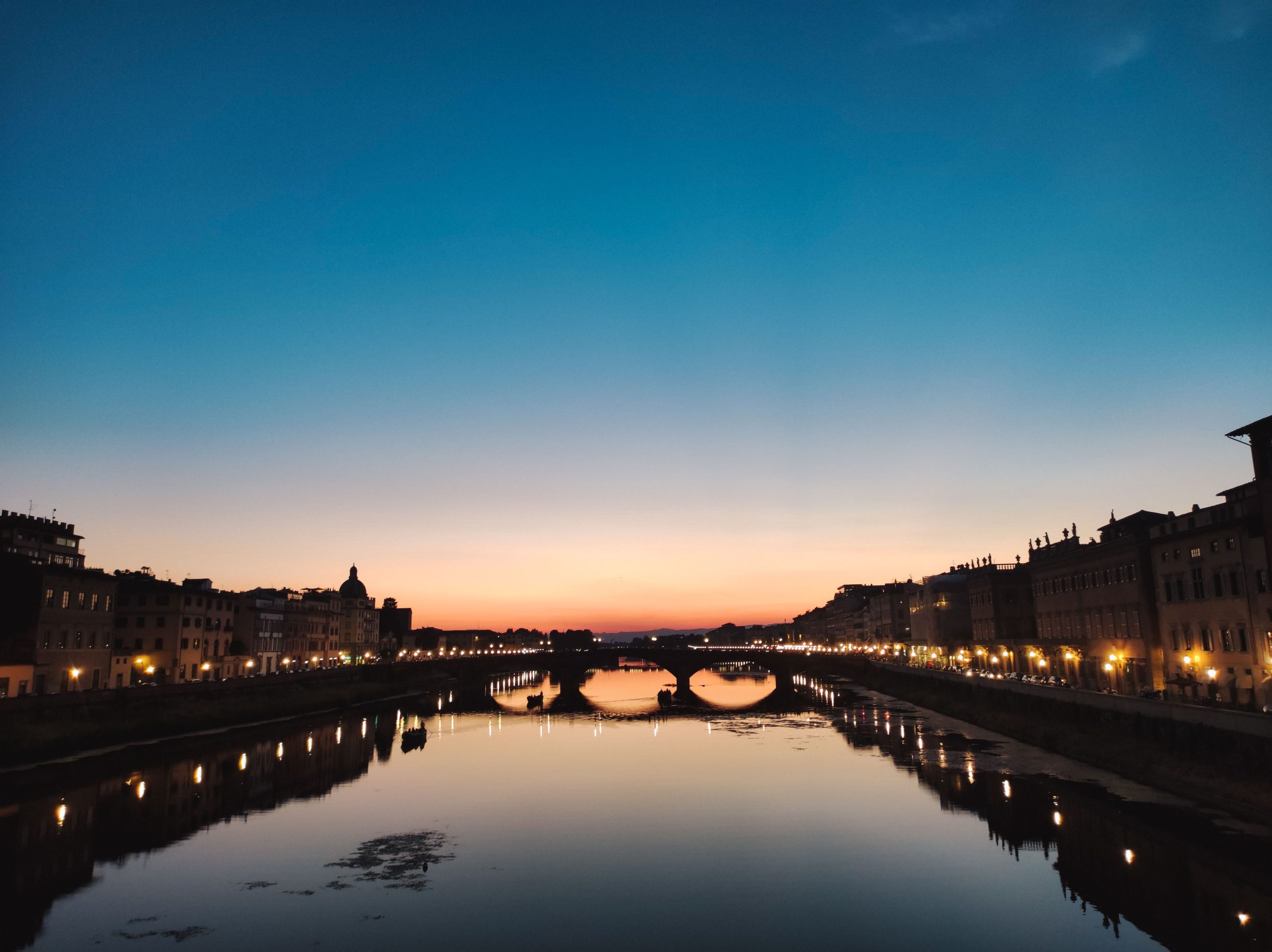
Florence from the hills · © Raffaele Ferrari
Fiesole — The Ancient View
Fiesole sits on a hill seven kilometres northeast of Florence, at an altitude of 295 metres. It was an Etruscan settlement long before Florence existed. The Roman theatre, the archaeological area, the Franciscan monastery on the hill above the town — Fiesole offers photography material that has nothing to do with the panoramic postcard of Florence and everything to do with the layered history of the Tuscan landscape.
The view of Florence from Fiesole is different from the Piazzale Michelangelo view in a way that matters photographically: it is more distant, more compressed, and it shows the city sitting in its valley with the hills on the far side — a complete geographical picture rather than a close architectural portrait. At dawn, when the city is still in shadow and the light is hitting the hills above it, this view produces images that no photographer at Piazzale Michelangelo is making at the same moment.
The archaeological area at Fiesole — the Roman theatre, the Etruscan walls, the baths — is photographically extraordinary in its own right. The stone of the ruins, the quality of the light in the theatre hollow, the terraced geometry of the site above the olive groves — this is material that very few travel photographers engage with seriously.
Arrive in Fiesole before the tourist coaches from Florence appear. The town at 7am, when the local bars are just opening and the light is horizontal and the archaeological area is empty, is a completely different experience from Fiesole at noon.
Settignano — Where the Sculptors Lived
Settignano is further along the ridge from Fiesole, higher and quieter. This is the village that produced Desiderio da Settignano, Benedetto da Maiano and, according to some accounts, influenced the young Michelangelo. Bernhard Berenson lived here for decades at the Villa I Tatti, now the Harvard University Center for Italian Renaissance Studies.
For a photographer, Settignano offers something that Fiesole — now somewhat compromised by tourism — does not: the genuine daily life of a Tuscan hill village above Florence. The bar in the main square, the market on the weekly day, the view down over the cypress-lined road that drops toward the city. The light in the late afternoon, when it arrives at a low angle across the valley and illuminates the stonework of the old houses, is excellent.
The road from Florence to Settignano passes through some of the most beautiful hill landscape immediately outside the city — the Villa Gamberaia, with its water garden terrace above the valley, is one of the finest Renaissance gardens in Tuscany and opens to visitors on request.

Giardino Bardini, Florence · © Raffaele Ferrari
The Bardini Garden — Florence from the Oltrarno
The Giardino Bardini, on the Oltrarno hill above the Ponte Vecchio, is the finest photography location in Florence that most photographers never visit. It is a terraced garden — baroque staircase, wisteria tunnel, English-style upper terrace, Italian formal lower section — that looks directly across the Arno to the historic centre. The view from the upper terrace includes the Duomo, the Palazzo Vecchio tower and the river, framed by the garden’s stone balustrade and the olive trees on the slope below.
In April and May, when the wisteria is in bloom along the baroque staircase, the Bardini Garden offers one of the most purely beautiful photography subjects in Tuscany. The purple racemes against the stone, the light coming from the east in the morning and from the west in the late afternoon, the city visible through the arches of the pergola — this is a composition that rewards multiple visits at different times of day.
The garden is open daily and requires a modest entrance fee. In the high season, arrive at opening time. The morning light on the lower garden, before the tourists arrive and before the sun is fully overhead, is the best available.
The Fortezza di Belvedere — The Military View
The Fort of Belvedere, immediately above the Boboli Gardens on the Oltrarno ridge, offers a 360-degree view of Florence and the surrounding hills that no other single point in the city replicates. The star-shaped military fortification was built by Buontalenti for the Medici in 1595 and now hosts contemporary art exhibitions in its interior spaces.
The photography value of the Belvedere is in the combination of the city view with the architectural geometry of the fortification itself — the angular bastions, the stone walls, the scale of the structure above the olive groves on the hillside. At dawn, when the city below is emerging from mist and the light is arriving from the east, the Belvedere offers conditions that Piazzale Michelangelo — on the wrong side of the hill for morning light — cannot match.
When to Photograph the Hills of Florence
Dawn is the most productive hour for the hills above the Oltrarno — San Miniato, the Belvedere and the Bardini Garden all face east and receive the first light directly. Fiesole and Settignano to the northeast are also excellent at dawn, when the city below is still in shadow and the light picks out the ridge above it.
Golden hour before sunset is the primary hour for Piazzale Michelangelo and the viewpoints that face west across the city. The light in October arrives at a low angle that illuminates the Duomo and the Palazzo Vecchio from the side and produces the warm terracotta tones that define the classic Florence panoramic image.
Spring and autumn are the best seasons. The wisteria in the Bardini Garden blooms in April and May. The olive harvest in October turns the hillsides around Fiesole and Settignano gold. The summer heat produces a haze above the valley that reduces the clarity of the panoramic views and makes the hours between 9am and 6pm largely unproductive for landscape photography.
Fog is the most extraordinary condition for photographing Florence from the hills. Several times each winter, the city disappears into a dense white fog that leaves only the top of the Duomo visible above the cloud — photographed from Fiesole or from the Belvedere, this is one of the most striking images available anywhere in Tuscany. It cannot be planned. It requires the willingness to go out at 6am when the weather forecast suggests it might be forming.
The Approach That Produces Strong Photographs
The hills of Florence are not a subject that yields to quick visits. The photographers who come away with images worth keeping are the ones who have spent enough time on a specific hillside — at a specific hour, in specific conditions — to understand what the light does there and when it does it.
The common approach is to cover as many viewpoints as possible in a single afternoon. The productive approach is to choose one viewpoint and spend an entire morning or evening there, observing the light across its complete arc, understanding the foreground and background relationships, waiting for the moment when the composition becomes what you imagined it could be.
The view from Fiesole at dawn.
The wisteria in the Bardini Garden in May.
The Duomo above the fog from the Belvedere in winter.
These photographs require patience, not luck.
Photograph Florence at dawn.
The hills. The light. The real city.
The Tuscany workshop includes Florence at pre-dawn — the Lungarno, the hills above the Oltrarno, the Bardini Garden at first light. Individual mentoring. Maximum 4 photographers. From €1,000.
Discover the Tuscany Workshop →
Continue reading about Florence and Tuscany photography:
Photograph Florence — Essential Guide ·
Photograph Chianti ·
How to Photograph Val d’Orcia ·
Photograph Siena ·
Photography Workshop in Tuscany ·
Why Small Group Photography Workshops in Italy


2 Comments