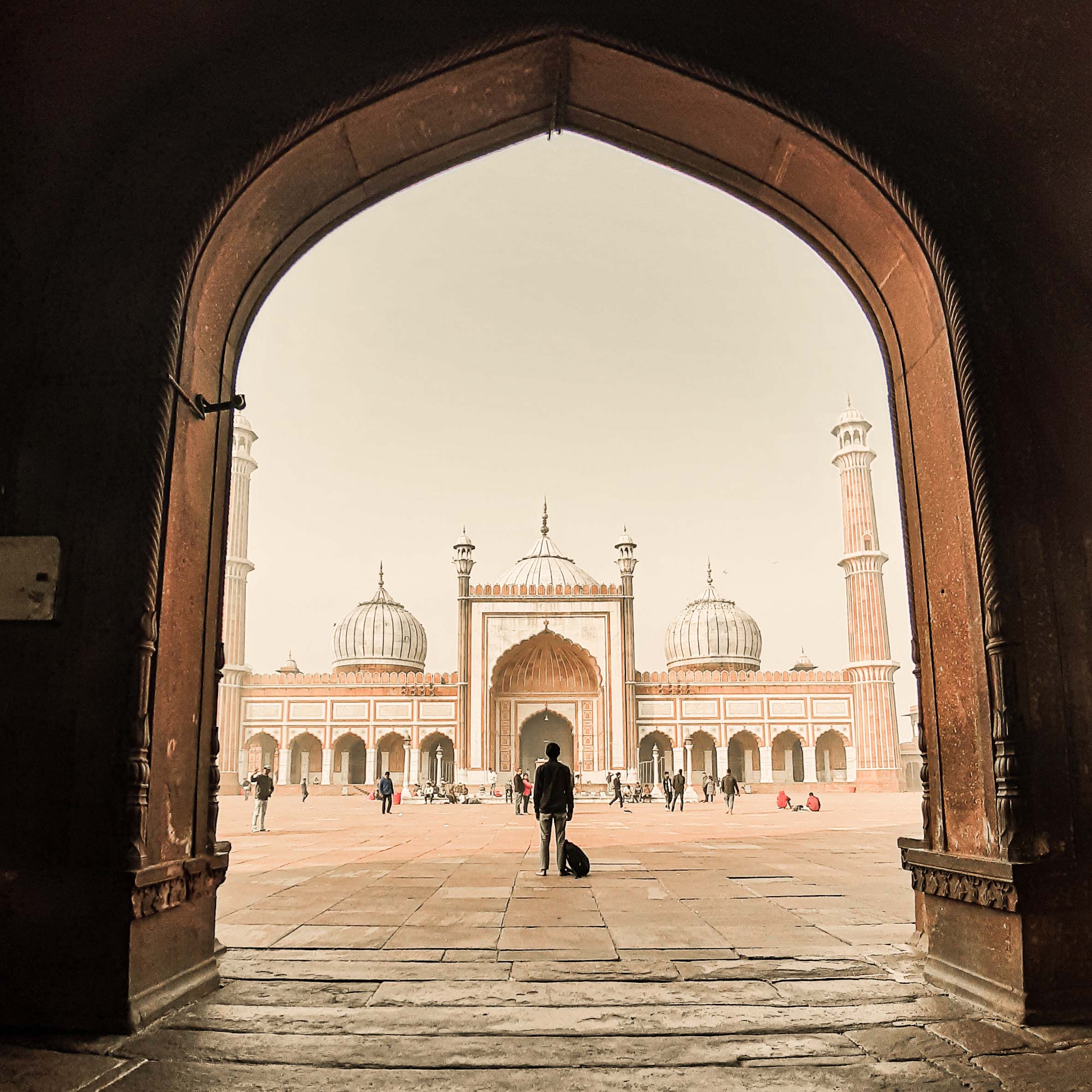
Golden Triangle in India, an itinerary to photograph
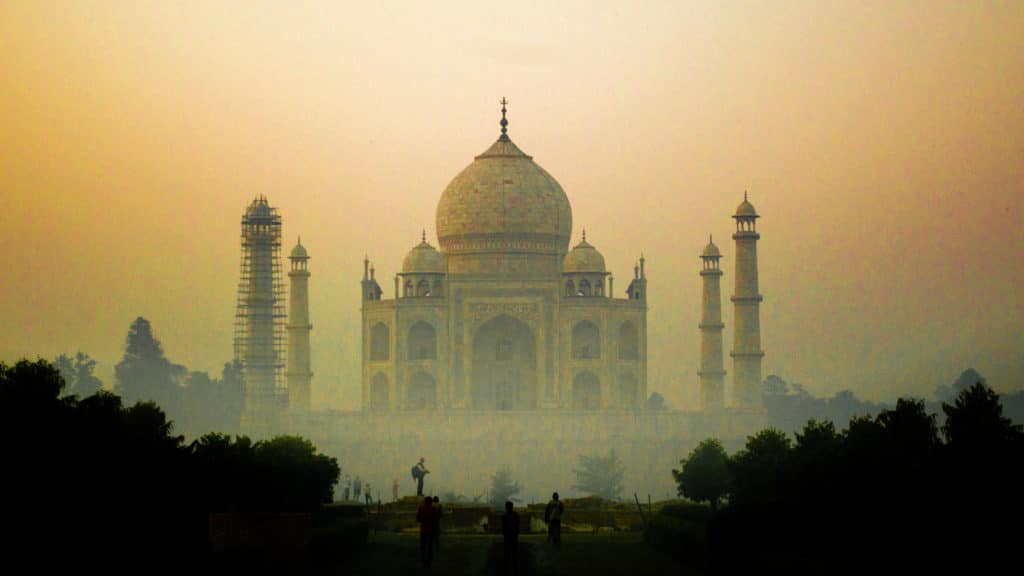
Golden Triangle India Photography:
How to Photograph Delhi, Jaipur and Agra
The Golden Triangle — Delhi, Jaipur and Agra — is the most visited photography itinerary in India. It is also the one where the gap between what most photographers produce and what the places actually offer is widest. This guide is an attempt to close that gap.
After leading photography workshops through northern India for more than a decade, I have watched hundreds of photographers make the same journey and return home with the same images — technically competent records of famous places made from the obvious positions at the wrong hours. The Taj Mahal at midday. The Amber Fort from the tour bus layby. The markets of Old Delhi at the moment when the self-consciousness of being photographed is at its highest.
The Golden Triangle offers something completely different to the photographer who approaches it with patience, a willingness to arrive before dawn and a readiness to abandon the itinerary when something more interesting appears. This guide describes that different approach — where to go, when to be there, and what to look for that the standard India photography tour never finds.
The complete northern India photography journey. The Rajasthan photography expedition covers the Golden Triangle as the opening chapter of a ten-day journey through northern India. Maximum 4 photographers. Heritage accommodation included. Discover the Rajasthan Expedition →
The Seven-Day Golden Triangle Photography Itinerary
Seven days is the minimum for serious photography across the Golden Triangle. Ten days is preferable — it allows you to return to key locations in different light conditions, to spend an extra morning at Fatehpur Sikri, and to absorb the pace of each city rather than simply passing through it.
Seven-Day Photography Itinerary — Delhi, Jaipur, Agra
Delhi — The Opening Chapter
Delhi is where every serious India photography project should begin — not because it is the most spectacular destination on the itinerary, but because it prepares you for everything that follows. The visual complexity of Old Delhi teaches the eye to read a crowded frame. The scale of the Mughal monuments teaches patience. The chaos of the traffic and the markets teaches the kind of alert, mobile attention that documentary photography in India requires.
Photographers who arrive in Jaipur without having spent serious time in Delhi tend to be overwhelmed by the visual density. Those who have worked Delhi first arrive already calibrated — their eye accustomed to the pace, their camera position instinctive.
Old Delhi — Chandni Chowk at Dawn
Chandni Chowk is at its most productive between 5:30am and 8am, before the traffic activates and while the wholesale market transactions of the early morning are still in progress. The Khari Baoli spice market, the fabric lanes of Kinari Bazaar — each one has a specific visual character. The spice market at dawn, when the sacks are being opened and the colour is most saturated, is one of the most extraordinary photography environments in the city. Read the complete Delhi Photography Guide for the full approach to the city.
Humayun’s Tomb — The Best Photography Subject in Delhi
Built in 1570 as the first garden-tomb on the Indian subcontinent — the direct predecessor of the Taj Mahal — Humayun’s Tomb is the monument I return to every time I am in Delhi. The late afternoon light on the west-facing facade is extraordinary. The morning is better for the char bagh garden and the Isa Khan enclosure. The complete guide to photographing Humayun’s Tomb covers every angle and hour in detail.
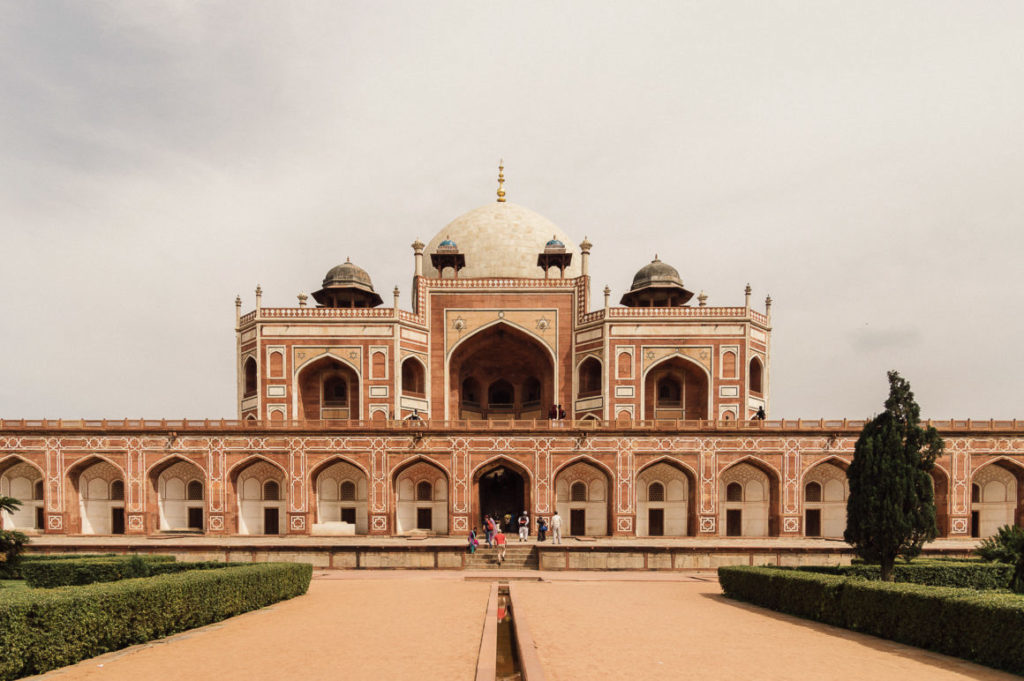 Humayun’s Tomb, Delhi · The monument that taught the Taj Mahal how to be beautiful · © Raffaele Ferrari
Jaipur — The Pink City
Jaipur is the most visually generous city of the three — it offers the most subjects, the most colour and the most accessible photography of any destination on the Golden Triangle. The challenge is not finding things to photograph. It is making images that are genuinely yours rather than simply confirming the visual grammar that already exists for the city.
Amber Fort — Before the Elephant Rides Begin
The view of Amber Fort reflected in Maota Lake — photographed from the road below before 6am when the light arrives from the east and the lake is still — is one of the finest photography compositions in Rajasthan. This requires arriving at the base of the hill before dawn. By the time the first tourist coaches arrive at eight o’clock, the lake reflection has gone and the light is overhead and flat. The full approach to Jaipur, including Jantar Mantar, Hawa Mahal and Nahargarh Fort, is in the Jaipur Photography Guide.
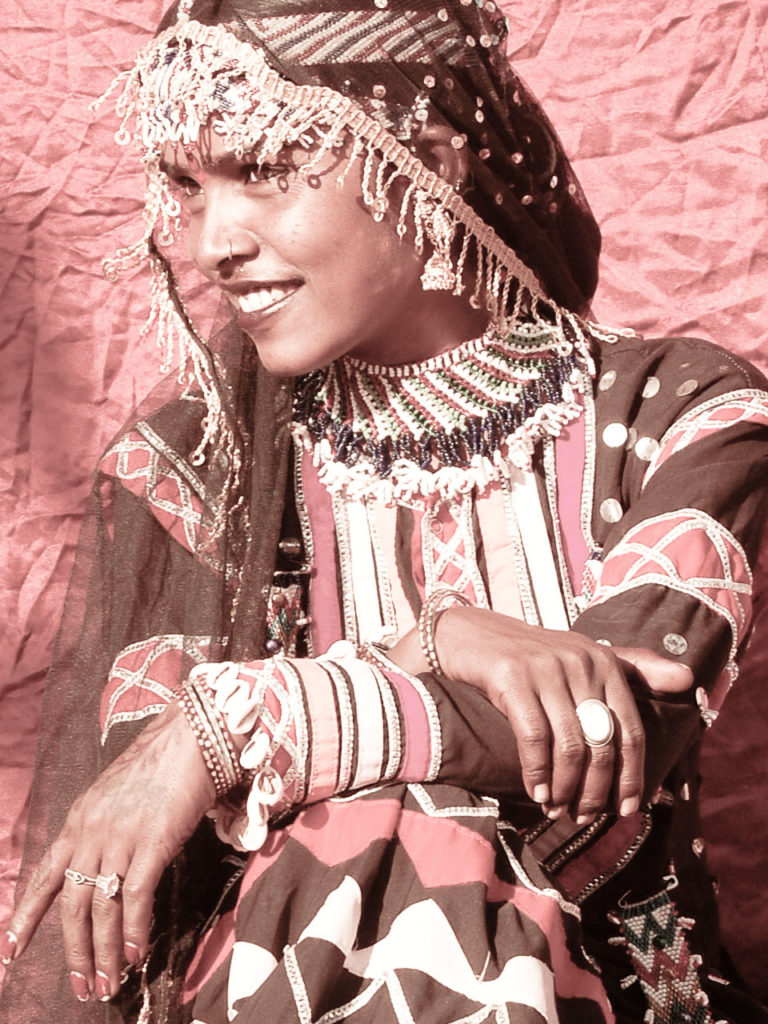 Jaipur, Rajasthan · The people of the Pink City — the subject that no list of viewpoints captures · © Raffaele Ferrari
Beyond the Monuments — The Old City Bazaars
The nine bazaars of the Old City — each originally dedicated to a specific trade — are the most productive documentary photography environment in Jaipur. Johari Bazaar for jewellery, Tripolia Bazaar for metal goods and lac bangles, Nehru Bazaar for textiles. The best time is 7–9am, before the tourist coaches arrive and while the wholesale transactions of the morning are still in progress.
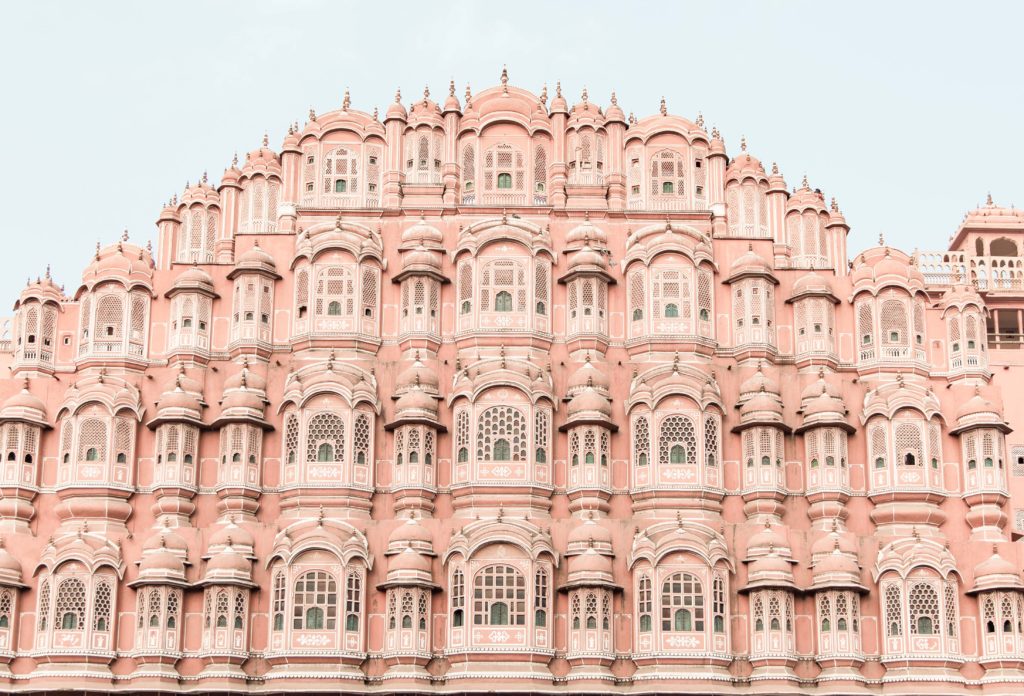 Hawa Mahal, Jaipur · The Palace of Winds at golden hour — the facade that defines the Pink City · © Raffaele Ferrari
Agra — The Taj Mahal and What Lies Beyond It
The Taj Mahal is the most famous building in Asia and the most photographed monument in India. It has been made so many times, from so many of the same positions, that arriving there on a clear morning almost guarantees a technically good photograph — and almost guarantees it is not quite yours. What it requires, as with every famous subject, is a willingness to put down the image you already know and look for the one that is actually there.
The Taj Mahal — How to Photograph It Originally
The eastern gate opens one hour before sunrise. Be there. The pool in the main axis reflects the dome in the blue hour — before the sky has turned fully light and before the first group tours have arrived — with a quality of atmosphere that the midday postcard cannot replicate. Work the main axis first, then move to the side terraces, the minarets as framing elements, the inlay work on the plinth in the morning light.
The most original Taj Mahal photograph available is not made from inside the complex. It is made from Mehtab Bagh — the garden on the opposite bank of the Yamuna River — at sunset, when the rear facade is illuminated from the west and the river in the foreground reflects the last light. This is the view that Mughal emperors would have seen from the garden side. It is significantly less crowded than the main complex and produces the image that most visitors never make.
Fatehpur Sikri — The Abandoned Capital
Forty kilometres west of Agra, the abandoned Mughal capital of Fatehpur Sikri is one of the most extraordinary and least photographically saturated subjects in the Golden Triangle. Built by Akbar between 1571 and 1585, then abandoned when the water supply failed, it stands complete — palaces, mosques, audience halls, the gateway of Buland Darwaza — in a state of preservation that makes it feel less like a ruin than a city whose population simply left. Visit in the morning on the way from Jaipur to Agra, spending at least two hours — the Jama Masjid courtyard and the Panch Mahal are the strongest photography subjects. Read the complete guide to photographing Fatehpur Sikri before visiting.
Taj Mahal, Agra · The pre-dawn blue hour — the image that requires arriving before the crowds · © Raffaele Ferrari
How to Travel Between Delhi, Jaipur and Agra
For a photographer, hiring a private car with driver is the most practical option for the Golden Triangle — it allows pre-dawn departures, stops at intermediate subjects like Fatehpur Sikri, and the flexibility that train schedules do not permit. A good driver who understands that you need to be at Amber Fort before sunrise and at Mehtab Bagh before sunset is worth more than any transport saving.
Car with driver: ~4.5 hrs
Bus: ~5–6 hrs
Shatabdi Express recommended
Car with driver: ~3.5 hrs
Bus: ~4 hrs
Via Fatehpur Sikri: add 2 hrs
Car with driver: ~2.5 hrs
Bus: ~4 hrs
Gatimaan Express fastest
Festivals and Photography Opportunities in the Golden Triangle
The timing of your visit to the Golden Triangle can dramatically change the photography available. Several festivals overlap with the optimal October–February season and are worth planning around specifically.
Pushkar Camel Fair — Late October to November
The Pushkar Camel Fair is the most extraordinary documentary photography event in Rajasthan and one of the most remarkable in India. It is not technically part of the Golden Triangle — Pushkar is a two-hour detour from Jaipur — but any photographer who visits in November and does not go to Pushkar is making a significant mistake. The fair brings 200,000 traders, pilgrims and livestock to a small desert town for ten days, creating a documentary photography environment of unparalleled density and visual richness. The Rajasthan Photography Expedition is timed specifically around the Camel Fair.
Diwali — October or November
The festival of lights, which falls on a different date each year according to the Hindu lunar calendar, transforms Delhi and Jaipur into extraordinary photography environments — fireworks, oil lamps, the particular quality of light that only one night of the year produces. Plan around it if your dates allow.
Holi — February or March
The colour festival is one of the most photographically intense events in India. Jaipur and Agra are both excellent locations — the combination of the coloured powder and the Mughal architecture produces images that are impossible at any other time of year. Arrive early, protect your camera, and move through the celebration rather than observing it from the periphery.
When to Photograph the Golden Triangle
October to February is the optimal photography season for the entire Golden Triangle. The light is at its lowest angle, the temperatures are manageable for full days on foot, and the air quality — which is affected by winter pollution in December and January — is significantly better than in the monsoon months. October and November are the strongest months overall: post-monsoon clarity, optimal light angle, and the Pushkar Camel Fair within reach.
April through September should be avoided where possible. The heat between April and June is extreme — temperatures consistently above 40°C make serious photography almost impossible outside a two-hour window around dawn and dusk. The monsoon (July–September) brings dramatic cloud formations and green vegetation, but also significant logistical complications.
Golden Triangle Photography — Practical Information
- Best months: October to February — October and November optimal
- Best hours: One hour before sunrise to 9am. 4pm to sunset. Midday is the least productive window everywhere
- Taj Mahal: Eastern gate opens 30 minutes before sunrise. Mehtab Bagh opens at sunrise. Photography fee applies inside main complex
- Amber Fort: Open 8am–5:30pm. Road-side lake reflection requires arrival before 6am — outside fort opening hours
- Humayun’s Tomb: Open sunrise to sunset. Best in late afternoon for west-facing facade
- Fatehpur Sikri: Open sunrise to sunset. Best in morning — visit on the Jaipur to Agra transit day
- Visa: Indian e-visa available online. Apply minimum 4 days before travel. Approximately €65
- Transport: Private car with driver recommended — allows pre-dawn departures and flexible stops
- Tripod: Permitted at most monuments. Not permitted inside Taj Mahal complex — use monopod or steady hand
The Golden Triangle is not a difficult photography itinerary. It is a testing one. The subjects are famous and heavily photographed. The conditions — heat, crowd density, aggressive touts — are demanding. The gap between the obvious image and the interesting one is wide. But for the photographer who arrives before dawn, who is willing to return to the same location twice, who puts down the camera and simply looks before raising it — the Golden Triangle offers some of the most extraordinary visual material in the world. It always has.
Extend Beyond the Triangle — Into Rajasthan
The classical Golden Triangle covers Delhi, Jaipur and Agra in approximately seven days. But the photographers who return from northern India with the strongest portfolios are almost always the ones who added Rajasthan — Jodhpur’s Blue City, the desert landscape of the Thar, and above all the Pushkar Camel Fair — to the standard itinerary.
The Rajasthan Photography Expedition is designed as the complete version of this journey — Delhi, Agra, Jaipur, Jodhpur and Pushkar over ten days, timed around the Camel Fair and led with individual mentoring throughout. Maximum 4 photographers. Heritage accommodation included. It begins where the Golden Triangle ends and goes considerably further.
Golden Triangle India Photography — Frequently Asked Questions
Maximum 4 photographers. Heritage accommodation. Ten days through northern India — from the Mughal monuments of Delhi to the extraordinary documentary photography of the Pushkar Camel Fair. Individual mentoring throughout. Heritage accommodation included. No deposit required to enquire. Discover the Rajasthan Expedition →
Delhi Photography Guide · Photograph Jaipur — The Pink City · Photograph Humayun’s Tomb · Photograph Fatehpur Sikri · How to Photograph Jodhpur · Kerala vs Rajasthan — Which Workshop? · All Photography Workshops


